Bridge Street Cemetery Gravestones
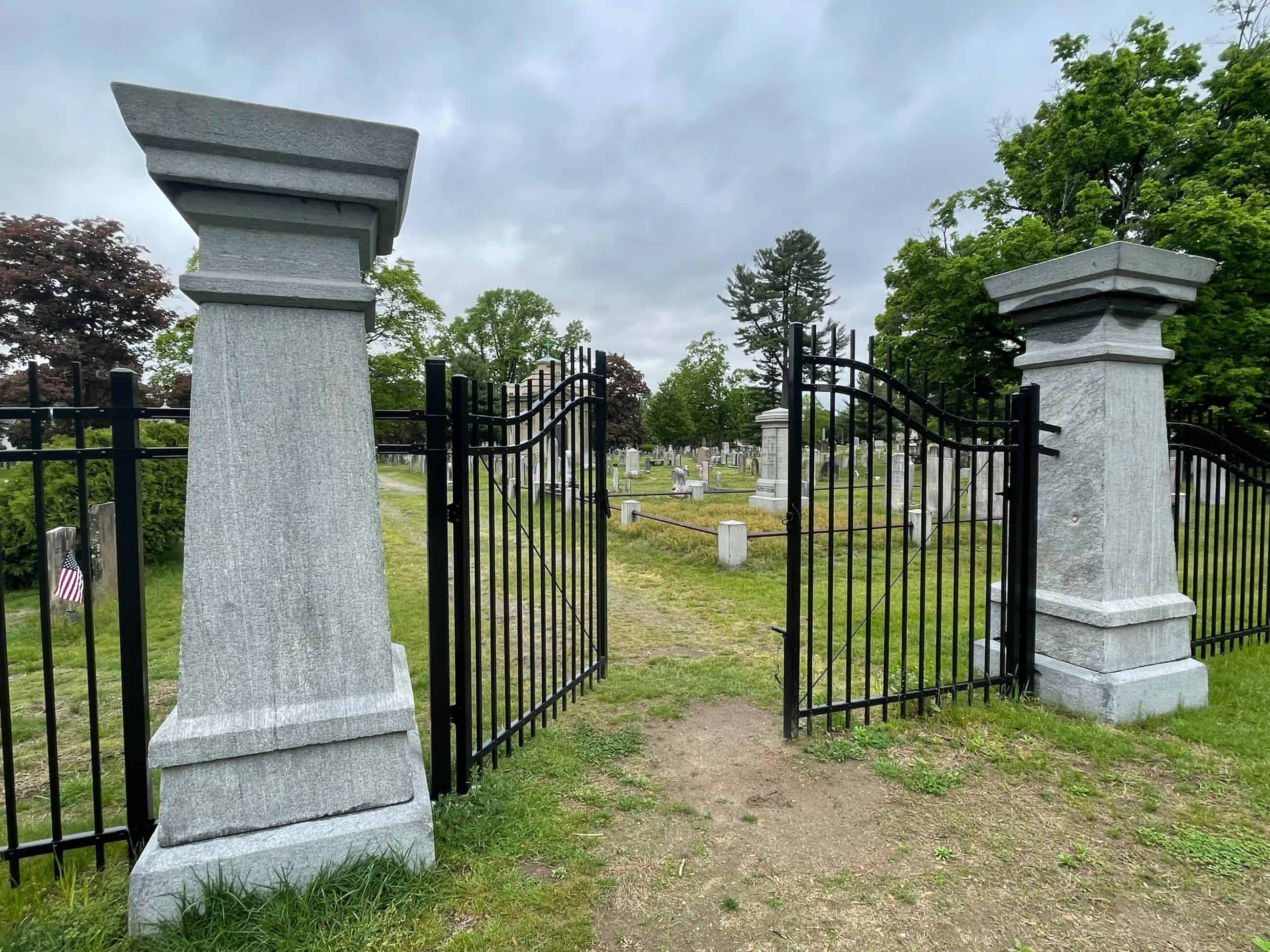
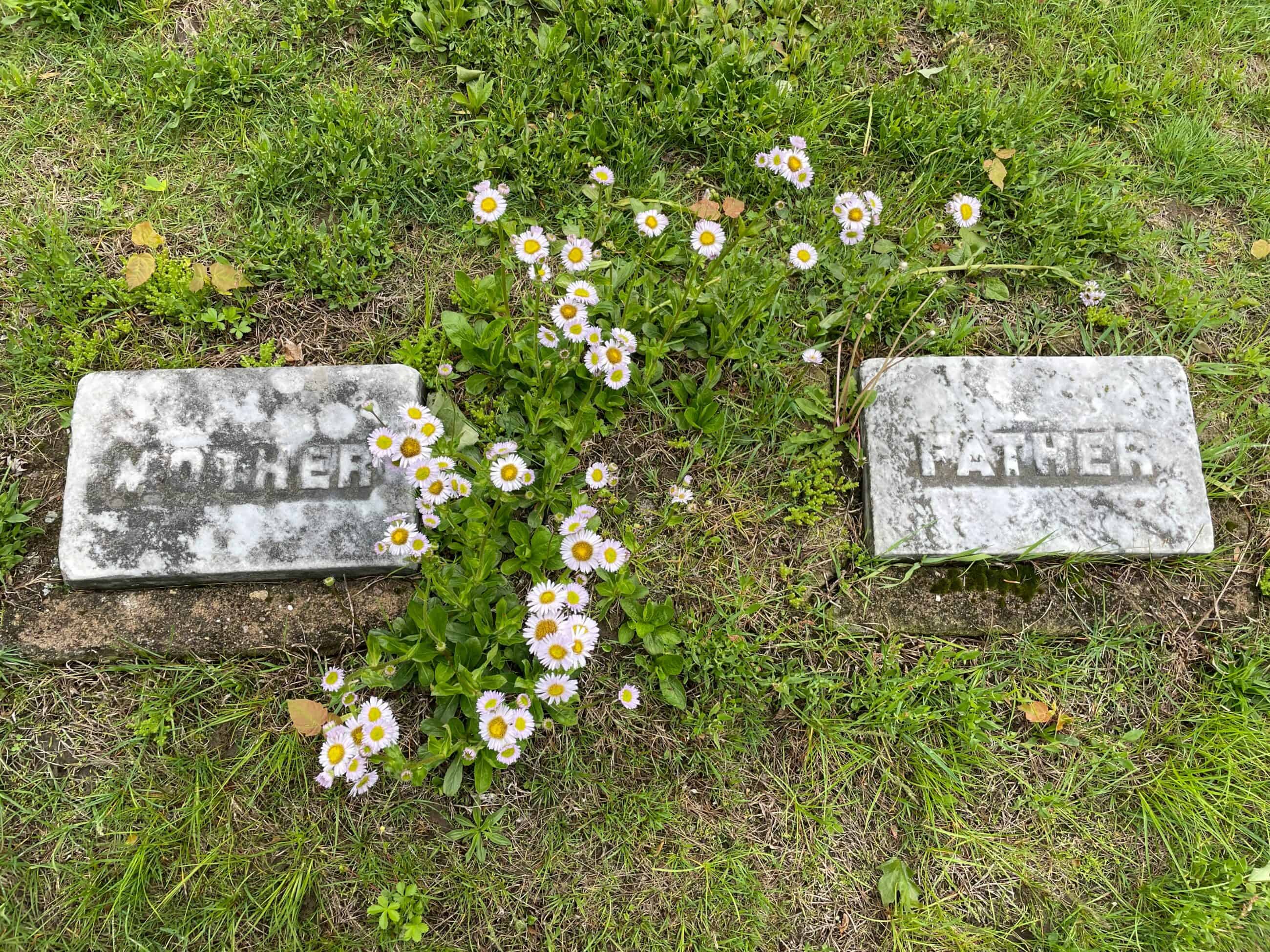
Bridge Street Cemetery was established in Northampton in 1663. After the town voted that no more burials should take place next to the meetinghouse, a portion of a ten-acre lot on the far edge of town, known as the “minister’s lott” at Pine Plain, was allocated for use as a burial ground. In 1680, the bodies of those previously buried were moved to Bridge Street Cemetery. Today, the cemetery encompasses approximately 20 acres. It is an active non-denominational city cemetery.
Below is a partial list of gravestones, compiled by students in a Teaching Local History course at Smith College.
17th-Century Gravestones
- About 17th century gravestones
- Captain Elisha Grey, d. 1685
- Elder John Strong, d. 1699
- Lieutenant John Lyman, d. 1690
18th-Century Gravestones
- About 18th century gravestones
- Abigal Lyman, d. 1776
- David Brainerd, d. 1747
- Ebenezer Parsons, d. 1744
- Electa Hunt
- Elizabeth Lyman, d. 1762
- Enoch Southwell, d. 1778
- Ephraim Wright, d. 1794
- Esther Warham Stoddard, d. 1736
- Fanny Tileston, d. 1795
- James Lyman, d. 1769
- Jemima Lyman, d. 1785
- Joel Lyman, d. 1778 and Mary Lyman, d. 1778
- John Alexander, d. 1733, and Sarah Alexander, d. 1732
- Jonathan Edwards, d. 1758
- Jonathan Hunt
- Jonathan Phelps
- Joseph Hawley, d. 1788
- Joseph Lyman, d. 1763
- Lucy
- Marcy Clark, d. 1798
- Miriam Wright, d. 1744
- Phebe Pomeroy, d. 1776
- Seth Pomeroy, d. 1777
- Solomon Stoddard, d. 1729
- William Lyman, d. 1774
19th-Century Gravestones
(partial list)
- About 19th century gravestones
- Civil War Monument
- Isaac Chapman Bates, d. 1845
- Justus A. Boies, d. 1863
- Sally Maminash, d. 1853
- Sarah Gray, d. 1831
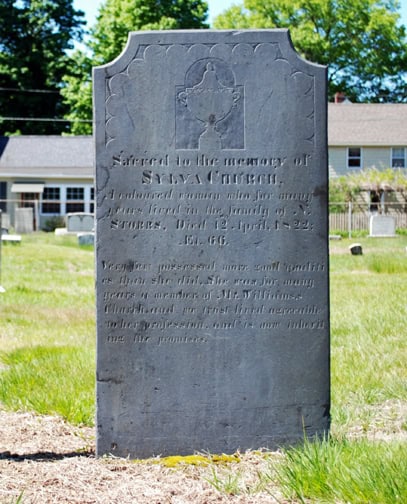
- Sylva Church, d. 1822
- Sylvester Graham, d. 1851
- Timothy Dwight, d. 1817
About 17th-Century Gravestones
In the Connecticut valley, less than 100 grave markers from before 1700 survive. This is because very few people, generally only well-to-do white men, could be buried in marked stone graves. Women, children, and the poor would be marked with wood crosses (which deteriorated over time), or in unmarked plots. The poor would often be placed on the outer periphery of the cemetery, while the gravestones of the rich occupied the central portion on the cemetery. The oldest surviving stone in the Bridge Street Cemetery is that of Captain E. Gray or Elisha Graves from either 1683 or 85, and though largely unreadable is a good example of a simple headstones, showing only the deceased’s name, age, and date of death cut into them. The lack of decoration on 17th-century graves was not a result of a lack of material or a lack of trained cutters, rather the Puritan objections to imagery. Stone cutters were local artisans, who did cutting as a side job, but were formally trained under a master cutter. Sandstone, the material of choice in the Bridge Street Cemetery, was cheap and in great abundance, and local–it was quarried at Mount Tom. Although in the early days of the cemetery graves remained undecorated, the exception to the rule of simple undecorated headstones are the tablestone grave markers. These mark the clergy and civil leaders, and some had coats of arms cut into them, a symbol of social rank–something the Puritans did not object to.
About 18th-Century Gravestones
It was not until the 1720s that the image of the winged death’s head began to appear on gravestones. A late example of this style would be Lieutenant Jonathan Hunt’s grave from 1769. The death’s head symbolized the certainty and triumph of death, as well as God’s judgement of sin. This representational image was a dramatic break from the graves of before, and was part of a Puritan movement towards symbolic representation of spirituality. As the Puritan control weakened, the cherub motif began to evolve from the Death’s head. The cherubs are less didactic and ominous than the skulls, and suggest an emphasis on heaven and salvation, rather than judgement. These appeared in Bridge Street in the 1750’s brought by Northampton’s most well known stone cutter, Nathaniel Phelps. Graves began to have decorative motifs and epitaphs about the deceased’s life. The phrase “in memory of” began to be used over “here lies”, suggesting the individual value of the person, rather than the value the community had of them. A late and uncommon example of Phelps’ work can be seen with the grave of Seth Pomeroy, 1777. An example of a decorative cherub motif possibly done by Phelps is that of Captain James Lyman, 1769. An example of the changing epitaph can be seen in the stone of Mrs. Phebe Pomeroy.
About 19th-Century Gravestones
At the beginning of the 19th century, marble became a popular material because of its neoclassical associations. Unfortunately, it has not weathered well as automobile emissions and acid rain have obliterated many of these marble carvings. Along with new materials, there was also a shift towards memorializing the dead and expressing the grief of the survivors in the epitaphs. Neoclassical designs such as the urn, the willow tree and columns became popular motifs. By the 1820’s design had become increasingly stylized and standardized. The craftsmanship and art of the stonecutter was increasingly replaced by mass produced headstones. The graveyard itself became standardized as it was divided into identical plots and grids. By the 20th century, markers and headstones resembled those in cemeteries all over America.
Information compiled by Judith Owen, Susanna Morgan, Allison Schofield and Rebecca Ames; all students at Smith College.