Jonathan Edwards
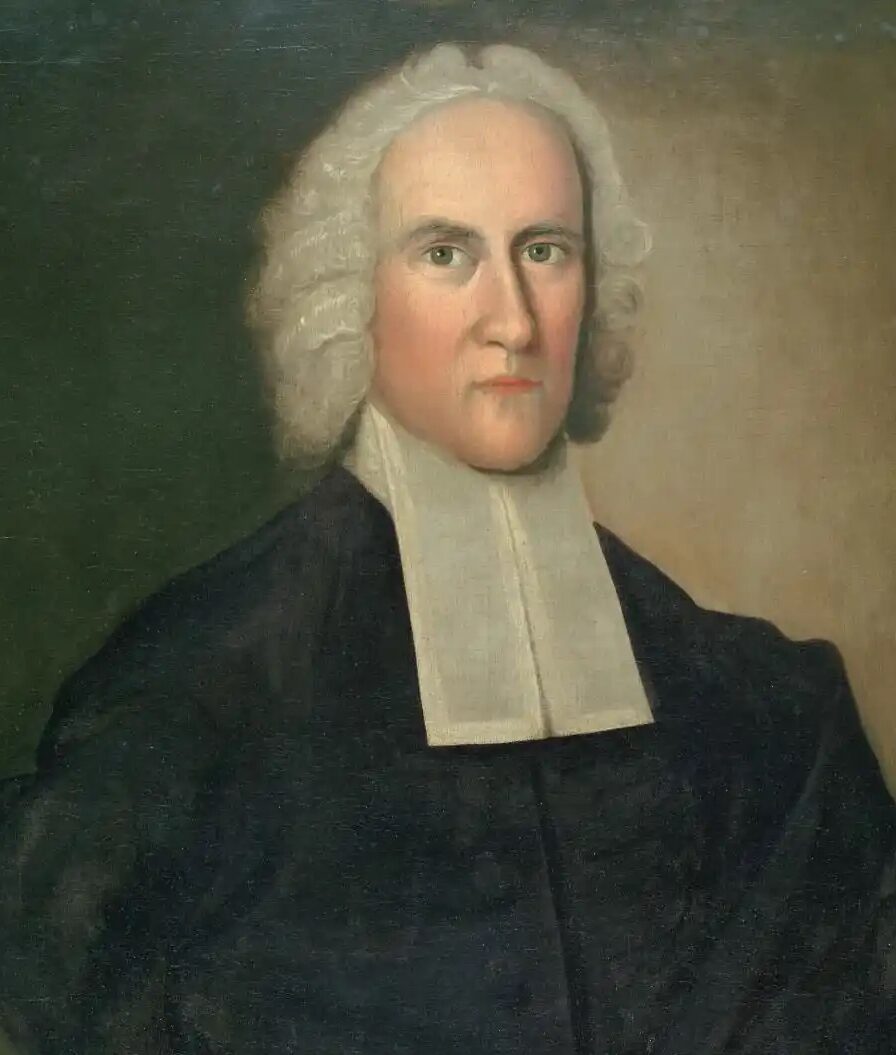
Jonathan Edwards was a Northampton-based Congregationalist minister, philosopher, and theologian whose work was critical in the First Great Awakening.
Northampton’s Minister
Jonathan Edwards (1703–1758) arrived in Northampton in 1726 to assist his grandfather Solomon Stoddard in his ministry. He took over Stoddard’s position in 1729 upon the elder pastor’s death. While in Northampton, Edwards ascended to clerical and intellectual fame as a theologian, a Calvinist, and an evangelist. Edwards preached about sin and punishment and painted vivid descriptions of eternal damnation. Under his leadership, Northampton experienced a major religious revival in 1734–1735, a precursor to the First Great Awakening in the 1740s.
Jonathan Edwards lived in Northampton from 1726 until 1751. His homestead was on King Street, where Edwards Square is now.
Contemporary accounts describe Edwards taking long rides through the meadows next to the Connecticut River, deep in contemplation.
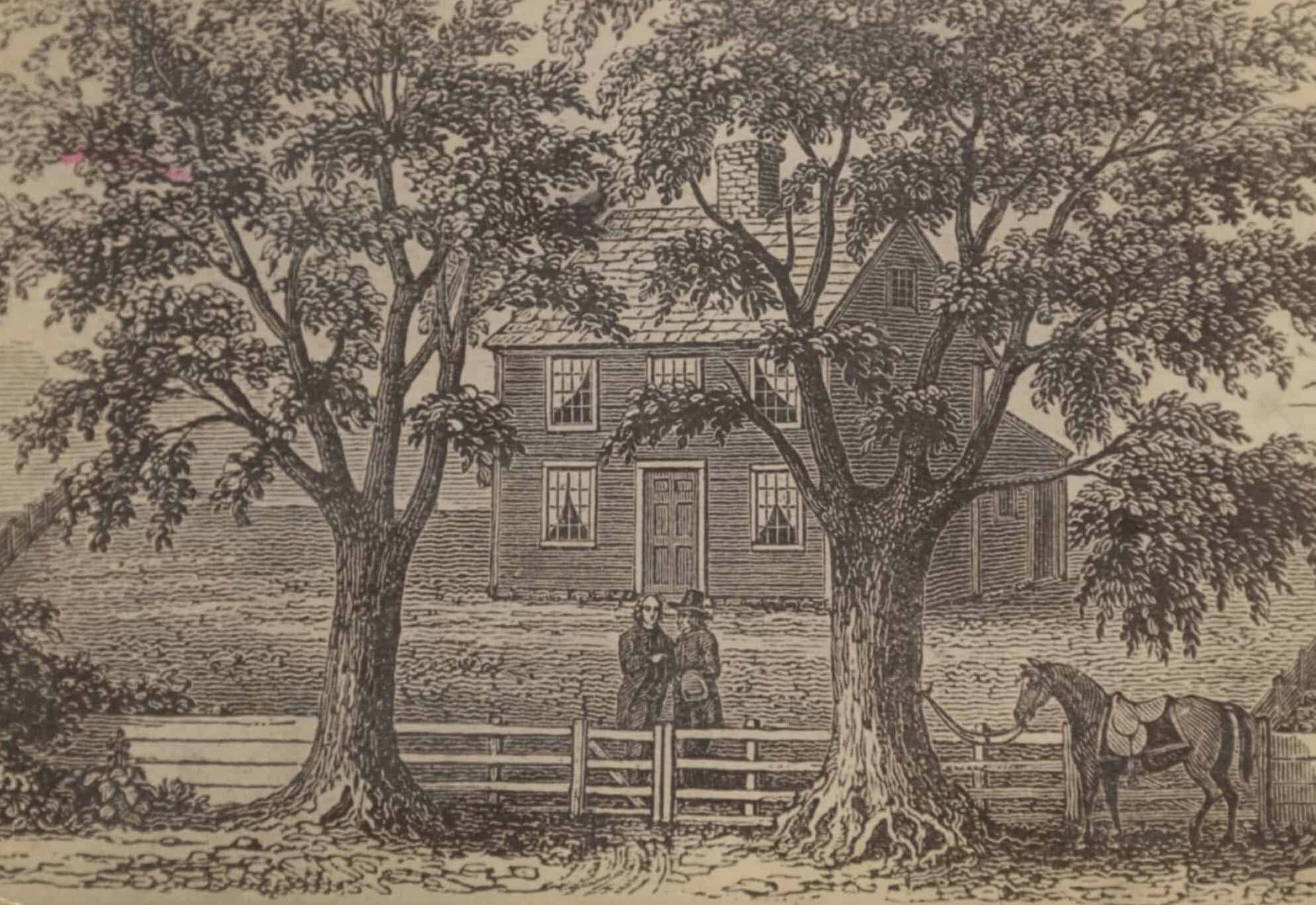
As ideas came to him, he would write them down on scraps of paper and pin them to his cloak. When he returned home, literally covered with thoughts, his wife, Sarah Pierpont Edwards (1710–1758), would arrange the notes for his future use.
Dismissal as Minister
Despite widespread fame, Jonathan Edwards still performed the duties expected of a local minister. In colonial New England, a “settled” pastor was one of the most important men in town, a political and spiritual leader. This also meant that Jonathan Edwards was at the center of more than one town-wide controversy. Ronald Story’s chapter in A Place Called Paradise details three particular episodes that eventually led to Edwards’ dismissal in 1750.
Edwards disagreed with the church leaders’ decision to assign pews by wealth in the newly built meetinghouse in 1737. He “preached against the contentiousness and pride that underlay it, and warned the congregation: ‘Consider it is but a very little while before it will be all one to you whether you have sat high or low here.’” (p. 95)
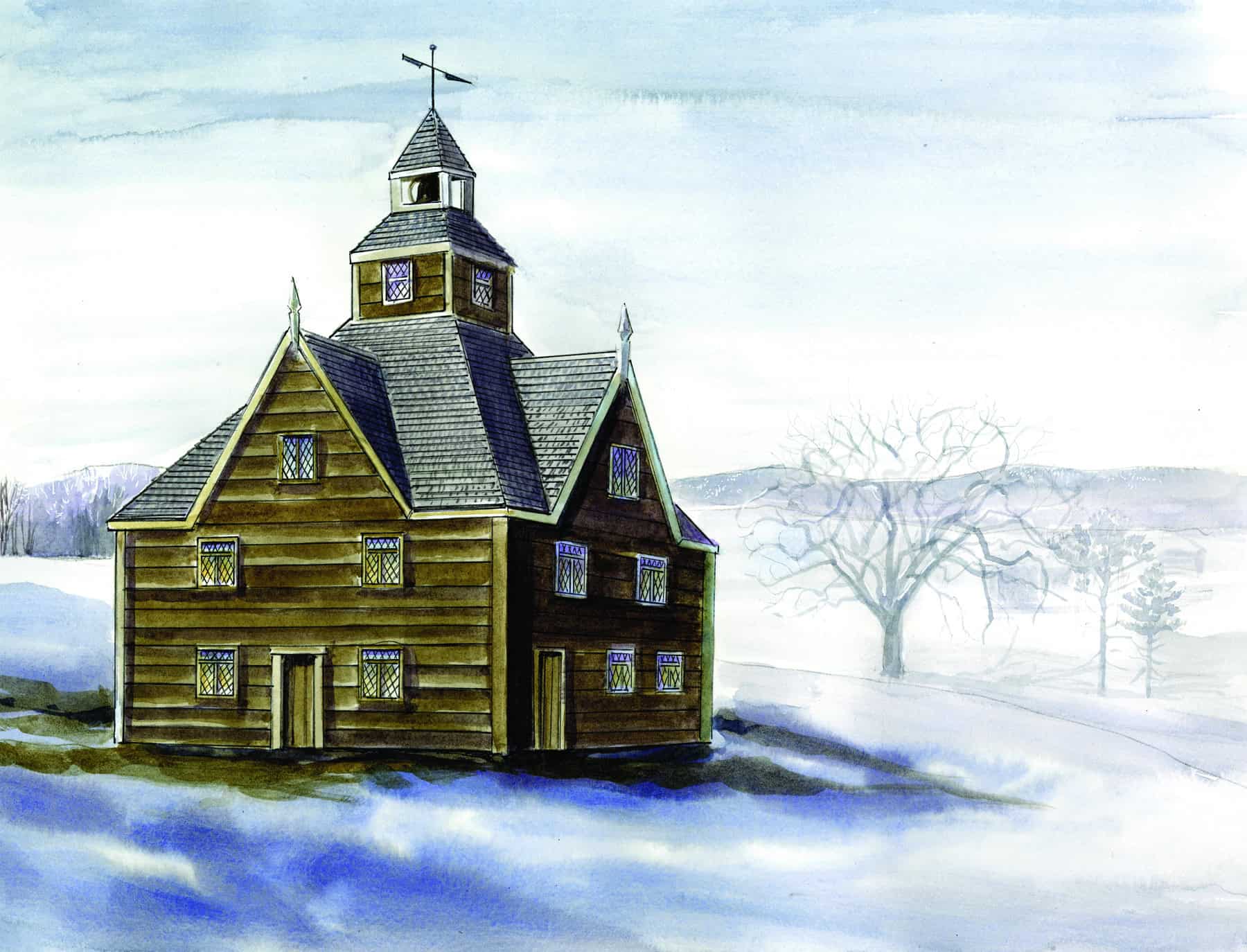
In a second example cited by Story, Edwards used his pulpit in 1744 to admonish young men who “had been reading a midwifery book, joking about explicit descriptions and diagrams, and taunting the girls for being ‘nasty creatures,'” an episode called the “Bad Books Case.” Long concerned about the potential waywardness of Northampton youth … Edwards now preached against this instance of ‘lewd’ sinfulness, then read a list of the names of the miscreants publicly from the pulpit. Three of them openly resisted his and the church’s authority. One [child] said he would not ‘worship a wig’ and cared not a ‘turd’ or a ‘fart’ for the church authorities. (p. 95)
The final disagreement that would lead to Edwards’ dismissal was about his salary. Story explained:
Only after bitter debates did the taxpayers agree to settle and fix the salary according to certain commodity prices. Edwards had a large family and many visitors. More urgently, he believed that the minister should have elevated status in any community calling itself Christian, and that it was ‘anti-ministerial’ and therefore ‘anti-spiritual’ to withhold salary.” (p. 95)
Due to these ongoing disagreements, as well as a widening gulf between Edwards’ and the congregation’s religious beliefs, Northampton expelled Jonathan Edwards from his ministerial role in 1750. His first cousin, Joseph Hawley III, was instrumental in the removal process because of personal and spiritual differences.
Jonathan Edwards the Enslaver
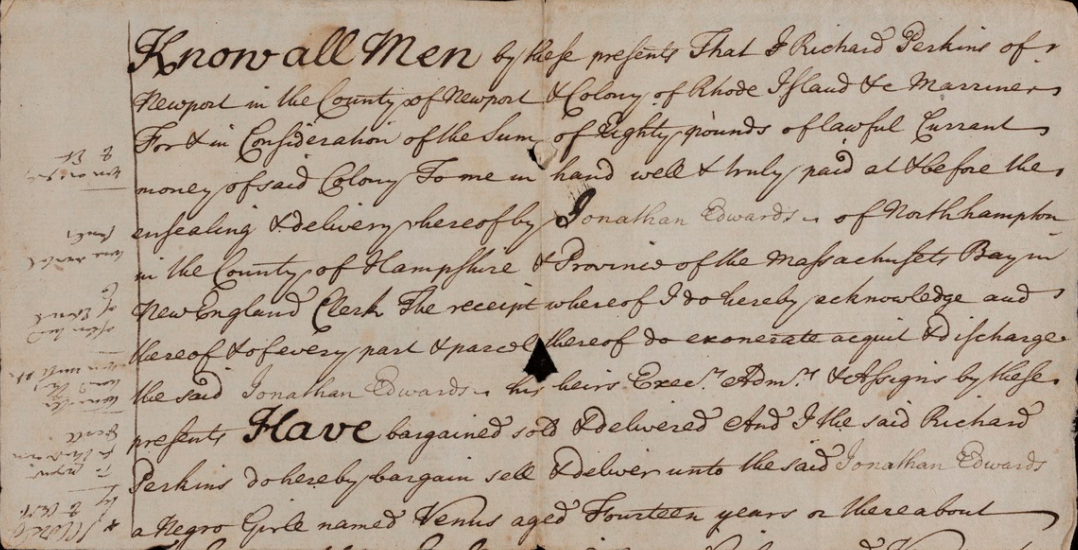
Edwards was an enslaver. In 1731, he traveled to Newport, Rhode Island, to purchase and bring home “a Negro Girle named Venus” who was “age Fourteen years or thereabout” who was taken from her family in West Africa. A young woman named Leah was also enslaved to Edwards. Some historians think that Edwards renamed Venus with the biblical name Leah when she was baptized. It is also possible that Venus died, and Leah was someone else.
In 1751, a year after his dismissal, Jonathan Edwards moved his household to Stockbridge, Massachusetts, where he became pastor to the English in the Stockbridge church as well as a missionary to Mahican people. At the time, his household included an enslaved woman named Rose Binney, whom he may have freed in the 1750s.
Edwards in Stockbridge
While in Stockbridge, he wrote his most-well-known theological treatises. Edwards was then selected to become president of what is now Princeton University. It was an honor he did not enjoy for long.
Jonathan Edwards died in 1758 from a smallpox inoculation and is buried in Princeton, New Jersey. There are two cenotaphs devoted to Edwards in Northampton’s Bridge Street Cemetery—one next to the grave of his daughter Jerusha (1730–1748), installed by David Stebbins in 1860, and a large family marker in the plot of Edwards’ daughter, Mary Dwight.
Take Our Virtual Tour!
Scroll down to get started, or view tour in full screen mode