Frederick Douglass
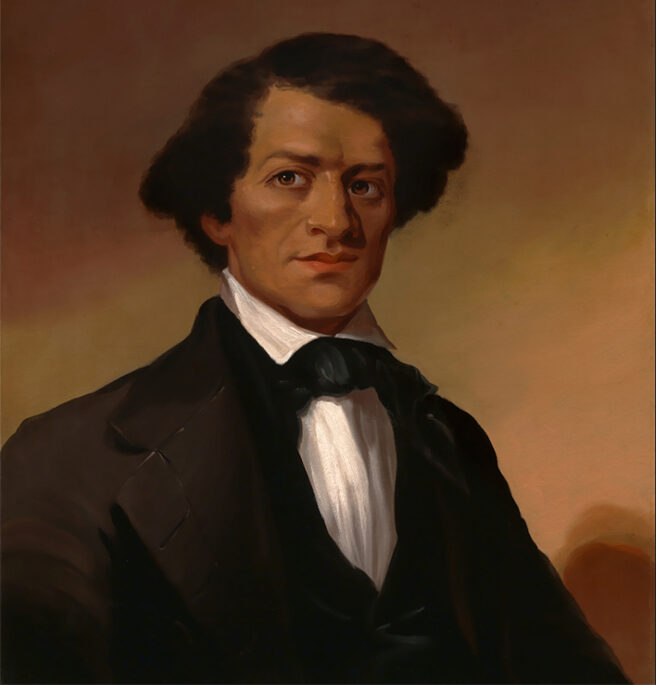
Frederick Douglass (1818–1895) was born enslaved on Maryland’s eastern shore. At age twenty, in 1838, he escaped slavery and arrived in New York City, where he was assisted in freedom and mentored by David Ruggles, a prominent African-American abolitionist who helped those seeking freedom reach free states. Just a few years later, Douglass became one of the anti-slavery movement’s greatest orators, speaking to large and small audiences across the country, to both praise and violent attacks.
Douglass visited Northampton and the village of Florence at least six times (he never lived here).
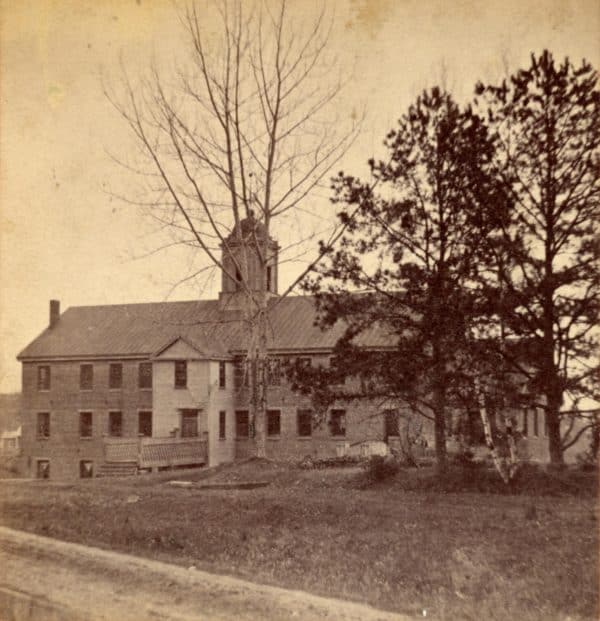
He was drawn to the area through his friend David Ruggles and through the Northampton Association of Education and Industry (NAEI). The NAEI was an abolitionist and utopian community founded in April 1842 on Nonotuck Street. It was referred to informally as “the Community.” The Community aimed to manufacture silk on principles of equality as an alternative to the slave labor system. In November 1842, David Ruggles, in declining health, moved from New York to live at the Community. Ruggles established a water cure nearby and continued his work as an anti-slavery activist. Ruggles’s presence is believed to have attracted a significant African-American population, both free-born and self-emancipated, to Florence. Douglass would later write about the Community:
The place and the people struck me as the most democratic I had ever met… There was no high, no low, no masters, no servants, no white, no black…. Here, at least, neither my color nor my condition was counted against me.”
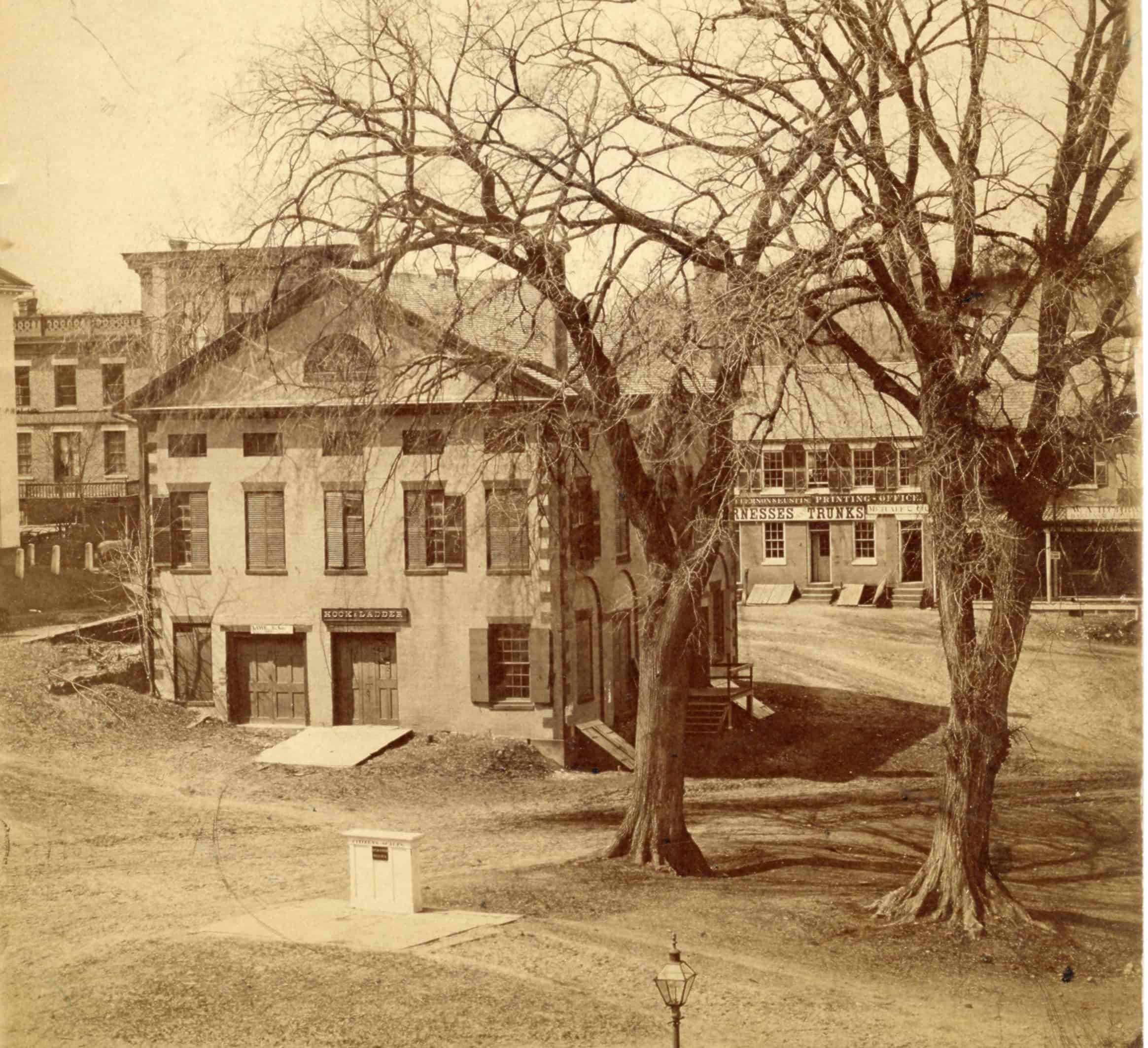
Douglass’s first known visit to Northampton was on April 27-28, 1844.
The Hutchinson Family Singers, with whom he occasionally toured, were staying at the Community. John Hutchinson later recollected that Douglass spoke in the Community’s great dining hall, bringing many to “tears of real grief, tears for suffering humanity.” That same evening Douglass gave a spirited talk at the town hall on Main Street in Northampton to a crowd of 400 or 500 people while the Hutchinsons performed. One writer praised his “power, eloquence and force of argument” while a reporter in the local press dismissed him. This is likely the visit when Frederick Douglass first met Sojourner Truth. Douglass later wrote:
I met here for the first time that strange compound of wit and wisdom, of wild enthusiasm and flint-like common sense, who seemed to feel it her duty to trip me up in my speeches and to ridicule my efforts to speak and act like a person of cultivation and refinement. I allude to Sojourner Truth.”
Douglass returned to the Community in the spring of 1845.
Community member Dolly Stetson wrote in a letter to her husband James on April 13, 1845 that Douglass spoke at the Community: “This afternoon Frederick Douglass talked to us upon prejudice against color—this is an old subject but one upon which I never heard a colored person speak in public.“ She wrote that most of her family had gone into town to listen to Douglass speak. The Stetson’s son, George R. Stetson (born in 1837) would later write, “Among the family curiosities is a stone which was thrown at [Douglass] while trying to speak in Northampton’s town hall.”
During this 1845 visit, Douglass sat for a portrait by Community member Elisha Hammond. The pose is similar to the one on the frontispiece of his Narrative of the Life of Frederick Douglass, an American Slave published two weeks after this visit. On April 15, 1845, Dolly Stetson wrote in a letter, “I send this [letter] by Frederic [sic] Douglass …. Mr. Hammond has been very successfull [sic] in his portrait, if I am a judge.” The portrait is at the National Portrait Gallery, Smithsonian Institution, in Washington, D.C.
After the publication of his narrative, it was no longer safe for Douglass to remain in the U.S. He sailed for England on August 16, 1845, and returned in the spring of 1847. By November, he had come to Springfield, Massachusetts, where he first met abolitionist John Brown. In November 1848, Douglass returned to Northampton. On November 18, 1848, he wrote to the anti-slavery newspaper North Star:
I am now at the Water Cure establishment of Dr. Ruggles in Northampton Mass., and have seen my old friend and benefactor for the first time since my return from Great Britain. He was the first to welcome me from the land of whips and chains and to place me beyond the reach of my blood-hound pursuers. Since then, he has lost his outward vision [his sight] – but the lamp within burns as bright as ever. His whole soul is in his present profession – and I would as readily trust him with my breath now – as I did with my liberty then years ago.”
During his stay, Douglass gave lectures in Florence and then downtown Northampton on Thanksgiving.
Perhaps the death of his friend and mentor David Ruggles in December of 1849 led to a gap in Douglass’s visits until the mid-1850s.
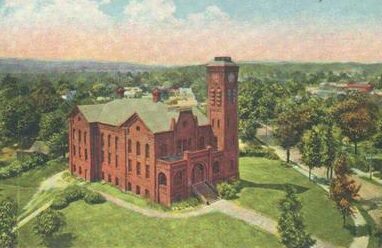
The Hampshire Gazette gives brief, enthusiastic coverage of lectures given in town and in Florence in April of 1865 and January of 1866.
Eight years later, on November 17, 1874, the Gazette reported that: “Fred Douglass delivered his lecture on John Brown at Cosmian Hall [in Florence] last Saturday evening to an audience that completely filled the hall. Even the aisles were furnished with chairs and occupied.” He spoke the following day: “Two car-loads of people from this town went to Florence, Sunday afternoon, to hear Frederick Douglass’ lecture on ‘Recollections of the Anti-Slavery Conflict.’”
Douglass wrote his memories of Community days in Charles Sheffeld’s History of Florence, Massachusetts published in 1894.
“I visited Florence almost at its beginning,” he wrote. He praised Florence residents who worked for emancipation but never reached his level of prominence:
… fifty years ago ….[Florence] was a wilderness. Now it blossoms like the rose. Though the outward form has changed, the early spirit of the Community has survived. The noble character of its men and women, and the spirit of its teachers, are still found in that locality, and one cannot visit there without seeing that George Benson, Samuel Hill, Mr. and Mrs. Hammond, Sophia Foorde, William Bassett, and Giles B. Stebbins, and the rest of them, have not lived in vain.”
Douglass died February 20, 1895, in Washington, D.C. He is buried at Mount Hope Cemetery in Rochester, New York.
ADDITIONAL RESOURCES
Blight, David. Frederick Douglass: Prophet of Freedom. Simon & Schuster, 2018.
David Ruggles Center for History and Education in Florence, Mass.
Douglass, Frederick. “What I Found at the Northampton Association” in Charles A. Sheffeld, ed., The History of Florence, Massachusetts : including a complete account of the Northampton Association of Education and Industry. Florence, Mass.: by editor, 1895, 129-132.