Lavinia

Lavinia was born to enslaved parents, Ann Maria and George, in 1852. Her mother, Ann Maria, was a 23-year-old house servant and seamstress making clothing for the Watson family, some of which now reside in Historic Northampton’s collections. Her father George also worked in the house and took care of the grounds around the Watson family’s fashionable Greensboro home. Both her mother and father appear frequently in the letters of the Watson family, referring to them with falsely intimate titles such as “Ann” and “Uncle George.” Many white enslaver families used nicknames and diminutive titles to express what they perceived as a familiarity with their enslaved people. We do not know how Ann Maria or her husband George felt about these nicknames.
When Lavinia was born, her older brother Granville was five, and her sister Maria Jane had already died. Unlike many of her peers enslaved by the Watsons, Lavinia grew up in the household. Instead of picking cotton on the plantation nine miles south in Newbern, she would have been trained from a young age to attend to the ever-changing needs of the Watsons. At times she served as a playmate for their many children as is mentioned in Henry’s 1859 July letter to Julia Watson. Lavinia was only six months younger than Arthur Watson, who would grow up to be the mayor of Northampton. Despite their similarity in age and their physical proximity, Lavinia’s and Arthur’s upbringings could not have been more different.
Lavinia’s upbringing is a story of childhood enslavement far from unique to her. In 1860, at least 56 percent of the United States’ enslaved population was under the age of 20 (Wilma King, Stolen Childhood). Five years later, at the point of emancipation, the Watson family enslaved 123 individuals, with 69 of those people being under the age of 18. Most of our surviving first-hand accounts of slavery come from the WPA interviews, a Federal Workers Administration project to interview surviving formerly enslaved people in the 1930s. These interviews were with mainly people who experienced slavery as children.
When Lavinia was 3, her mother Ann Maria died. Lavinia was probably raised then by her father George in the small living quarters they would have shared in the outbuildings surrounding the Greensboro house. Maybe other enslaved women in the house—such as Phillis, Ellen, or Lucinda—took care of her. But the majority of Lavinia’s time would have been spent serving the needs of her white enslavers, who themselves were children too.
The final mention of Lavinia comes in 1861, when Henry made his final goodbyes to their southern home. Julia Watson,13 years old at the time, had written to Lavinia saying goodbye and Henry wrote her back saying,
Despite her young age, Lavinia’s enslavers still expected her to work attending to the household chores. In 1860, at the age of 8, the majority of the Watson family had left for the North, leaving Lavinia alone in the house with Henry Watson’s brother Sereno, and the children’s nurse Phillis. Lavinia’s father George had been sent back to the Newbern plantation. Sereno wrote to his brother saying that, “Phillis and Lavinia attend to my works, with the best of disposition if not with the best of success,” implying that Lavinia, an 8 year old, and Phillis, a 70 year old, were responsible for running an entire household (July 20, 1860, letter from Serano to Henry Watson). This work would have included cooking, cleaning, setting and waiting the table, any necessary sewing and mending, and tending of any on-site livestock including the cows and poultry.
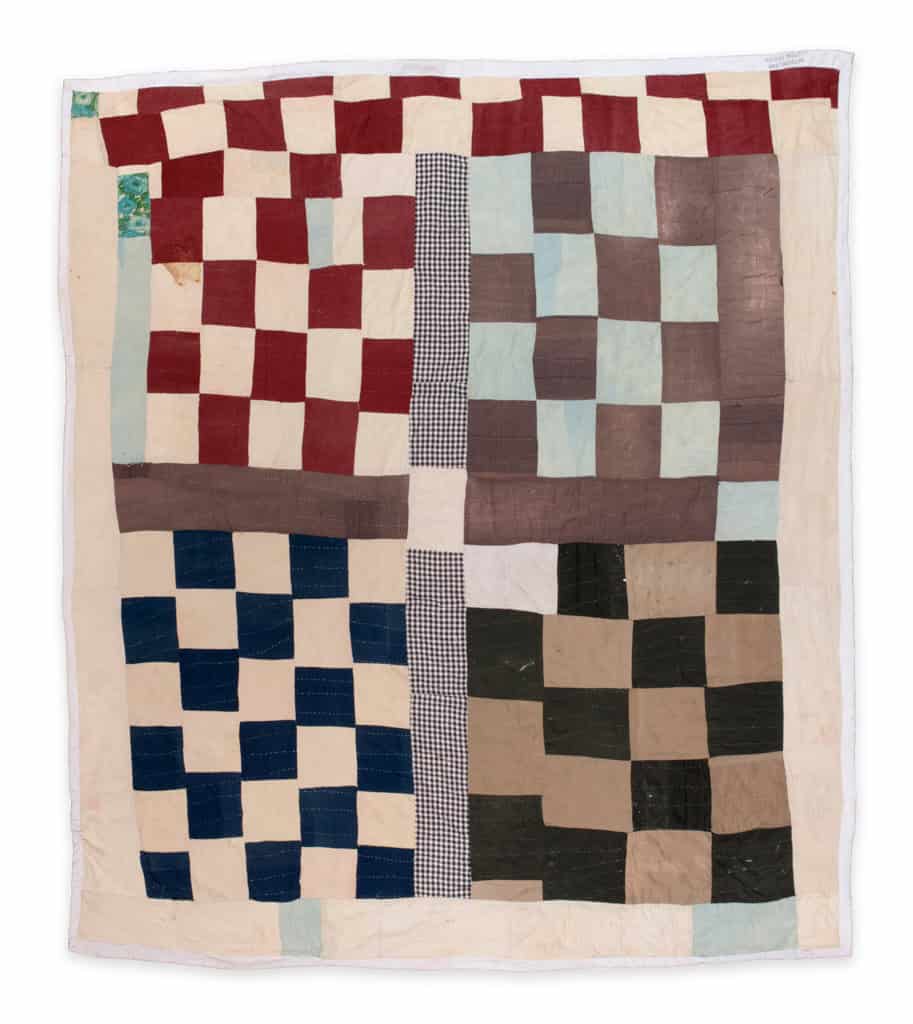
“Lavinia was much pleased at the receipt of her letter. I read it to her and it seemed to make quite an impression upon her and became a subject of conversation with those at the kitchen—Julia does it by saying ‘Goodbye’—This seems to have troubled Lavinia. She did not know what Julia meant by saying ‘goodbye’ she thought it must mean that Julia never expected to see her anymore. To relieve her, George came to see about it. I explained it to him for her & afterward talked to Lavinia about it & she was quite relieved. They are quilting Lavinia a little patchwork quilt today. I have lined it with a reddish calico & it will be very pretty.”
This interaction tells us a few things. Firstly, that not only has George returned to the household but also that he is a central figure in caring for Lavinia in the absence of her mother. He immediately arrives to calm her when she is upset. And secondly, Henry is overseeing the making of a quilt for Lavinia using a reddish calico. We know from other letters that a big part of enslaved women’s work was making clothing for their fellow enslaved people. The quilt, however, builds on this, sharing that enslaved people are taking the time to make objects of comfort and style for each other.