Henry Watson Jr.
Introduction
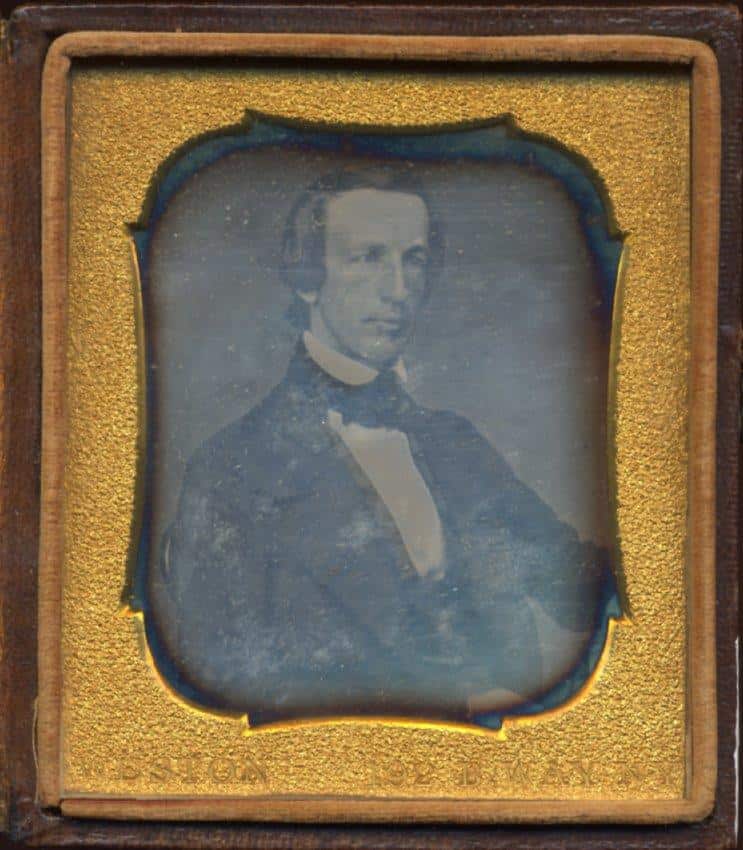
Henry Watson, Jr. was an enslaver, a lawyer, and a businessman. Born on September 24, 1810, in East Windsor Hills, Connecticut, Henry Watson, Jr. was the eldest of 13 children born to Julia Reed Watson (1792–1879) and Henry Watson, Sr. (1781–1848).
Early Life
Henry graduated from Trinity College in Hartford in 1828 and studied for two years at Harvard, including a full year dedicated to reading law. According to Mary Sampson’s family biography, a severe cold in the fall of 1830 led to a medical recommendation that he seek a warmer climate. This prompted his initial move to Greensboro, Alabama, in November 1830 to tutor Southern children. However, after a negative experience in teaching and concluding that it was not a lucrative career path, Watson returned to Connecticut in 1831.
He resumed his legal training in Hartford under Henry Barnard, who would later become the first United States Commissioner of Education. Watson earned admission to the Connecticut Bar in 1833 and returned to Alabama that same year to pass the state bar exam. By 1834, he had permanently settled in Greensboro, beginning his career as an apprentice lawyer under John Erwin, a slaveholder and Whig attorney. Henry was Erwin’s partner until 1849.
Settling in Greensboro
Henry Watson initially concentrated on establishing his law practice upon arriving in Greensboro, Alabama. Yet his background as a businessman was deeply rooted in the examples set by his father and his grandfather, John Watson, both of whom were prosperous merchants and settlers. He applied these inherited skills to diverse ventures, such as acquiring interests in the Ohio Land Company to profit from westward expansion.
Following the Panic of 1837—recognized as the first significant financial depression in the United States—Watson’s personal fortune grew at an extraordinary rate. By the close of the 1830s, this accumulated wealth enabled him to acquire his first plantation in Greene County and his first group of enslaved individuals. By 1843, Henry Watson had already enslaved 51 people. It was in this year that he began keeping track of the enslaved people under his control in a ledger he entitled “Record of Negroes Births, Ages, and Deaths.” This volume is an extraordinarily detailed account of the familial structures of enslaved people on one plantation and the source for much of Historic Northampton’s research into the enslaved people under the control of the Watson family.
Marrying into the Peck Family
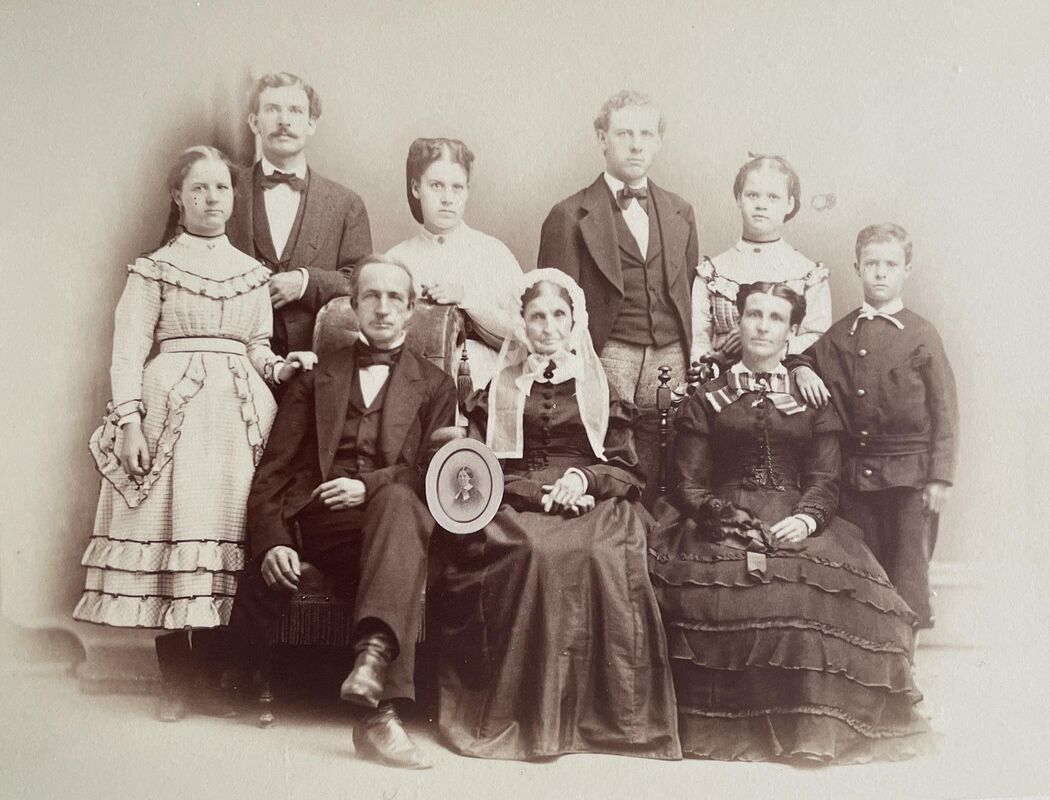
In 1845, Henry Watson sought Frederick Peck’s permission to marry his daughter, Sophia. Seeking approval in a letter from January 13, 1845, Henry wrote: “I trust you know me sufficiently well and believe me when I pledge myself that no effort shall be wanting on my part to render every hour and every moment of her future life a happily one.” The new couple was wed shortly after, on February 8, 1845. They welcomed their first son, Frederick, named after Sophia’s father, in 1846, and their first daughter, Julia, named after Henry’s mother, in 1848. They had four additional children: Arthur in 1851, Ella in 1853, Rosa in 1856, and Walter in 1858.
While affection likely played a role in this marriage considering that Henry had refused another woman’s hand before, the union was probably a strategic business move for Watson. Mr. Peck being one of the first settlers and businessmen in Greensboro, marrying into the Peck family offered significant financial advantages.
Henry’s and Sophia’s union followed a common marital trend of the era. Northern men often married into Southern families to secure wealth. In Greensboro, Henry was not the only one to do so; Frederick Peck himself was a Connecticut native who had married Elizabeth (Eliza) Kennard of Tennessee. Their shared Northern origins may have fostered a deeper understanding and a closer bond between Henry and his father-in-law.
1845: A Turning Point
The same year Henry married Sophia, he made two other significant transactions: purchasing a home in downtown Greensboro and a plantation in Newbern, located nine miles south. Following his 1844 acquisition of more enslaved individuals, including Fanny and Charles, Henry Watson likely sought to invest in a larger plantation to maximize cotton profit extracted from enslaved labor.
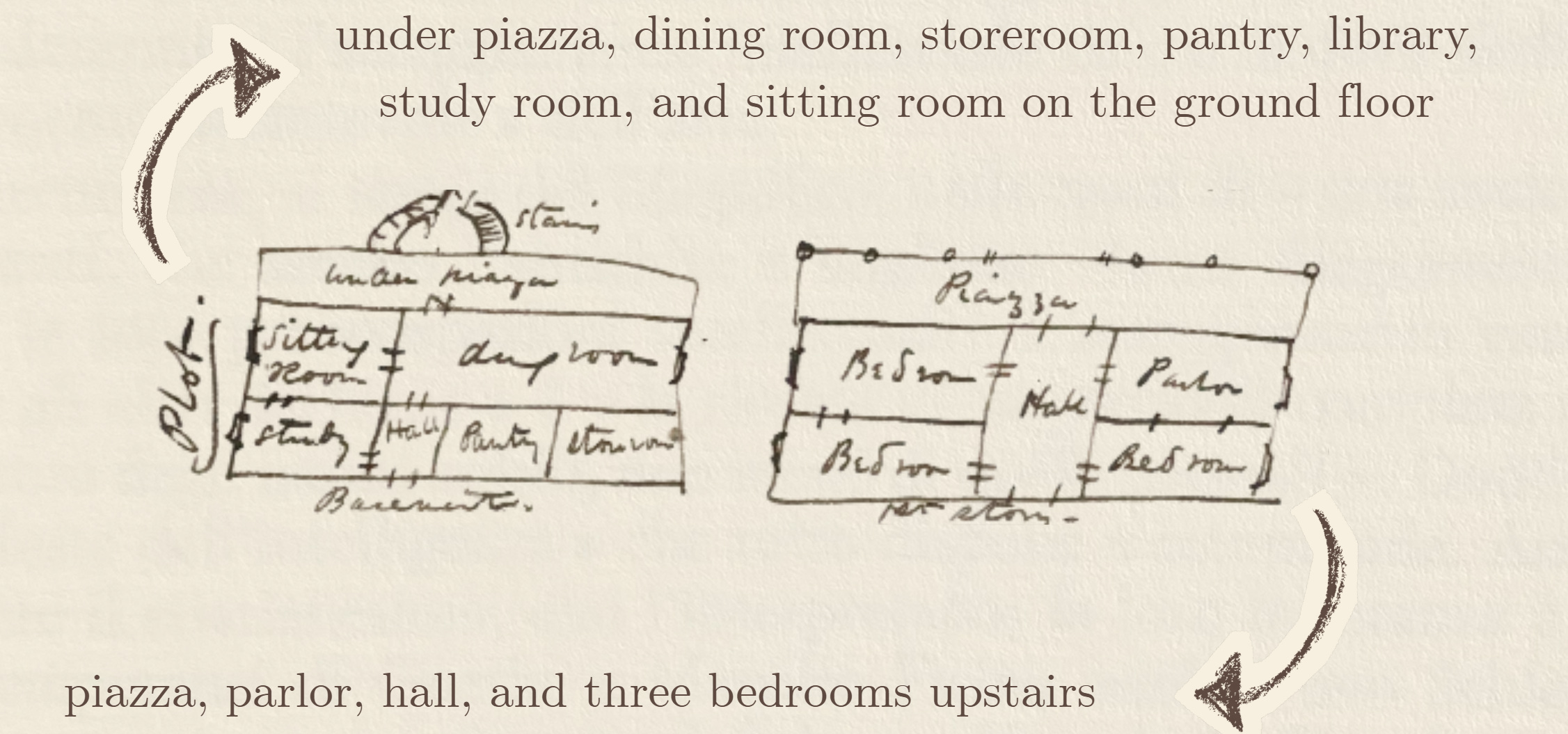
Henry took great pride in his Greensboro residence, which he acquired only a few days after his wedding. In a letter dated February 19, 1845, he writes that he “bought it since [he] became engaged,” suggesting he likely used Sophia’s dowry to fund the purchase. The property, which sold for $18,817.68 (approximately $824,499.74 today), originally belonged to Dr. John Ramsey Witherspoon (1774–1852), who moved to Alabama in 1826. Despite the popular image of a grand plantation house situated directly beside cotton fields, it was actually quite common in Alabama for an enslaver to reside in a property separate from their plantation.
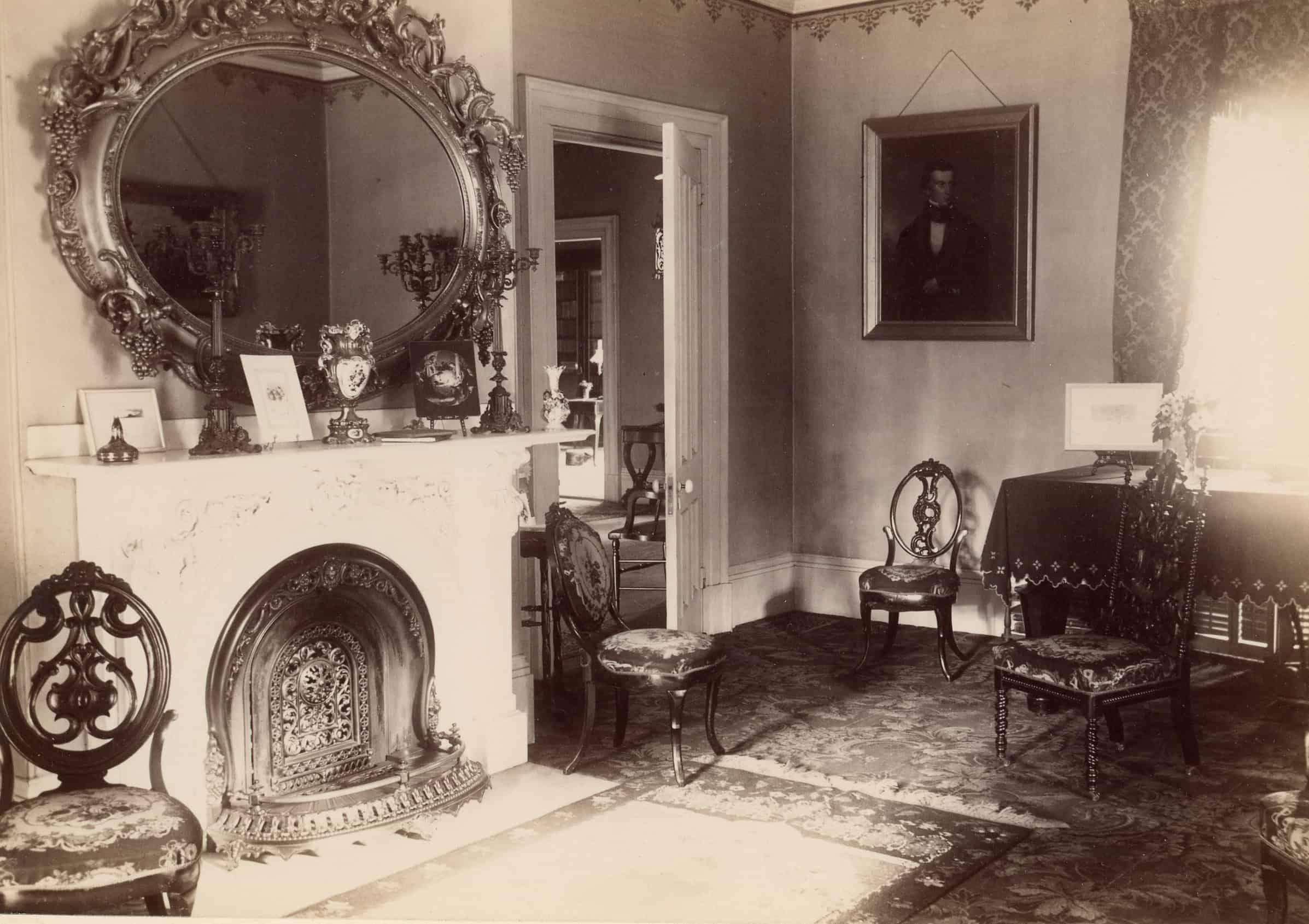
Henry Watson’s new Greensboro estate stood as a physical display of his newly acquired wealth, ranking among the largest in the area. Writing to his mother, Julia, on February 19, 1845, Henry boasted that he has “the best and most convenient home in the whole county, highly improved, with good outhouses and lots, the grounds well laid out and with an abundance of shade trees […].” Pressed to be moving in, Henry bought most of the furniture for the house while on his honeymoon with Sophia in Mobile, Alabama. Upon their return, the process of setting up the home was a collaborative effort involving family members as well as enslaved individuals. Henry sought assistance from his mother-in-law, Mrs. Peck, and several enslaved individuals, likely Ellen or Eveline, who had transitioned from the Peck household to the Watsons’.
In a letter from March 23, 1845, Henry detailed the rapid transformation of the house: “On Wednesday we cut out the carpets and commenced making them up. The Parlor carpet we had made in Mobile and I only had to nail it down.” Within a week, the entire household was established: “Before the next Wednesday every carpet was made and put down, three bedsteads put up, the furniture and groceries all received, opened and put in place and to all appearance we were as regularly and cozily fixed as if we had been keeping home twenty years.”
Social and Political Role
Henry’s fascination with horticulture and domestic affairs was further evidenced by his role in founding Alabama’s first Agricultural Fair in 1850. During this event, participants competed for awards in various categories, including the production of bread and milk, as well as unusual categories such as “negro blankets” and “negro clothes.”
Henry often went on business trips and thus traveled back and forth between Greensboro and other locations, including his family home in East Windsor Hills, Connecticut, New York City, and New Orleans, Louisiana. As a result, Sophia was often left alone in the Greensboro house and was often left in charge of the whole plantation. This worsened in 1848, when Henry left for over four months to take care of his father’s business after he passed in 1846.
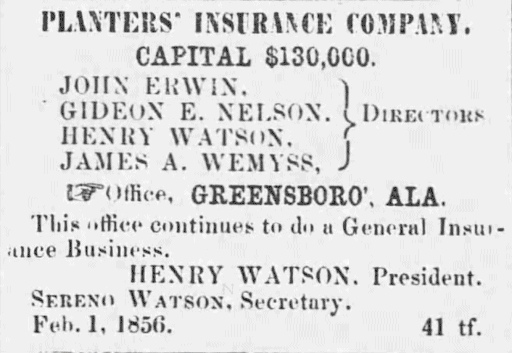
His business trips decreased, however, after 1854, when he established The Planters’ Insurance Company with his mentor John Erwin, Gideon E. Nelson, and James A. Wemyss as directors and his brother Sereno Watson as a secretary. With a capital of over $130,000, the local periodical, the Greensboro Alabama Beacon, described the company as such: “This company is now organized, and is prepared to make insurance upon houses, gin-houses, goods, furniture, cotton, and produce, against loss by fire. Also to insure cotton and merchandise against the dangers of the rivers and of the seas–and to effect insurance upon the lives of white persons and slaves.” As a town of enslavers, Watson’s company was meant to insure the local population of Greene County. Henry’s fortune kept increasing as the years went by, thanks to his insurance company, which he abandoned in 1859 after health issues, and through the cotton his plantation produced.
Moving North to Northampton
However, at the dawn of the Civil War and following Sophia’s contracting tuberculosis, the family moved back north in 1860 to Northampton, Massachusetts, as the city’s natural baths were known to cure disease. Sophia unfortunately died that same year.
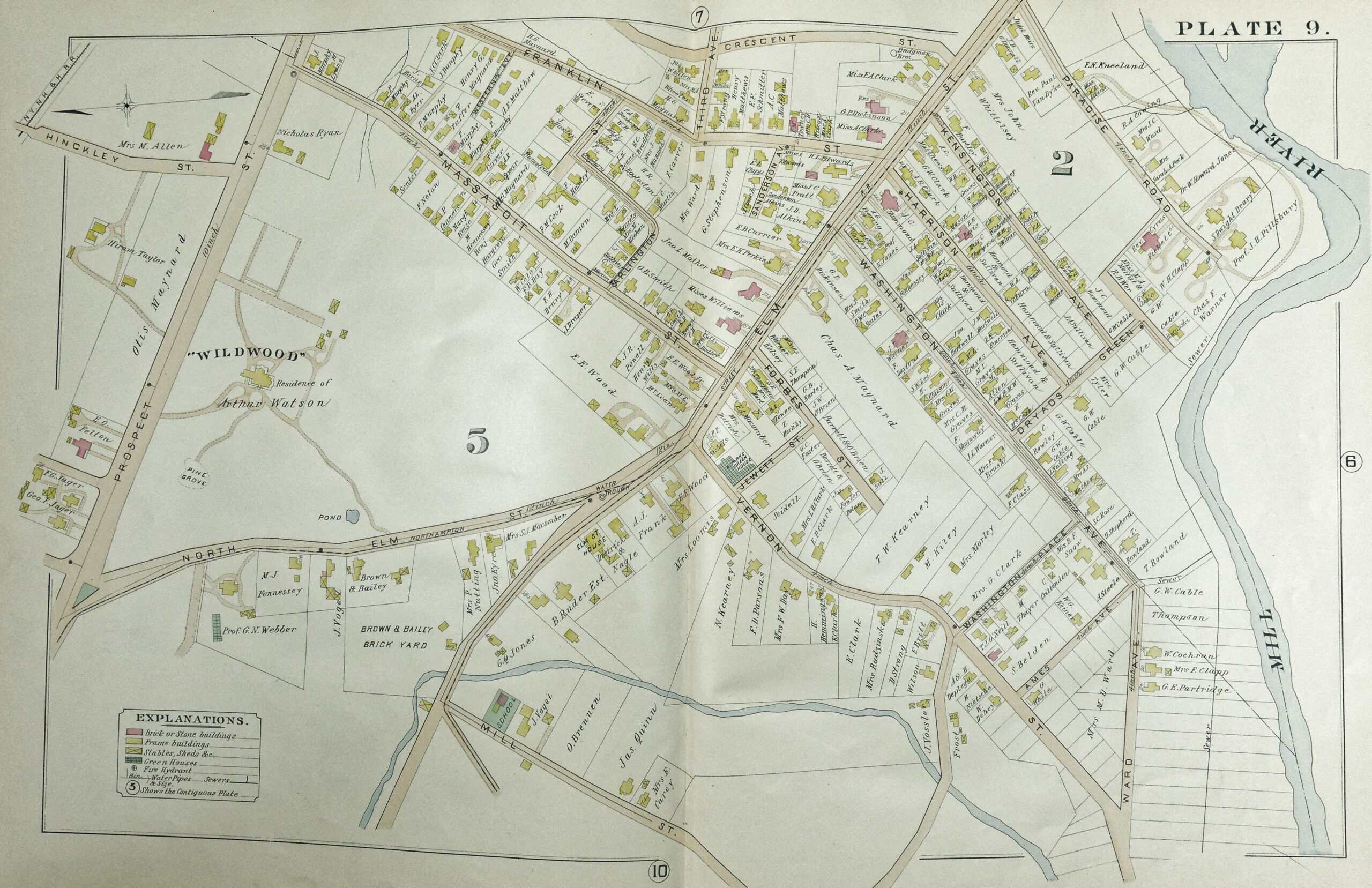
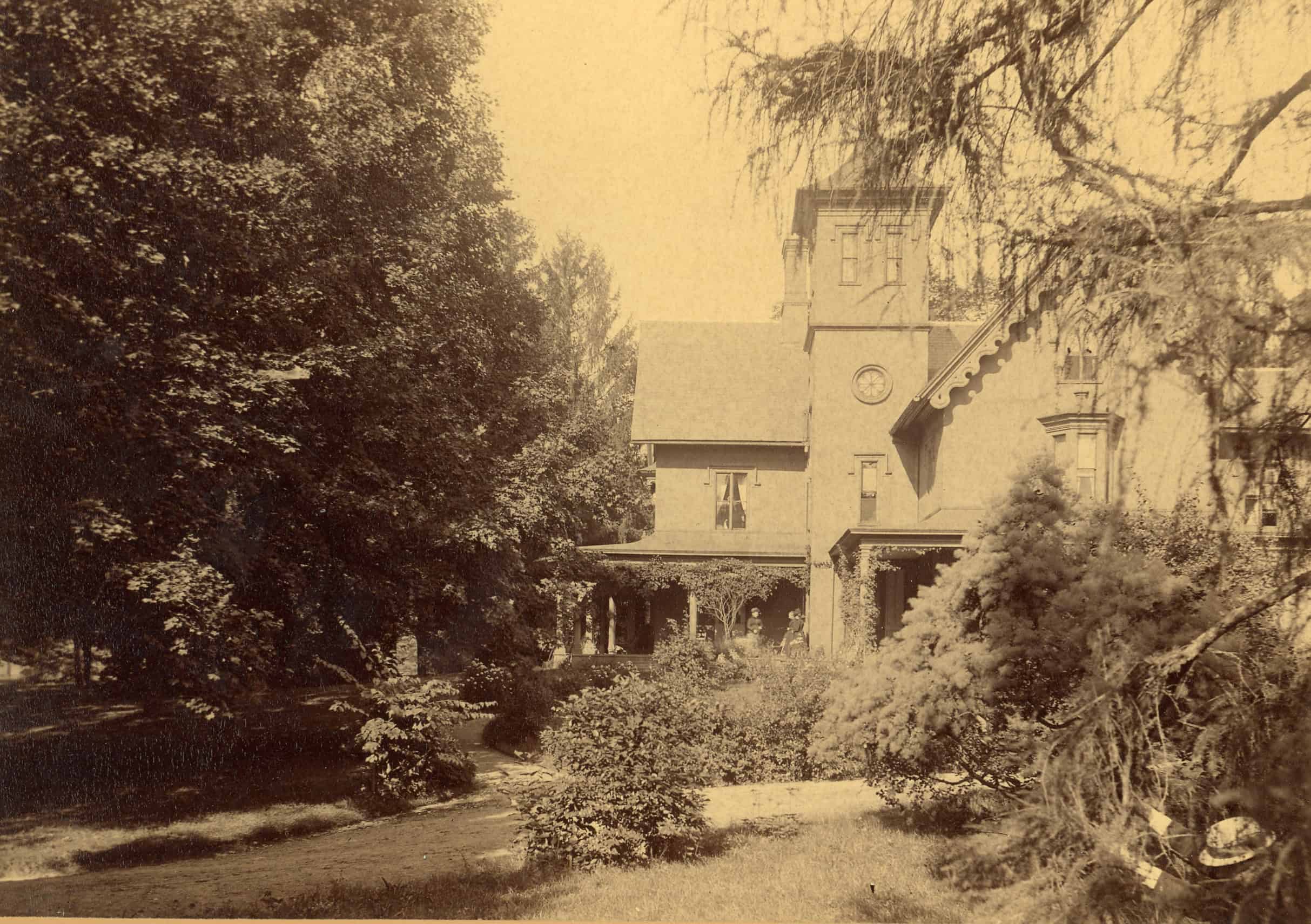
When their friends, the Barnards, decided to relocate from Northampton, Henry Watson capitalized on the opportunity. He purchased their furniture and their estate, “Wildwood,” (the land today is Child’s Park), which the Watson family promptly moved into. The layout of the 46-acre Wildwood estate resembled a Southern plantation house, as it included not only the main house but also outbuildings like a barn and a servants’ house. The Watsons probably decided to settle there because of a sense of familiarity.
However, it does not seem that the Watsons brought any enslaved people with them to Northampton because slavery had been abolished since 1783 in Massachusetts. Additionally, Northampton was an abolitionist town at the time, and bringing an enslaved person up North would have caused Henry some political ostracism.
Instead, Henry decided to hire Irish servants to make up for the domestic tasks that need to be taken care of. A letter from August 17, 1860, to Sophia shows the frustration Henry felt regarding the difficulty of hiring a new cook after he left Elle, the main cook of the plantation, behind in Greensboro:
I did not know what I undertook when I came down here [NYC] to hunt for a cook. […] I intend to bring home a cook if I stay two weeks. I find every thing else but cooks; nurses, chamber maids, servants of all work, etc. but cooks are not so easily found. When found, one will not go so far, another says the family is too large, another will not wash, another will help about the washing, another has a daughter she cannot go away, and leave in the City etc.”
The Watsons’ Influence on Northampton
A year after moving to the Wildwood estate and as the Civil War began, the family quickly left the country to live in Europe, including Germany, Switzerland, and France, while waiting for the war to be over. In the meantime, Henry’s brother, Sereno, was in charge of the Newbern plantation as well as the house in Greensboro.
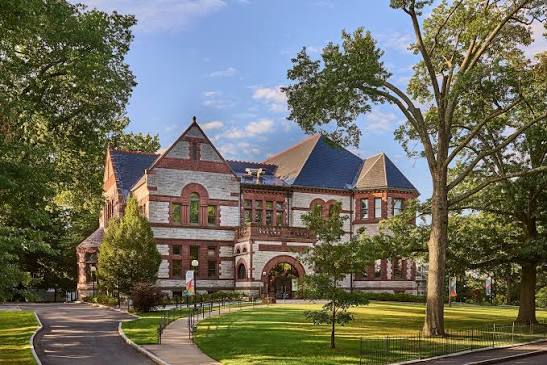
After emancipation reached Alabama in 1865, Henry Watson continued to profit off of his plantation as he practiced sharecropping, most likely with the same families he had previously enslaved. Henry and his family became important figures of Northampton’s social and political landscape, as a trustee of the Clarke School for the Deaf. Arthur, for instance, became the mayor of Northampton in 1900 and remained on the board of trustees at Forbes Library for decades. Rosa and Ella donated a lot of the family items and papers to both Forbes Library and Historic Northampton. Henry died in 1891 and is buried at Bridge Street Cemetery in Northampton, Massachusetts.