Elizabeth/Lizzy
Elizabeth or “Lizzy” was born on the Watson plantation in 1845 and enslaved there until 1865 when she became free at age 20.
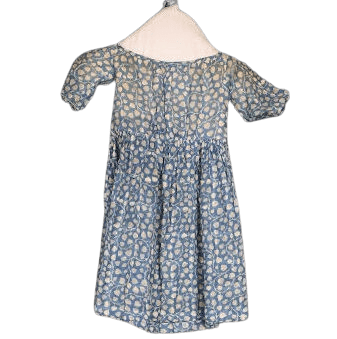
Lizzy’s Childhood
Elizabeth, or “Lizzy,” as she would come to be known, in the Watson household, was born in 1845 to another enslaved woman, Patience, and her husband Pleasant. Patience and Pleasant were some of the young single men and women Henry Watson purchased in 1844 to wed to each other so as to reproduce and create more wealth for him and his family.
Lizzy was her mother’s first child and the only one to survive. When Lizzy was 3 years old, her mother and new brother Daniel died from the same sickness that infected many of their fellow enslaved people and killed another child named Alexander, the son of an enslaved woman named Esther.
Her Mother’s Death
We do not know exactly what the illness was, but Sophia Watson believed it either resulted from or was exacerbated by malnutrition for children on the plantation. In a letter to her husband Henry on June 26,1848, as the illness spread, she wrote:
I begin very much to fear that the children are neglected at the plantation. Peggy complains that she has nothing that they can eat when they are sick but fears of them will eat rice-mollasses is not good for them and they have no milk. I think you will have to keep a cow down there to furnish them with milk.

Lizzy would have been one of these children raised on the plantation with little to no access to nutritious food. When her mother and brother got sick, she was brought up from the Newbern plantation to the Greensboro house, where her mother and brother were being cared for, and where she likely continued to live after her mother’s death.
Work as a Seamstress
When Lizzy was old enough, Sophia Watson selected her to become a seamstress. She would have likely been trained by people like Ann Maria, who herself was taken as a young girl from the plantation into the household to be trained as a seamstress. On May 31, 1855, Ann Maria died, and Lizzy was left alone.
A few years later, on June 23,1859, Harriet Watson wrote to Sophia, saying:
Lizzie thought for a few days that it was ‘mighty lonesome’ and was slightly affected by a spirit of drowsiness. She has now overcome it and appear to like her daily allowances of work, with its variety, is ready for sewing … every morning, has made Levina’s two dresses, … the mending, and hemmed five pairs of drawers for Ella.
From this letter, we know that the majority of Lizzy’s labor was mending previously made garments for all members of the house, construction of new garments for the white Watson family children such as Ella, and the construction of garments for her fellow enslaved people in the house, such as Lavinia.
Lizzy, like many of her enslaved seamstress counterparts, would have travelled back and forth between the household and the plantation in Newbern. On June 27, 1858, Julia Watson III wrote to her father Henry Watson that “Uncle George, Lizzie, and Louveania went to the plantation yesterday.”
This reference to George, Lavinia’s father, as “Uncle George” displays the false familiarity the white Watson family members felt and expressed towards the Black people they enslaved. Lizzy and Lavinia are frequently written about together, mentioned as playmates for the young Watson children, but also as forced child laborers. In many letters, Lizzy is mentioned briefly as sewing, as she does in an undated 1859 letter from Henry Watson to his wife where, in addition to the many goings on in the household, he writes merely “Lizzy sews.”
Relationship to the Watsons
This false, exploitative familiarity appears again when the family finally leaves the plantation to move to Northampton. In a letter from Henry Watson to his daughter Julia on July 10, 1859, he wrote:
“Remember us to George, Anthony, Milly, Aunt Phillis and Lizzy and Lavinia and to Carolina. We hope they are all well and getting along well. I wish they could know how much pleasure it gives me when they do right.”
While referring to Lizzy and her fellow household enslaved people as generous and kind, he does not forget to remind them to “do right.” To “do right” in this context is to obey the white overseers the Watsons have left in their place to manage the plantation in their absence. In this case, Henry is referring to his own brother Serano, who he left in Greensboro to oversee the household enslaved people as well as their counterparts on the plantation in Newbern, continuing to build his wealth through cotton farming.
Near the end of the Watsons’ time in Greensboro, Lizzy’s role evidently expanded beyond mere sewing to also include rearing the remaining children who had yet to join their parents in Northampton. Serano Watson wrote to his brother Henry on August 12, 1859, that he is “contriving ways to keep Lizzy and Phillis engaged and overseeing the children.” This is the last mention of Lizzy in any of the Watson correspondence.
Our final reference to Lizzy comes in the April 1st 1865 entry in Henry Watson’s “Record of Negroes Ages Births and Deaths,” when she is included among 123 other enslaved individuals freed at the end of the Civil War. Lizzy was 20 years old when she became free.
