Sawmill Hills Conservation Area
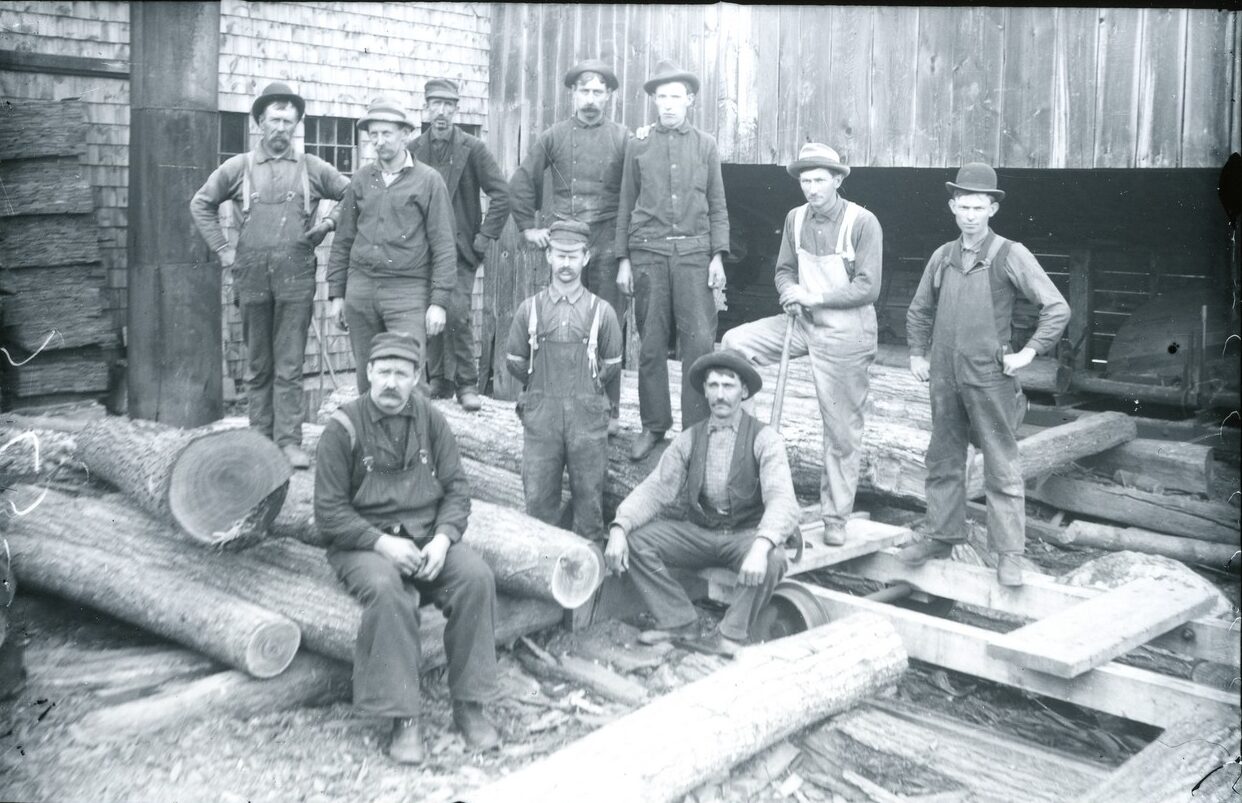
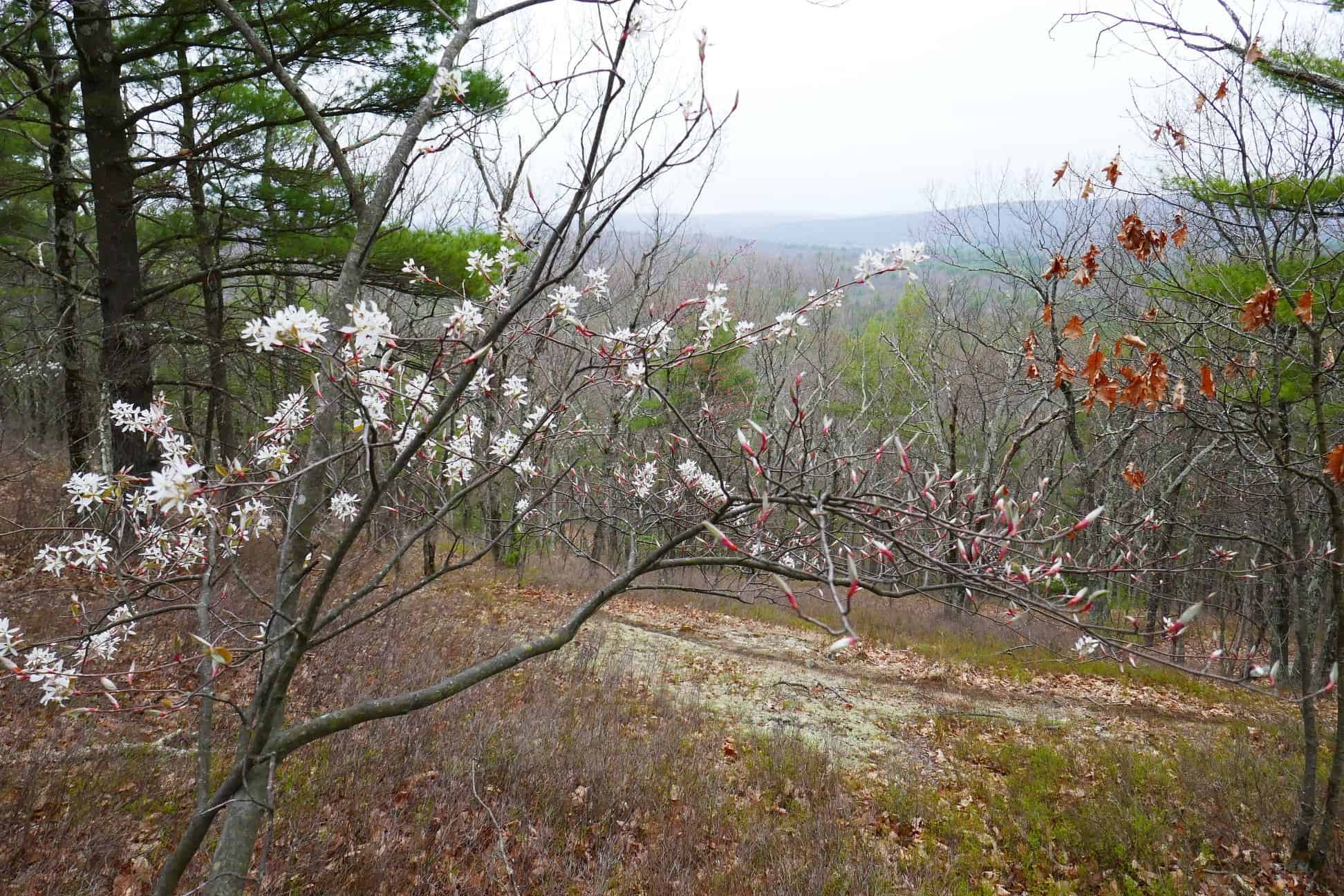
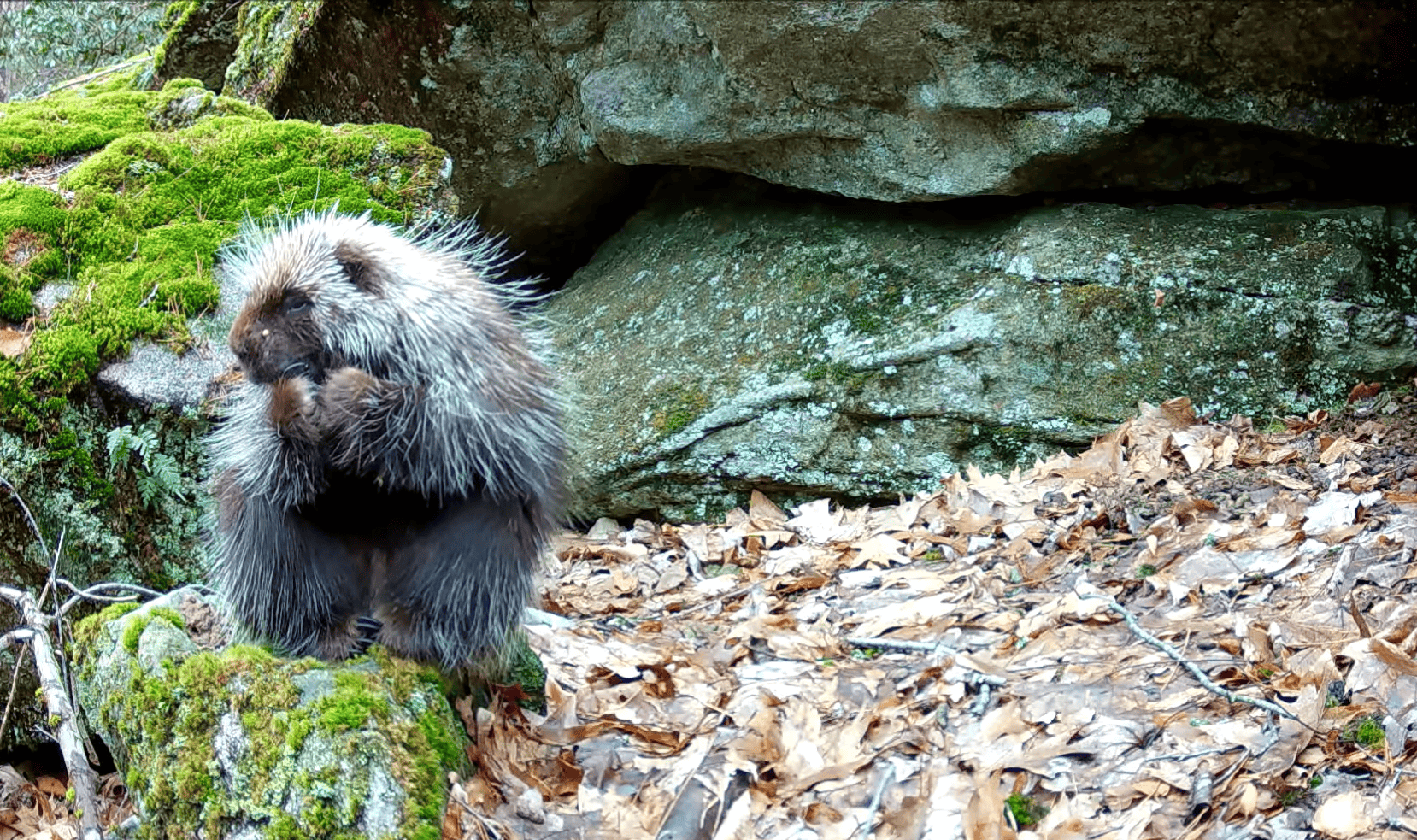
Image 1: Loggers working on West Farms, Northampton, MA, c. 1886-1902. Photograph by the Howes Brothers. Historic Northampton (ID no. 1975.40.56). Image 2: Photograph of nature in Sawmill Hills. Image 3: Photograph of a porcupine outside of its den in Sawmill Hills. A tick can be seen on the porcupine’s nose.
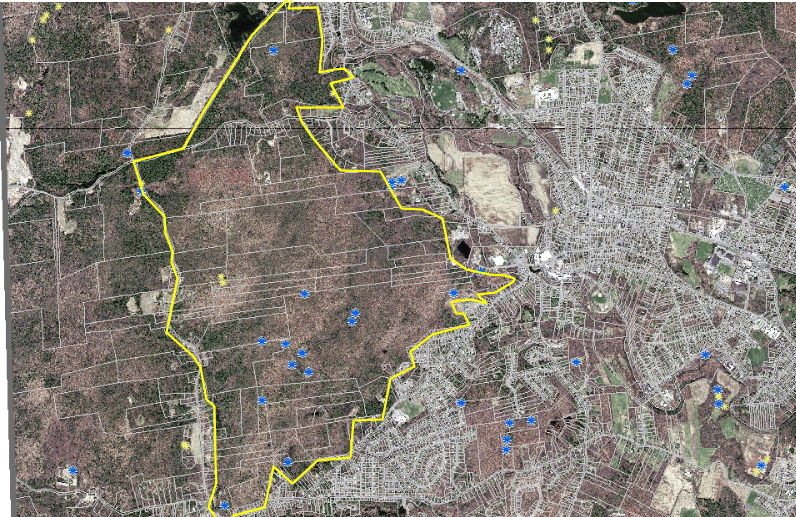
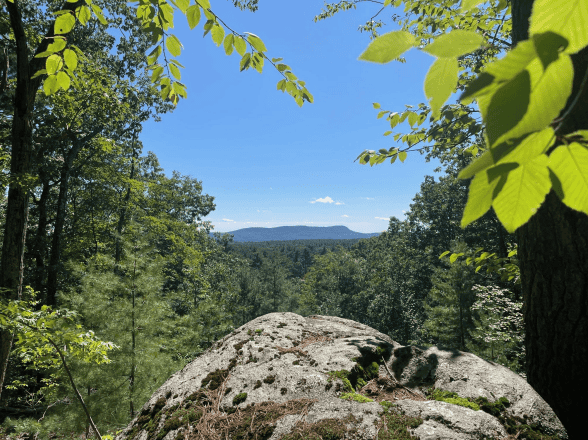
Located less than a 15-minute drive from downtown Northampton, the Sawmill Hills are one of Northampton’s largest roadless areas, stretching 2 1⁄2 miles north to south and 2 miles east to west. The 2,200 acres include rough and rugged terrain (cliffs, countless rock outcrops, steep slopes, and thin, acidic soils) along with headwater streams, perched wetlands (separated from the main groundwater), and more than a dozen vernal pools.
The landscape’s rugged topography and shallow soils made for such poor pasture that when early English settlers divided the land in the late 1600s, they carved this area of Northampton into long, narrow woodlots to meet the firewood and timber needs of people living in what is now downtown.
By the 1830s (and perhaps earlier), commercial-style logging was underway. There was one sawmill on the west side of the Sawmill Hills, along what is now Sylvester Road. It was owned by the Bartlett family and powered by Parsons Brook. There was another sawmill on the east side of the Sawmill Hills near Spring Street, which pulled power from a small tributary of the Mill River. According to a Hampshire Gazette article (9/21/1880), Bartlett’s Sawmill gave this range of ridges its place name.
During the 19th century, a large portion of the Sawmill Hills was purchased by the Brown & Bailey Brickyards (which was located near the present-day Northampton High School). The company harvested the wood to fuel the fires that baked their bricks. By 1880, “a large fraction of it [was] young growth” (Daily Hampshire Gazette).
Although some logging has taken place during the past century, today the forests on the Sawmill Hills have grown back and are dominated by oaks (red, chestnut, black) and other deciduous species.
In the late 1970s, Floyd Andrus donated Roberts Hill to the city as conservation land. Since then, another 800 acres have been protected as city-owned conservation land. These parcels, together with privately held land, support habitats that are important to wildlife and that offer a network of trails used by hikers and mountain bikers.
For a more complete understanding of the human and natural history of this conservation area, click here.
Wildlife Camera Footage from Sawmill Hills
Wildlife and Mushrooms (Summer 2024)
Serious natural history studies in America took off during the 19th century, including the scientific cataloging and naming of mushrooms. In 1885, Massachusetts’ Julius A. Palmer Jr. published Mushrooms of America, Edible and Poisonous, noting in his introduction: “No country is richer in mushroom food than America…” Palmer also warned to stay away from the Amanitas, most of which contain “deadly and violent poison” and are “extremely common.” This compilation begins with two Amanita mushrooms and reveals the emergence and decay of several mushroom species as well as the wildlife that passes by, and on occasion, interacts with them.
A Fungi Focus (Summer 2024)
A glimpse into the fungi in Sawmill Hills Greenway & some bonus wildlife views!
A Den of Activity (Spring 2024)
The American porcupine is the second largest rodent in North America and is found throughout much of the U.S., Canada, and even into the mountains of northern Mexico. Nevertheless, because its preferred habitat is rocky, wooded uplands, most of us seldom see them, let alone have a chance to observe their routine behaviors. Having an intimate knowledge of porcupine behavior was, and continues to be, important to Indigenous peoples, particularly because of their use of quills to create elaborate, decorative designs on clothing, bags, belts, moccasins, sheaths, and other items.
February at the Porcupine Den (2024)
Today porcupines are common in Northampton, living and denning in areas with forested, rocky uplands. A naturally solitary species, the porcupine is active year-round, mostly at night. At the time of year in this video, it feeds on the bark and buds of several kinds of trees and shrubs. Aside from the stream, in the first night scene, you’ll hear the porcupine’s soft, low voice and then see some spinning, a behavior that is common and thought to be defensive. This species is not mentioned in 19th-century documents for Northampton and for good reason. At that time, due to deforestation, porcupines were rare and restricted to the northwestern corner of Massachusetts.
See our Youtube channel playlist “Wildlife in Wilder Places” for more wildlife content at Fitzgerald Lake Conservation Area.
ADDITIONAL RESOURCE
Kestrel Trust, “Mineral Hills Conservation Area.”