Leeds
Introduction
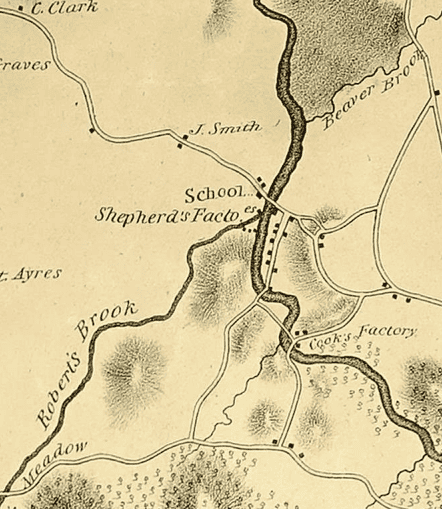
“The manufacturing village of Leeds lies about four and one half miles west of the business center of Northampton, in a deep and narrow gorge, on the banks of Mill River… For many years it was the most active part of the town; its citizens were prominent in town affairs, and exerted an influence greater than the population of the village would seem to warrant. They were men of enterprise and energy, whose power was felt and acknowledged by all.
The village embraces a portion of what was formerly known as the Rail Hill School District. The first house built with its limits was the dwelling of Luke Day, which was erected in the year 1793…
The business of Leeds has always been conducted by men of sterling worth… Prominent among them was Col. James Shepherd, the founder of the village. He was one of the selectmen of the town, and for many years one of the leading men in Western Massachusetts…”
— Northampton Directory 1875-6, Gazette Printing Company, Northampton, Mass., 45-50.
Highlights of Leeds History
Mulberry Street Mill – Shepherd Woolens to Nonotuck Silk
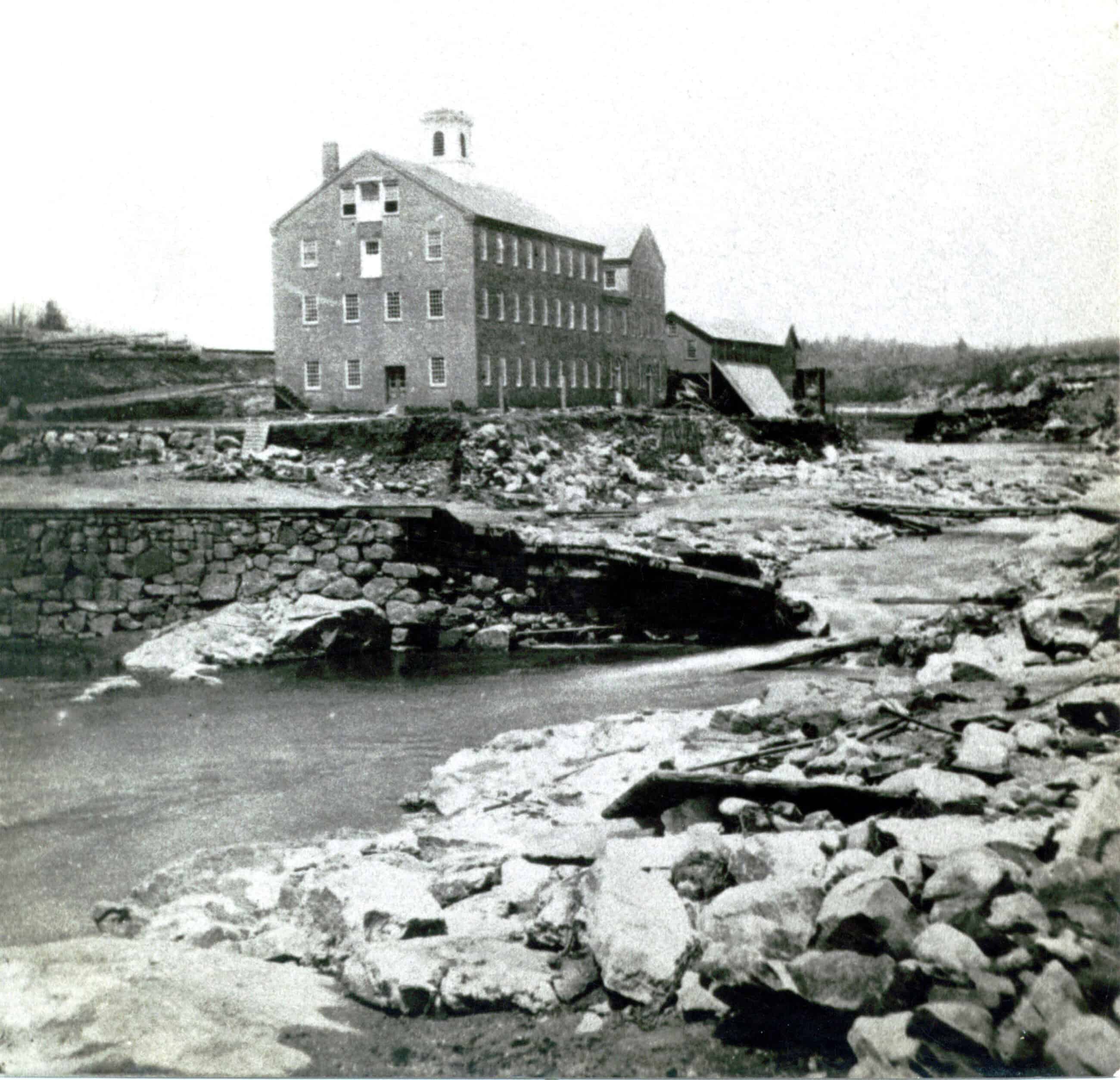
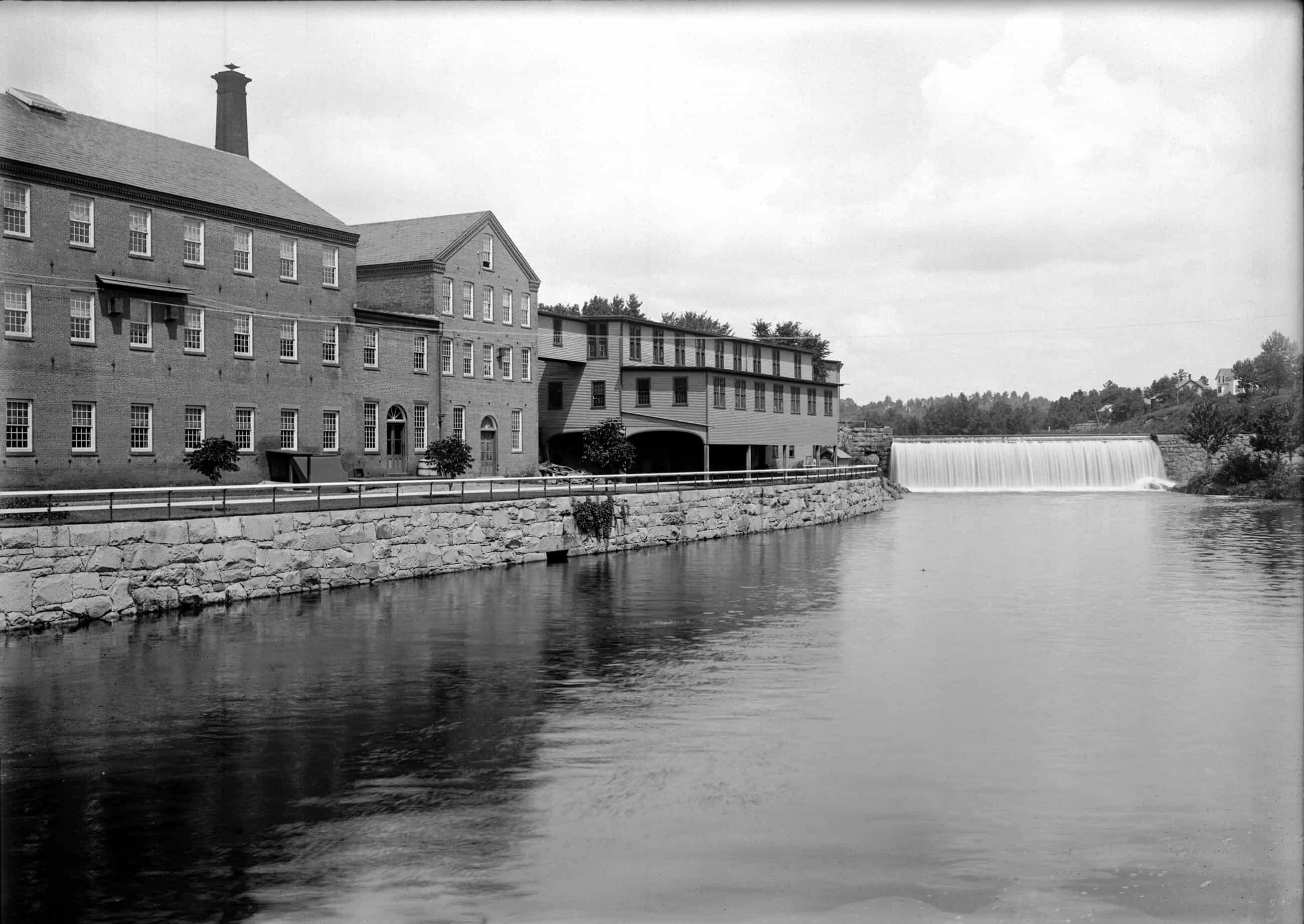
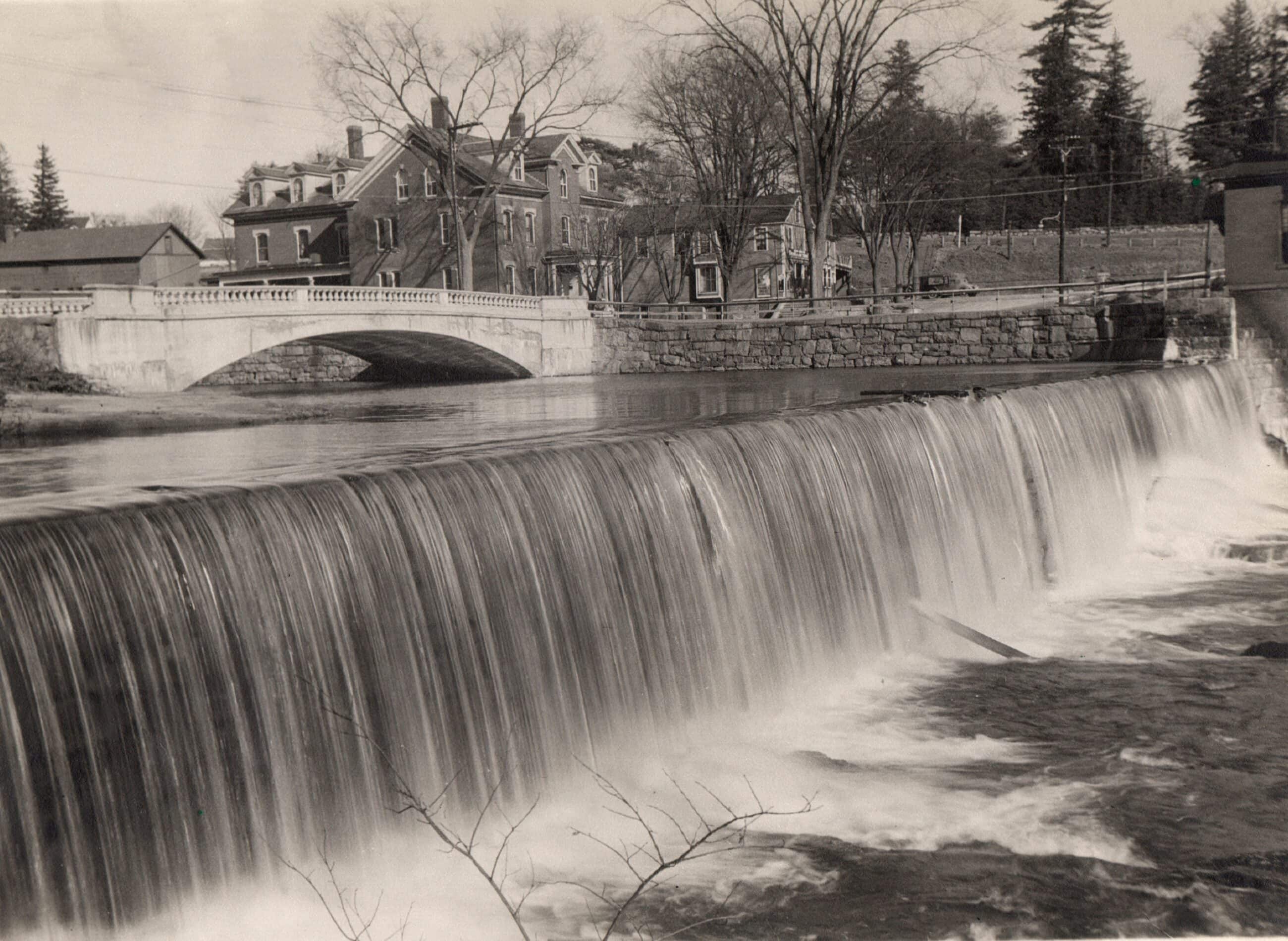
In 1809, colonel James Shepherd purchased Joseph Burnell’s saw mill, which stood on the southeast corner of Mulberry and Main Street. Col. Shepherd first used it as a cotton mill. He soon went into business with his cousins, Charles and Thomas, who were sheep farmers. The Shepherds outfitted the mill for manufacturing woolens and built a second mill on the Northwest side of Mulberry. The village, known then as Shepherds Hollow, grew considerably. The Shepherds were the first manufacturers of broadcloth. Their business thrived until a wool tariff was imposed. They closed down in 1828. In 1830, Edward Robbins bought the Shepherd mills and started the Northampton Woolen Company. In 1858, Nonotuck Silk Company bought and converted the mills for the manufacture of silk.
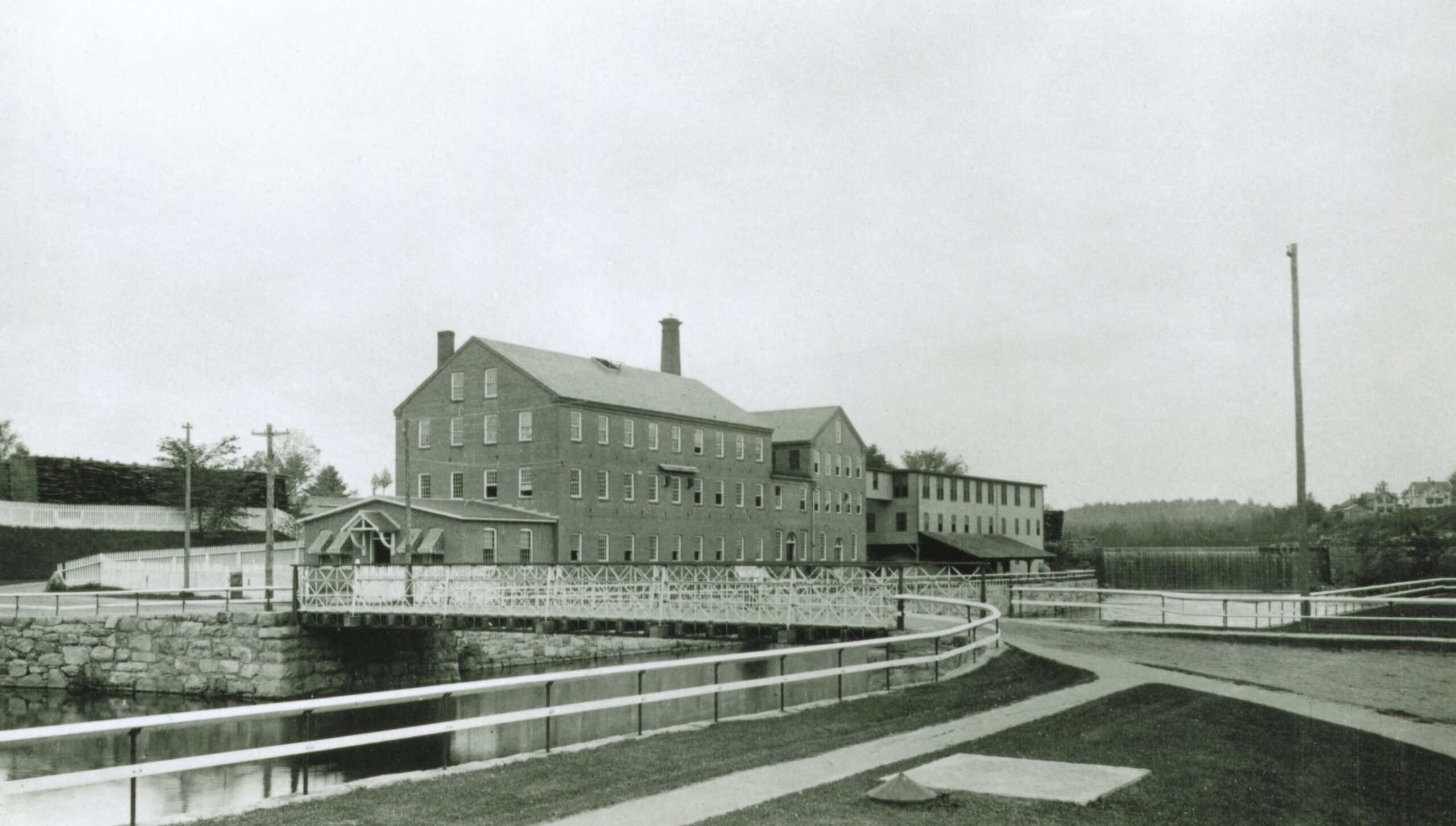
Left to right, top to bottom:
- The Mulberry Street mill was the only mill in Leeds to survive the 1874 Flood. Floodwaters veered to the eastern bank destroying the boarding house, bridges, dams and mills down stream. Courtesy of Knowlton Bros., Forbes Library.
- Mulberry Street millpond and Top Dam, c. 1940. Forbes Library.
- Middle Dam below Mulberry Street Bridge before 1955 hurricane. Robert P. Emrick, Forbes Library.
- Mulberry Street Bridge and mill, c. 1940. Robert P. Emrick, Forbes Library.
Leeds Prosperity, Devastation, Renewed Productivity
The village of Leeds was the leading economic center of Northampton during the 1800s and early twentieth century. The mills buzzed with production of cotton, then woolens, then silk. Leeds mills were the first in the United States to manufacture woolen broadcloth, vegetable ivory buttons, and Machine Twist, Corticelli’s famous silk sewing thread.
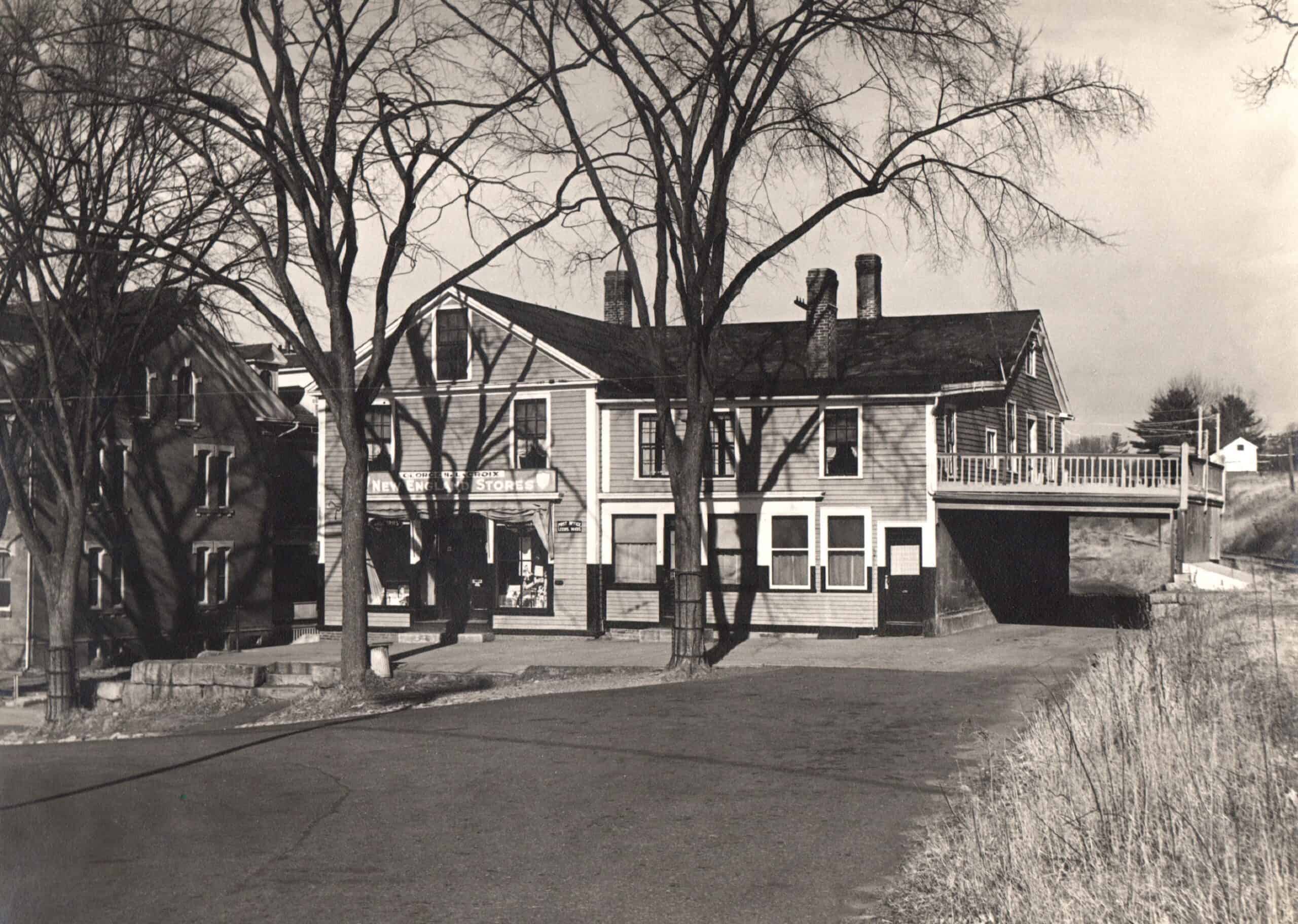
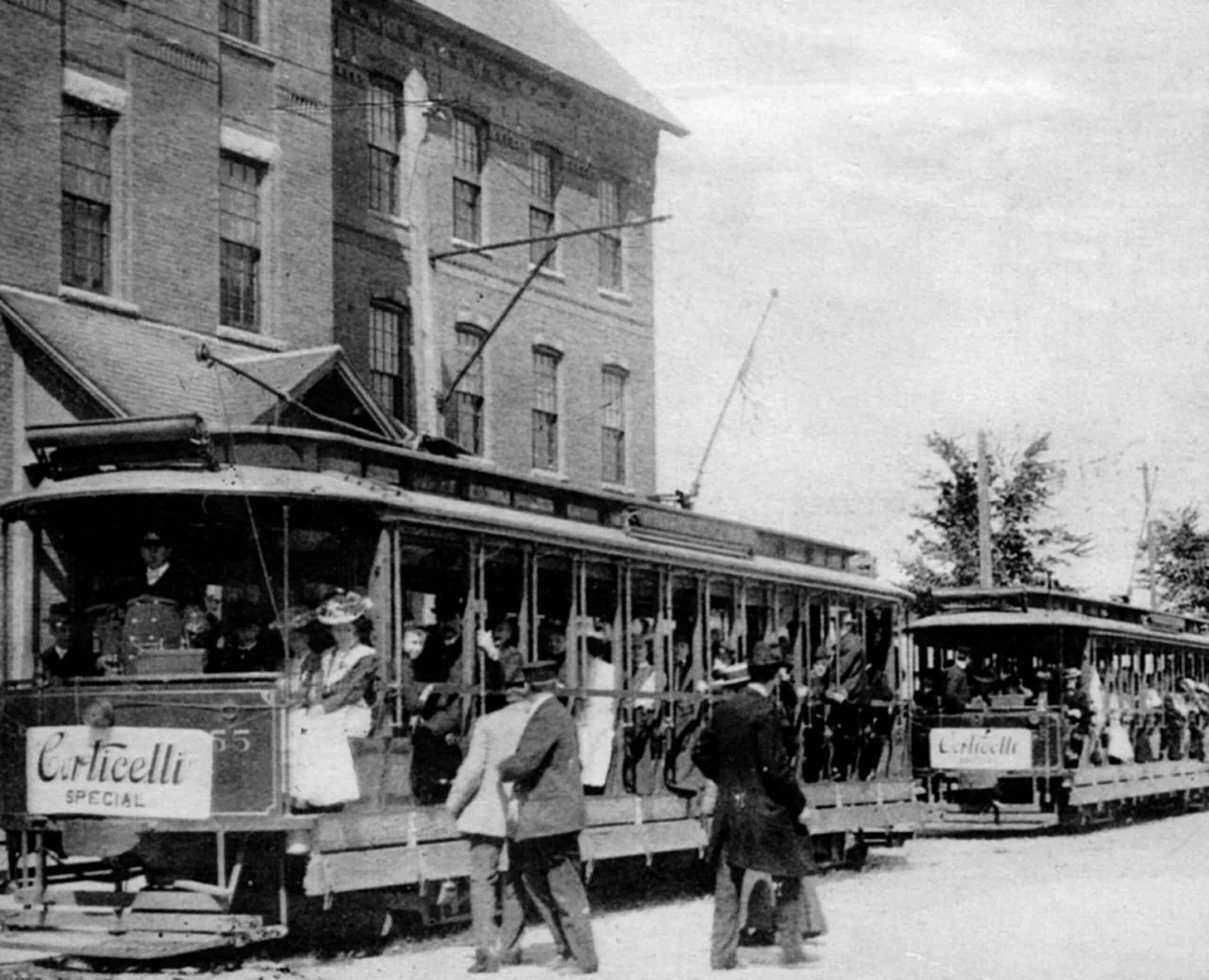
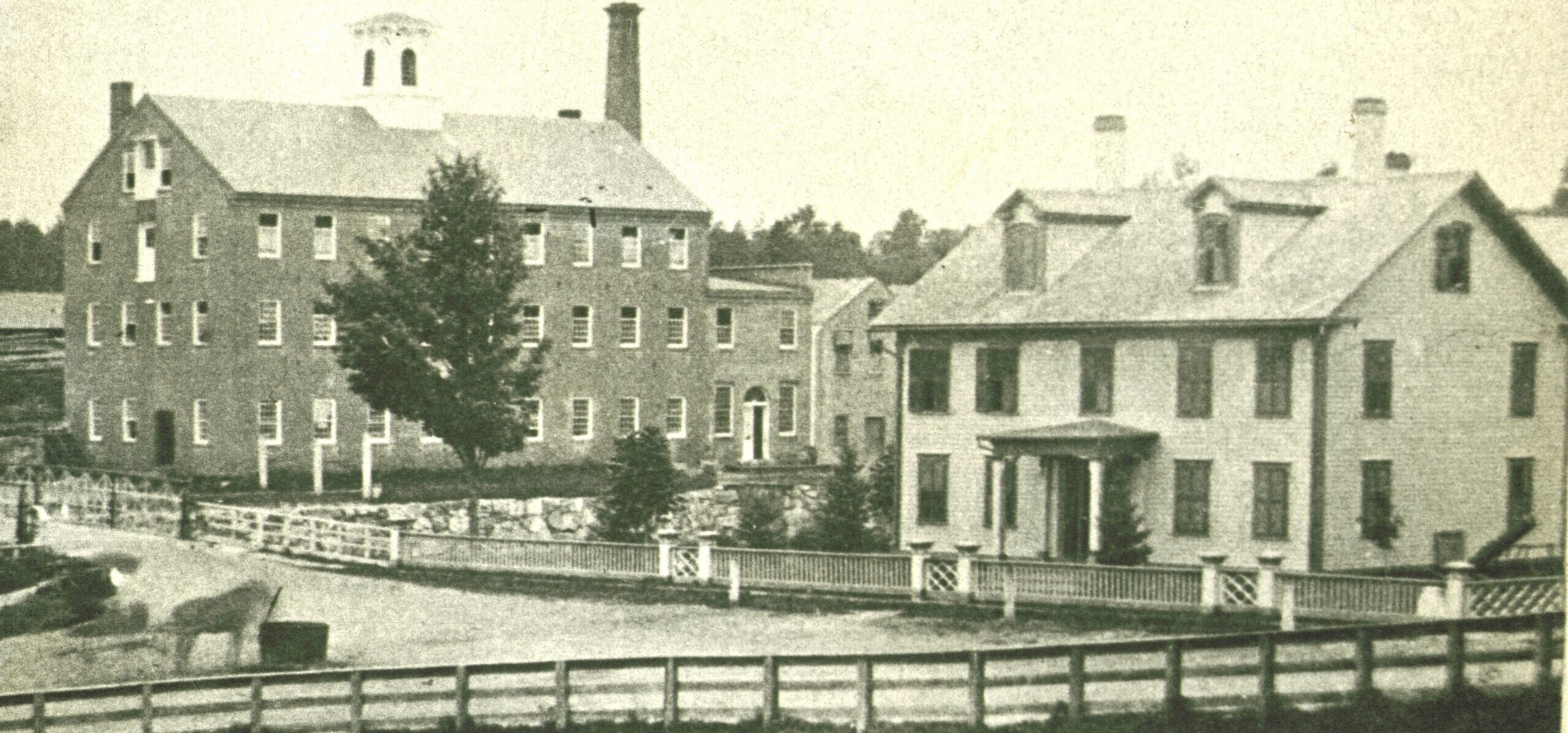
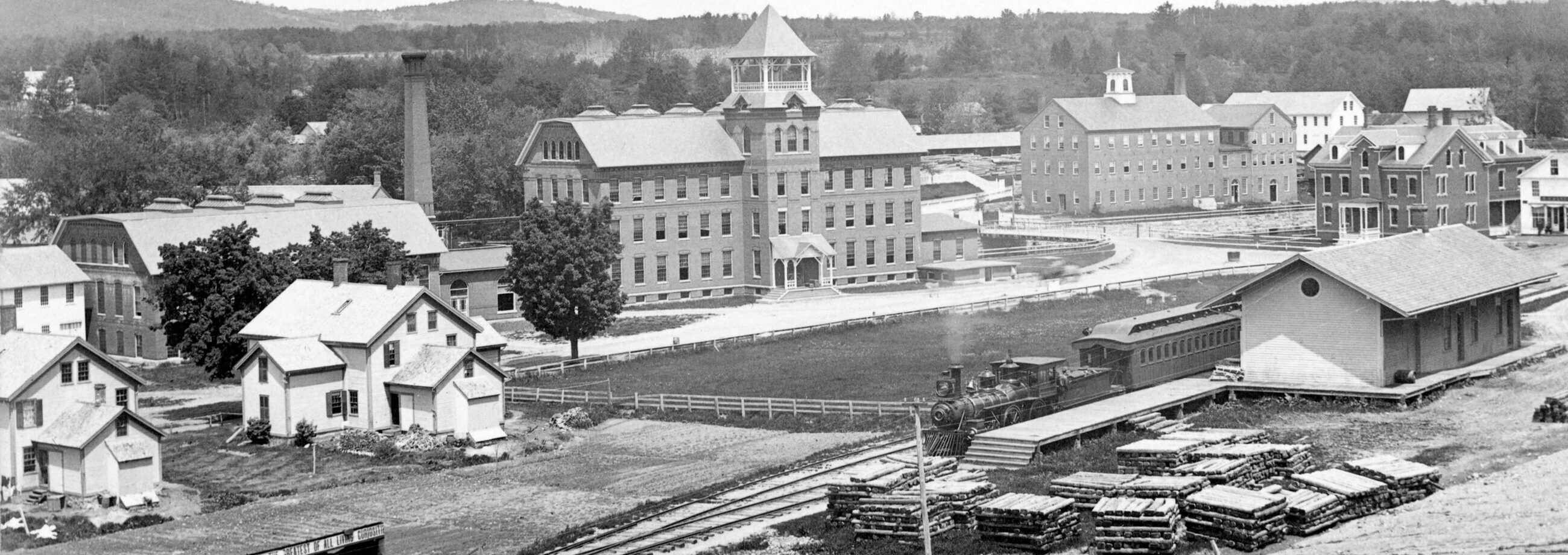
Left to right, top to bottom:
- In 1827, the Northampton Woolen Co. operated a store on this corner. In 1842, Benjamin North, a popular merchant, rebuilt the store and was its proprietor until 1862 when he sold it to the Nonotuck Silk Co. Photo: Courtesy of Robert P. Emrick, Forbes Library.
- The Corticelli Trolley stopped in front of the mill building on Main Street. It carried passengers to downtown Northampton. The 1904 photo was provided to the Gazette by the Clarence Beliveau family.
- The Mulberry Street Nonotuck Silk mill and original wooden boarding house were on opposite sides of the Mill River as seen in this 1865 photo. The women workers who lived in the boarding house had a short walk across the Mulberry Street Bridge to their mill jobs. Horses used the water trough at the intersection of Mulberry and Main. Photo: Courtesy of Knowlton Bros., Forbes Library.
- Within two years of the flood, Leeds mills, dams, bridges and the boarding house were rebuilt. Businesses flourished. Photo: Courtesy of Robert P. Emrick, Forbes Library.
First Vegetable Ivory Buttons in the U.S. Made in Leeds
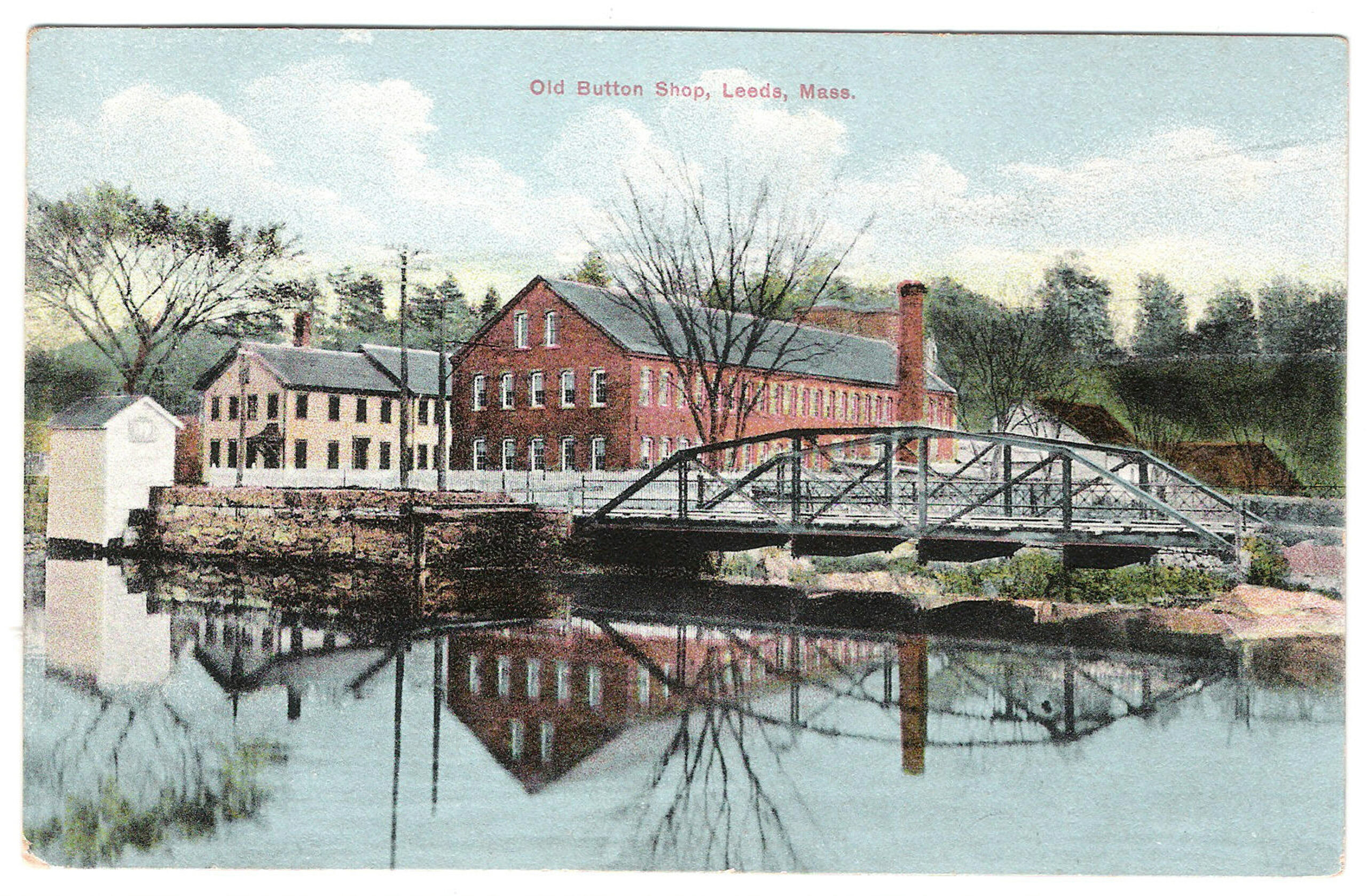
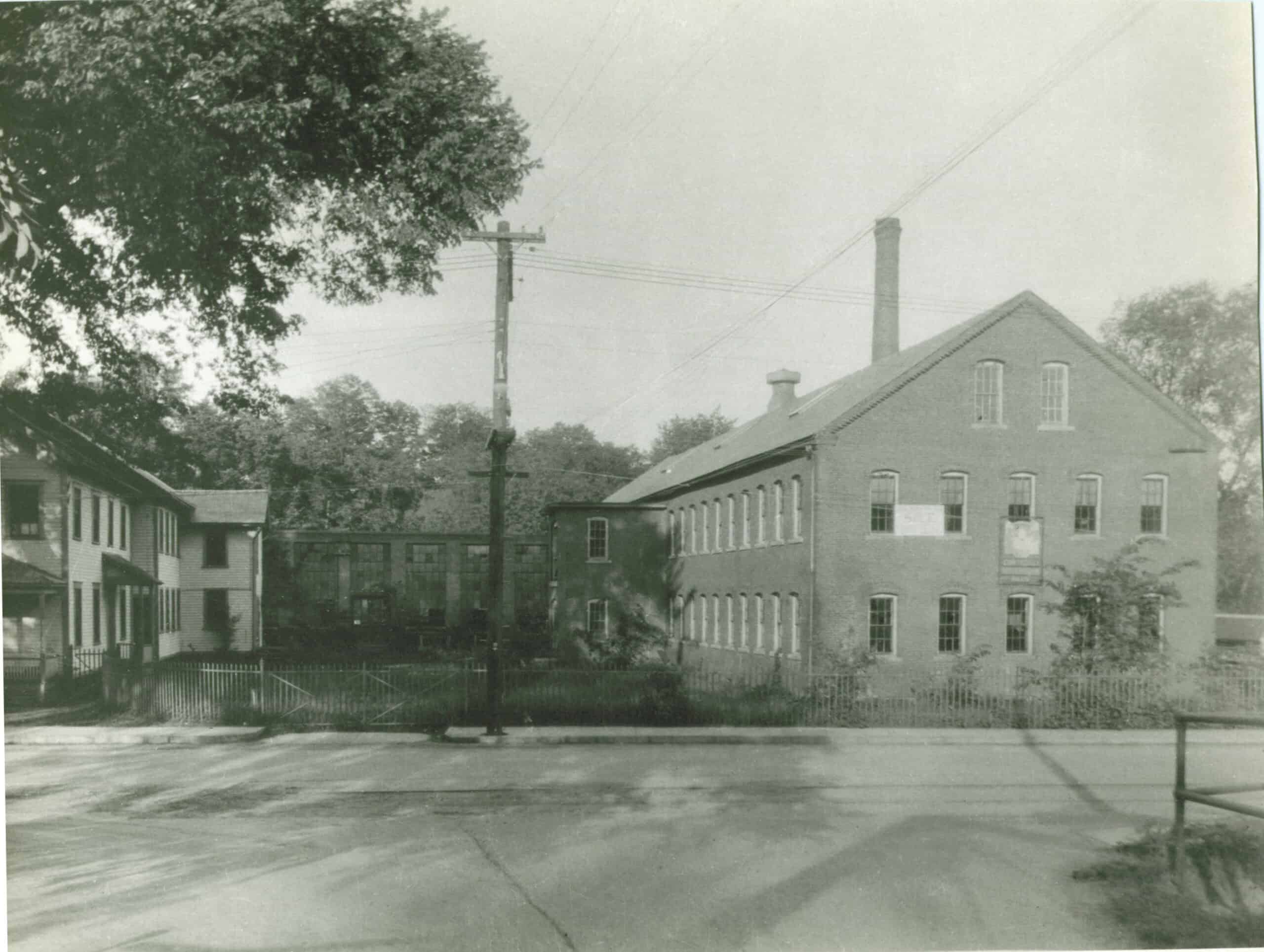
In 1858, investor and industrialist, Alfred P. Critchlow, transformed an old woolen mill on Main Street into the nation’s first factory for vegetable ivory buttons. He imported 600-700 tons of Corozo nuts per year from South America. Employees lathed, carved, etched and dyed the dried shell of the inner nut into fashionable buttons. Before the 1874 Mill River Flood, the mill employed 175 people and produced about 90,000 buttons per day.
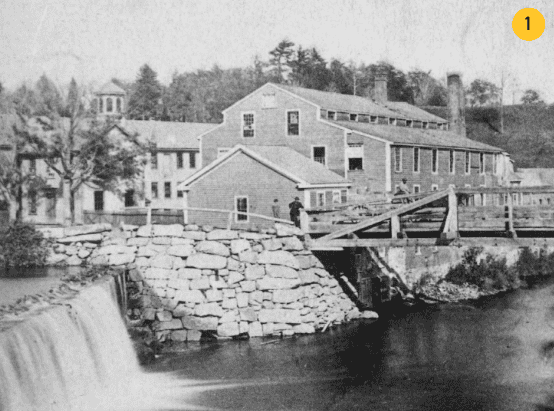
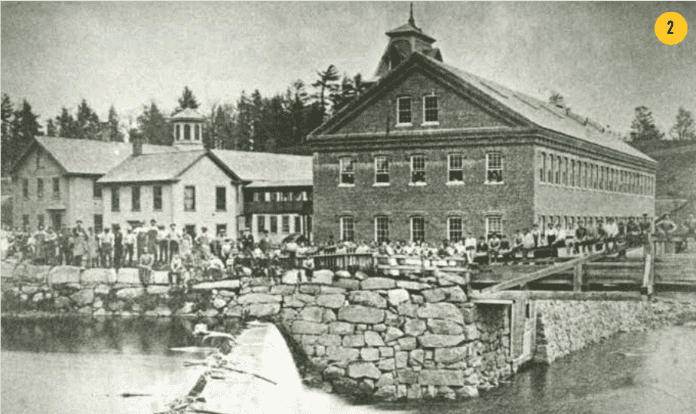
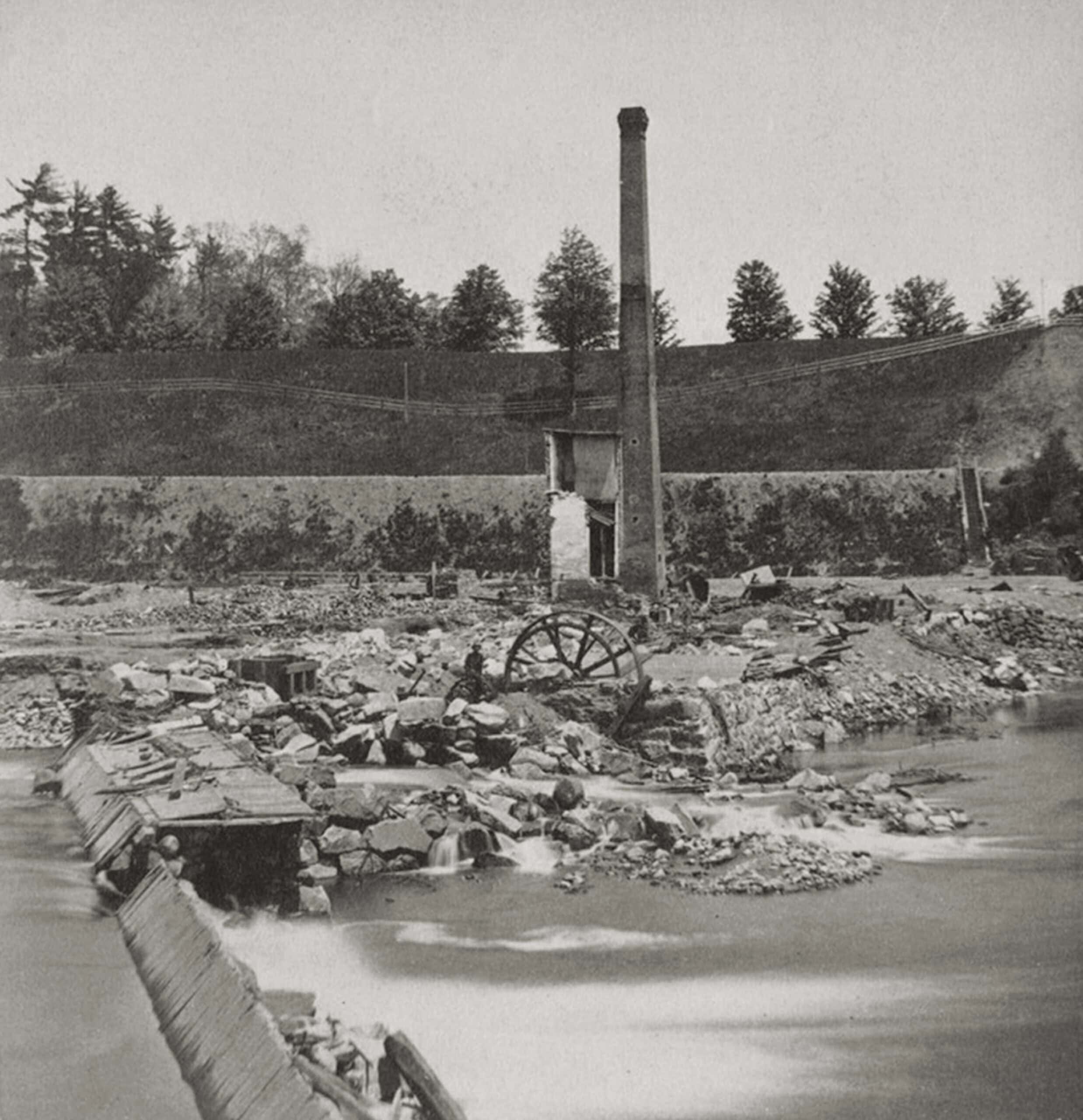
Left to right, top to bottom:
- This is the original wooden mill bought by Alfred Critchlow in 1858 from the Northampton Woolen Co. He built the structure to its left in 1863. The original mill burned down in 1870. Photo: Courtesy of Knowlton Bros., Forbes Library.
- The burned mill was replaced with a three-story brick building that had an overhead causeway leading to the wooden building. A new brick dry-house was in back. Critchlow sold the business to his son-in-law, George P. Warner, before the Mill River Flood. Photo: Courtesy of Knowlton Bros., Forbes Library.
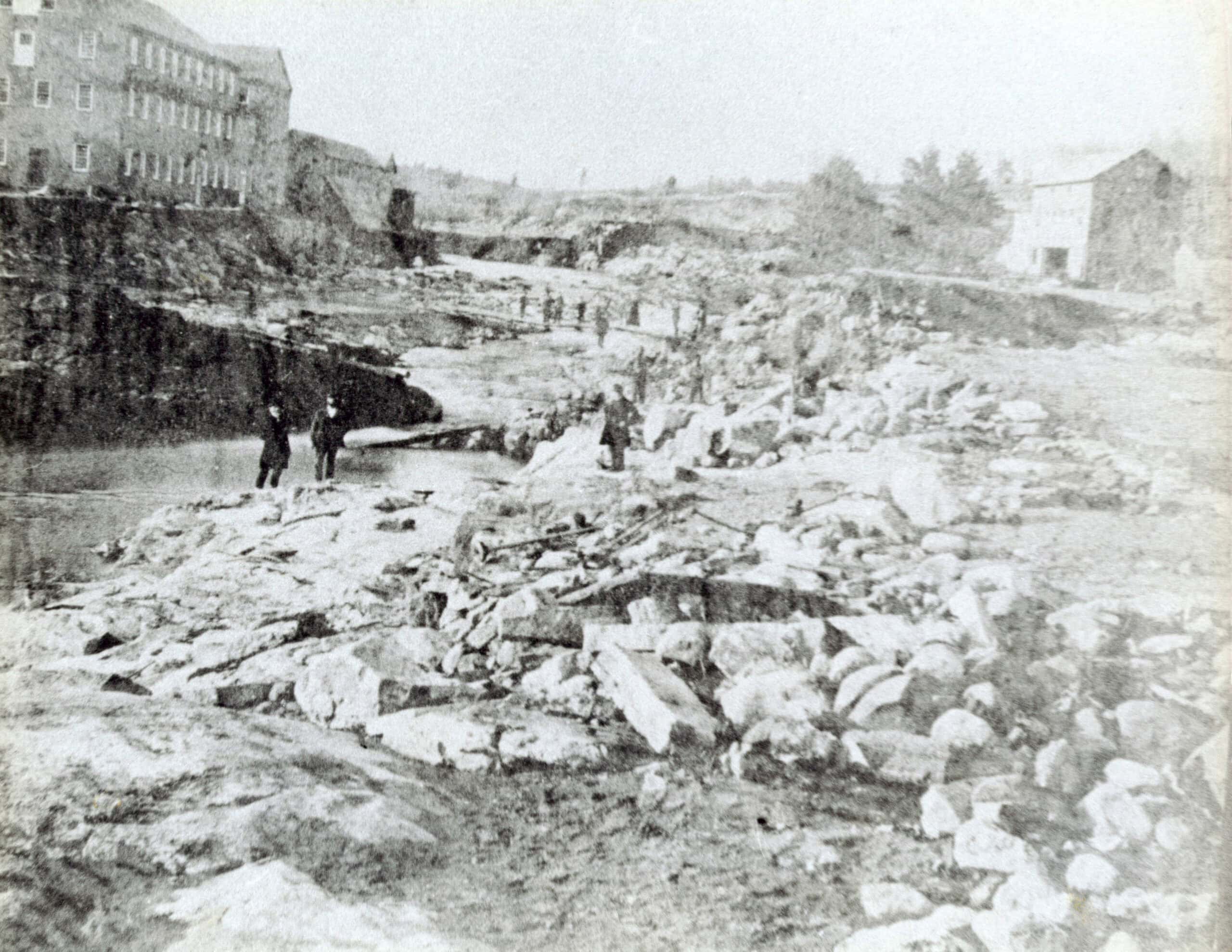
- The 1874 flood destroyed all of the button factory buildings. Only the dry-house’s chimney stack remained standing. Stairs that Critchlow once used to get to and from work can be seen on the hill behind the site. These stairs provided an escape route to higher ground for those lucky enough to reach them before floodwaters hit. More than half of the Leeds flood victims were button mill employees. Photo: Courtesy of Knowlton Bros., Forbes Library.
- The Springfield News Company postcard shows the rebuilt factory after the flood. By 1880 the Leeds button factory had doubled its manufacturing output.
- In 1936 the mill was operated by the Corticelli Silk Co. Photo: Courtesy of Robert P. Emrick, Forbes Library.
Mill River Flood Devastates Leeds Village
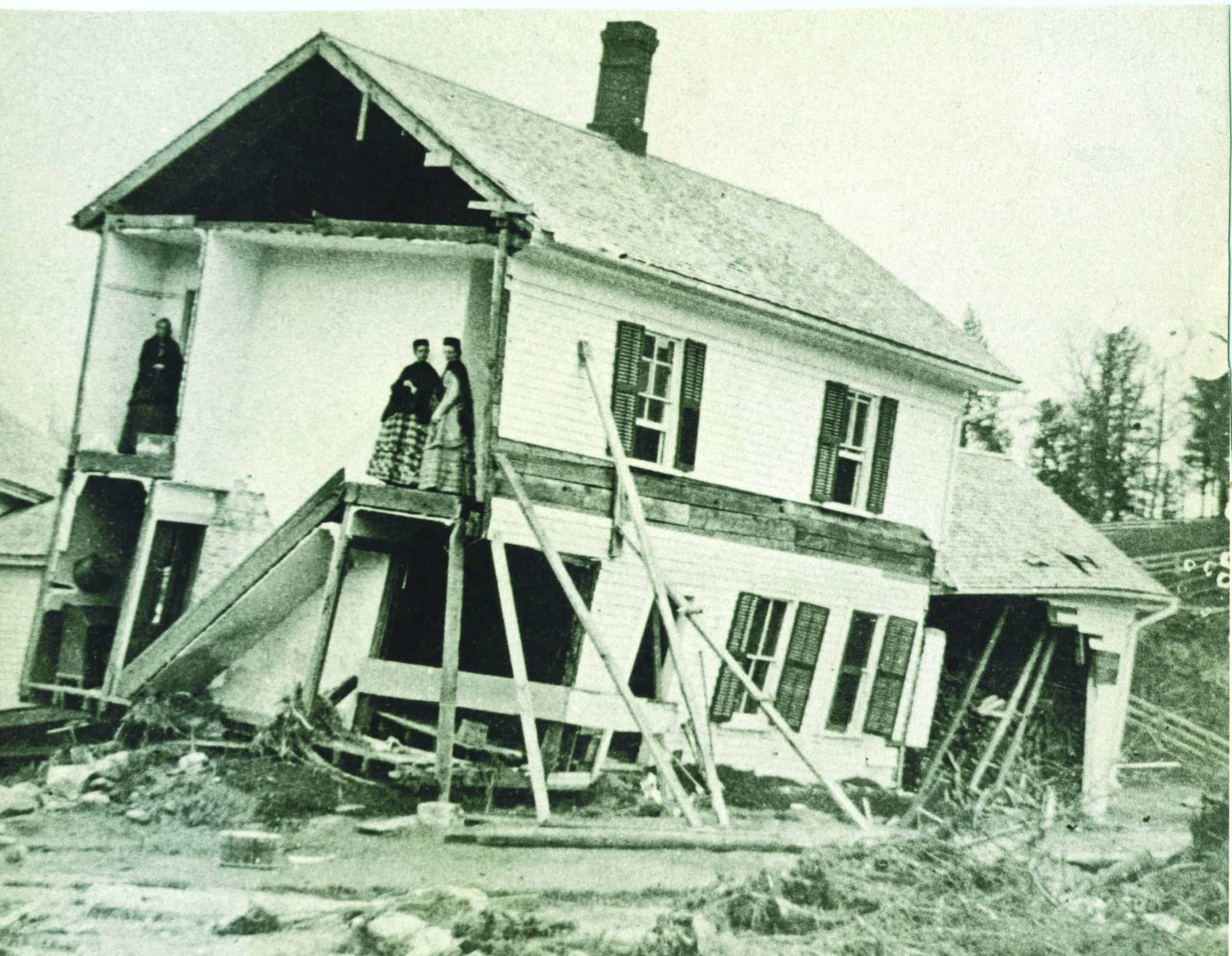
In the morning of Saturday, May 16, 1874, the Williamsburg Dam collapsed, unleashing 600 million gallons of water into the Mill River. Trees, houses, livestock, and boulders came rushing toward Leeds. The mills were already open. Workers and others in the path of the flood had little time to run to higher ground. Fifty-one Leeds residents lost their lives on that fateful morning. The Mill River Flood, which claimed 139 lives in total, was the most deadly dam failure on record in the United States at that time.
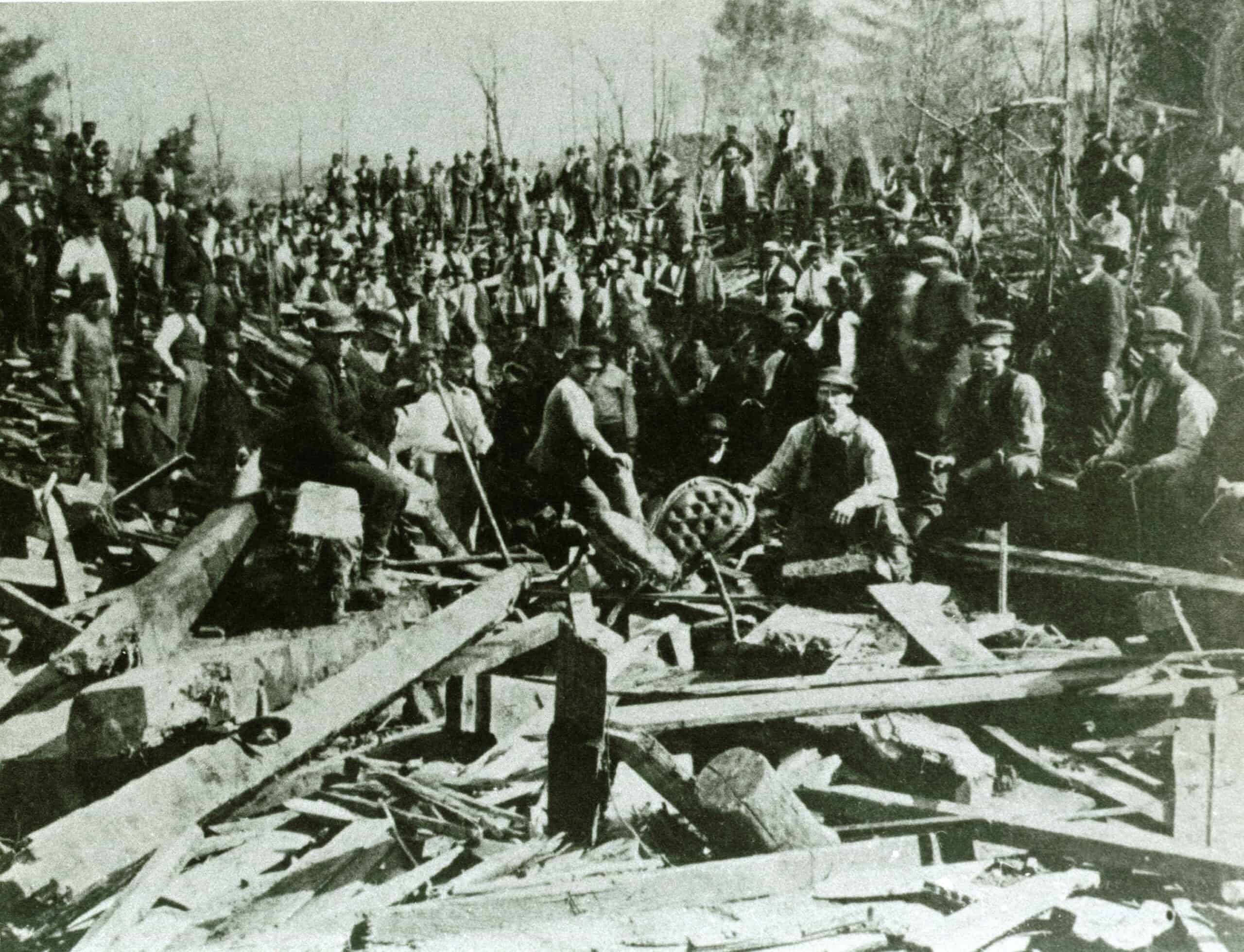
Left to right:
- Leeds center was turned to rubble. The Nonotuck Silk Mill on the north side of Mulberry Street remained intact as floodwaters tore through buildings, dams, and bridges downriver. Photo: Courtesy of Knowlton Bros., Forbes Library.
- The torrent ripped off the west side of William Quigley’s house on Main Street. A man, riding downriver on the roof of his own house, smashed into the Quigley house. The women in the Quigley house rushed to the window and dragged him inside. All four rode out the flood in the damaged house and survived. Survivors gazed at the destruction from the second-story landing. Photo: Courtesy of Knowlton Bros., Forbes Library.
- Hundreds of volunteers from the village of Leeds and surrounding towns searched for victims in the deep debris left by the flood. Photo: Courtesy of Knowlton Bros., Forbes Library.
More Leeds Histories & Photographs
Leeds Two Brick School Buildings
From 1885 to 1950, Leeds elementary (left) and middle school (right) stood on the west side of Florence Street.
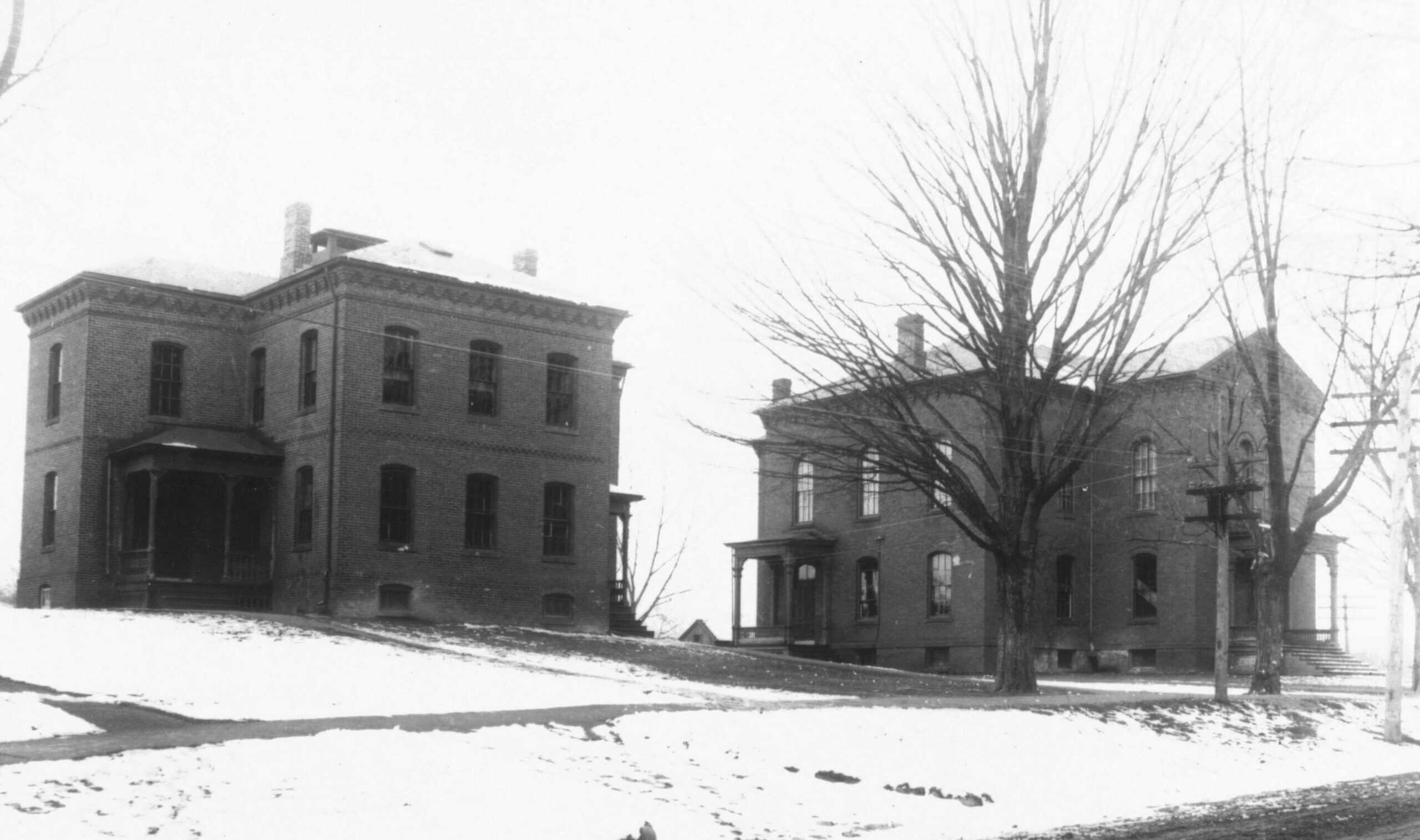
Courtesy of The Ray LaBarge Collection, Leeds Civic Association.
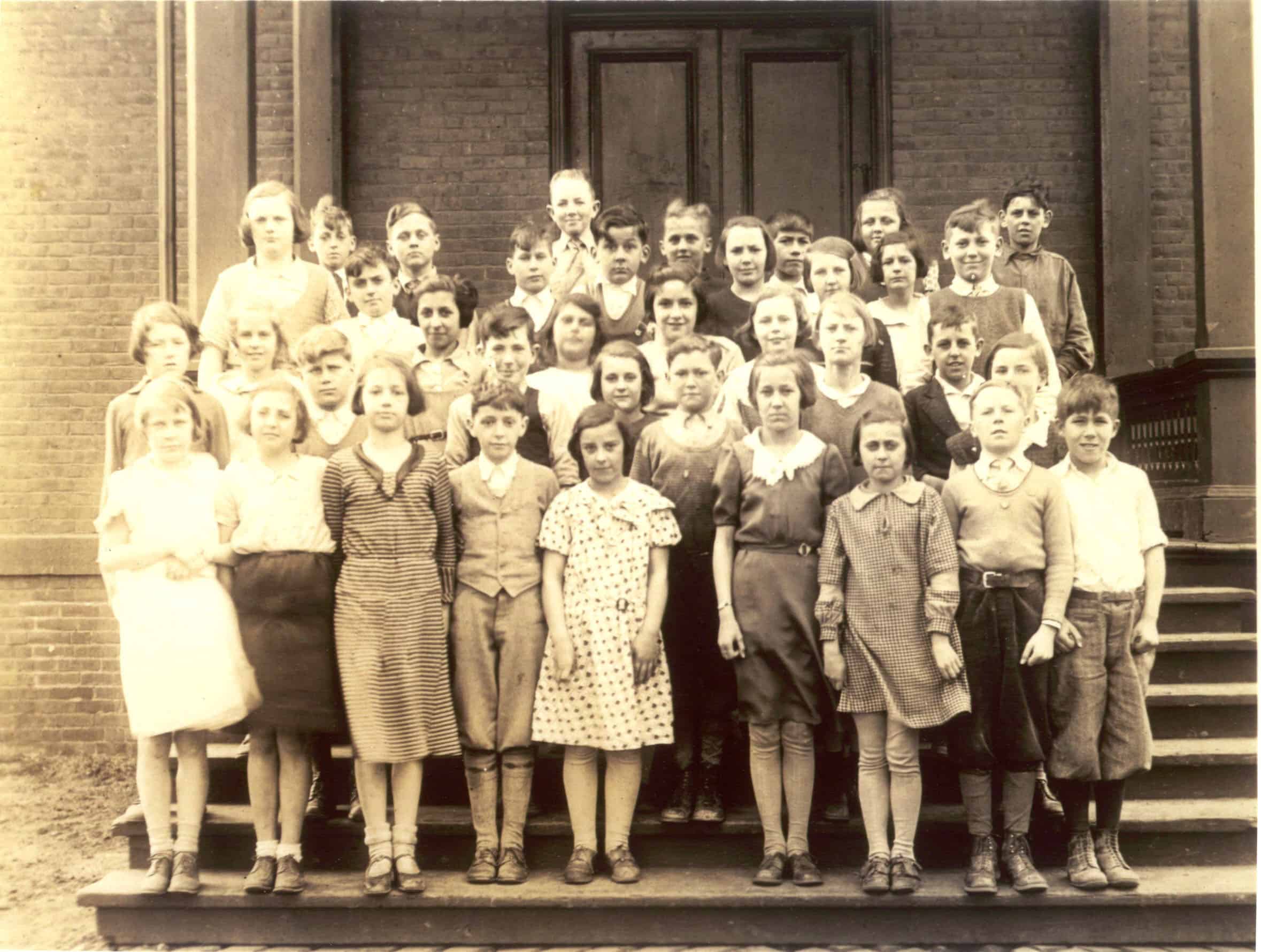
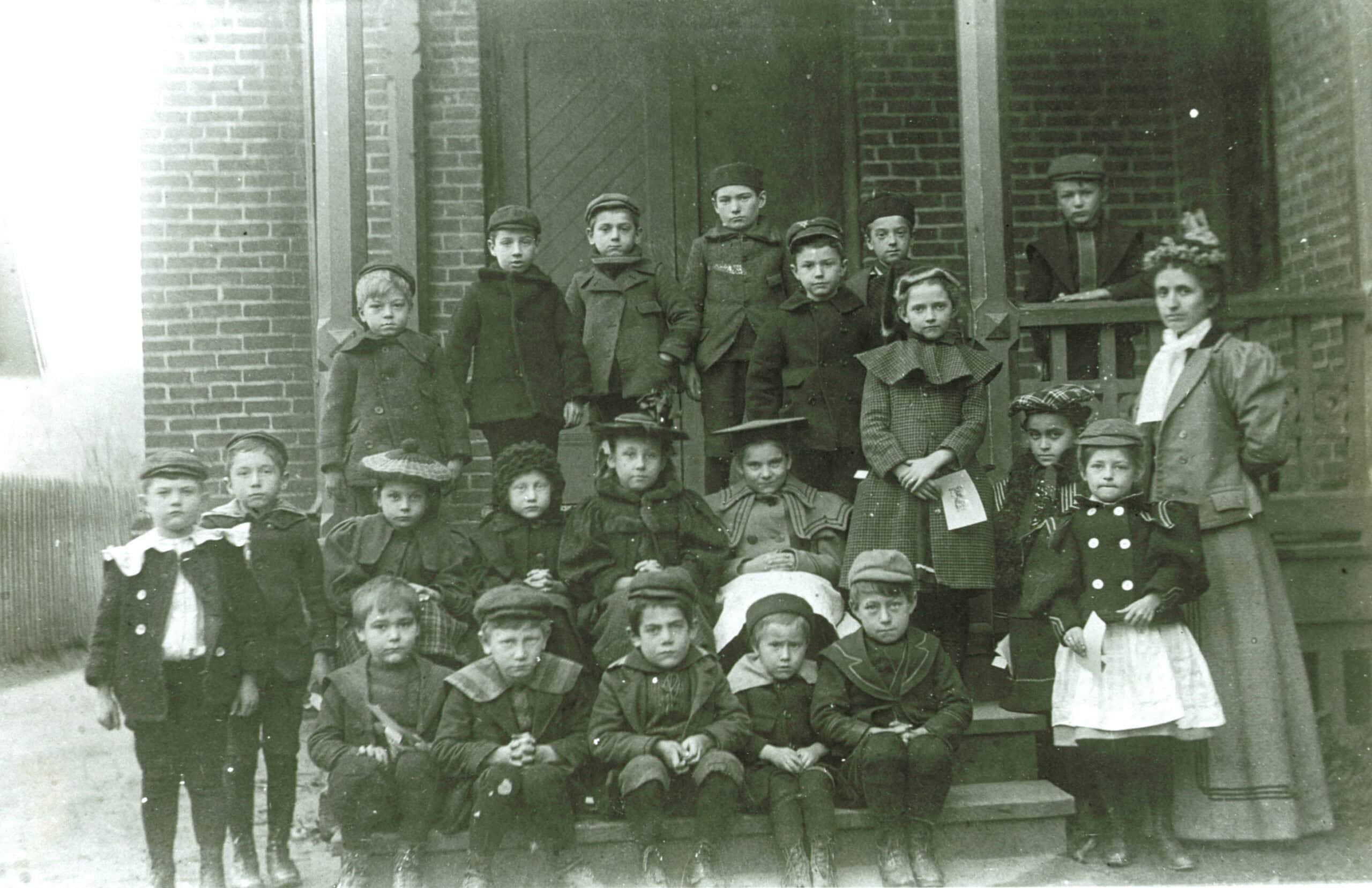
Left: Miss Lovell’s class, c. 1900. Right: Miss Graves’ 1905 third grade class.
Courtesy of The Ray LaBarge Collection, Leeds Civic Association.
Cook’s Dam and the Electric Power Station
Cook’s Dam was named after three brothers who ran a small woolen mill here in the 1820s. Sometime before 1895, it became the Nonotuck Silk Company Power Station producing electricity for Leeds mills and the electric trolley.
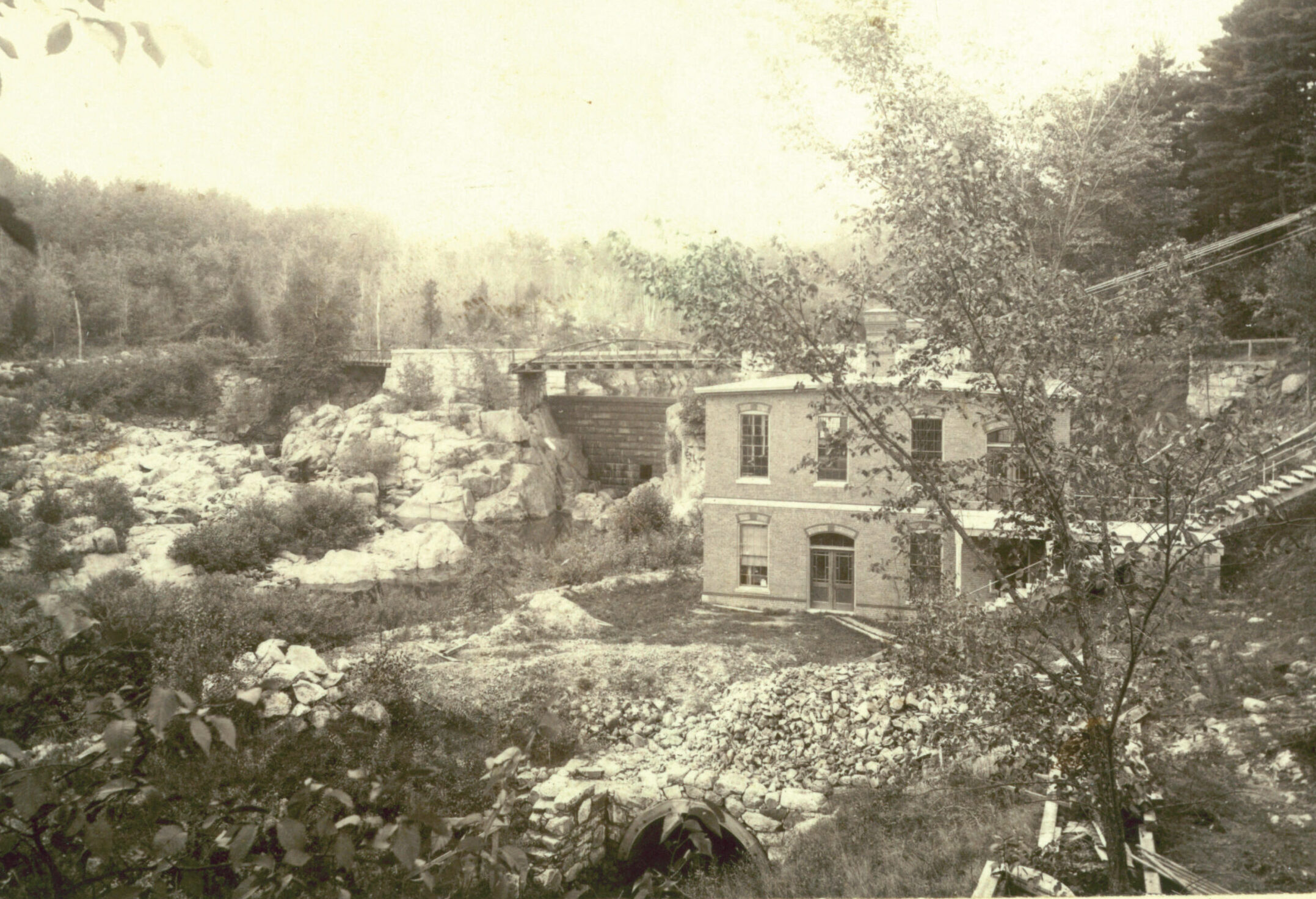
Photo: Courtesy of Howes Bros., Forbes Library.
Ice Delivery to Lucius Dimock’s Mansion, 1896
Lucius Dimock managed the Nonotuck Silk mill on Main Street in Leeds when the 1874 Mill River Flood destroyed it. Dimock’s mansion was built in 1880 in the Stick-Eastlake architectural style to match the rebuilt Nonotuck Silk Mill.
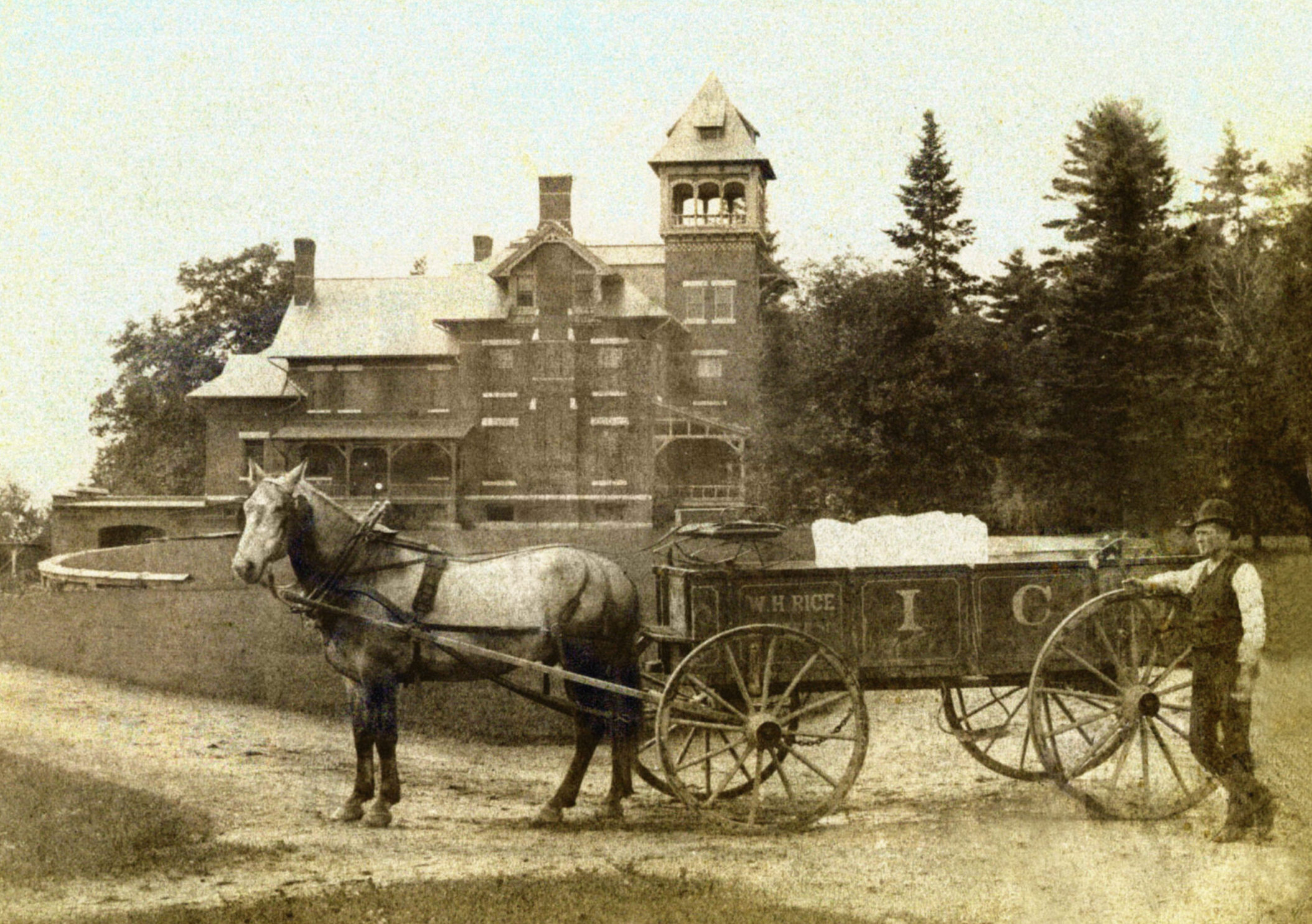
Photo: Courtesy of Leeds Civic Association.
First Leeds School Survived the Mill River Flood
This building served as the first official schoolhouse in Rail Hill (Leeds) from 1814 to 1836. It was the Parker family home at the
time of the 1874 flood. Frank Parker worked as supervisor in the Nonotuck Silk Company’s spool shop across the street. When he heard
the terrifying calls that floodwaters were approaching, he ran home, gathered his family and escaped to the higher knoll near
the present post office. The Flood spared the Parker house, Emery Wheel Works and seven homes on Water Street.
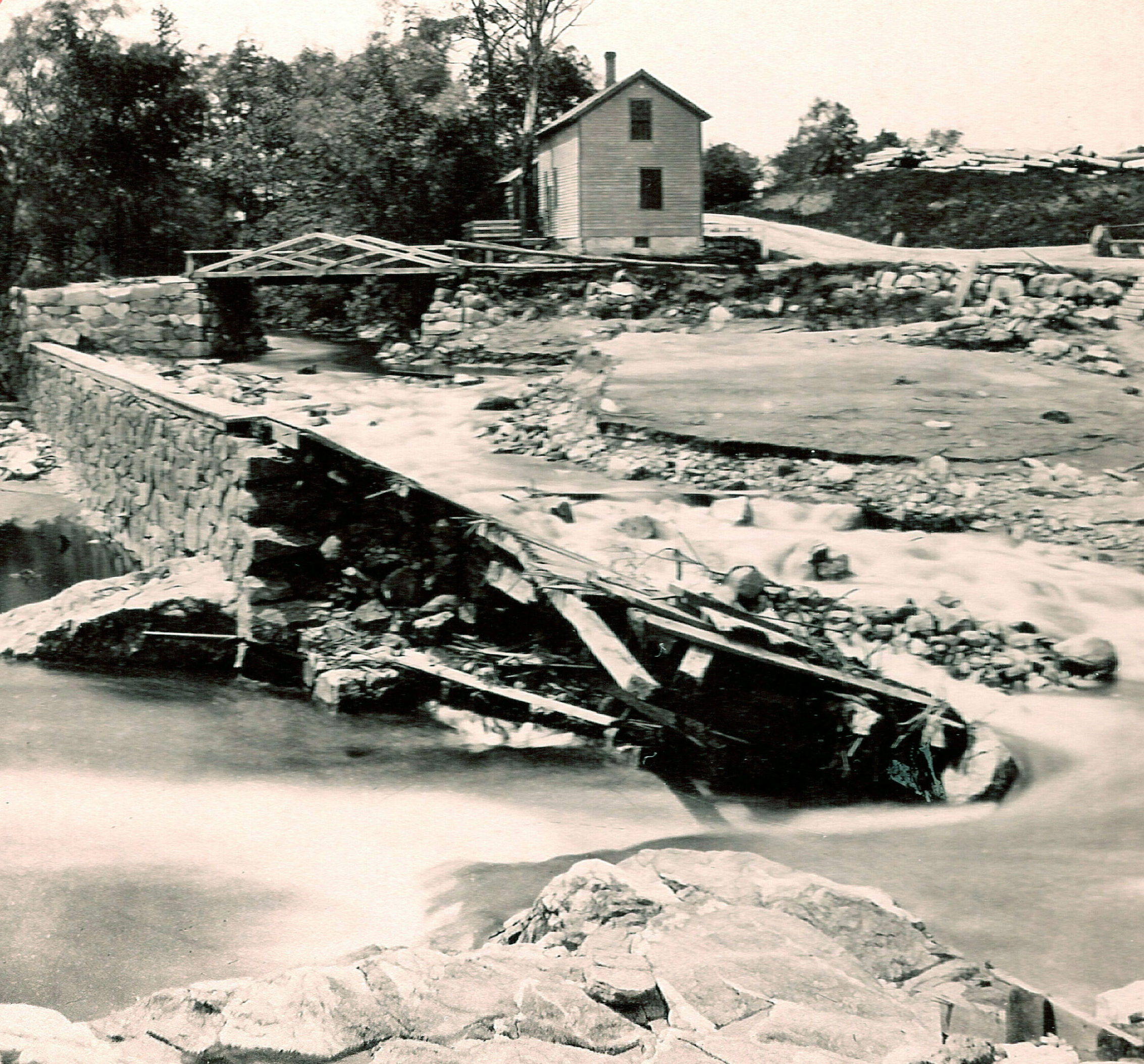
Photo: Courtesy of Knowlton Bros., Forbes Library.
Emery Wheel Works Building, 1940.
From 1870 to 1913, machine parts, hydrants and household equipment were manufactured at Emery Wheel Works. The Main Street
factory that Emery Wheel rented from Nonotuck Silk Company burned down in 1872. The company then moved to this Water Street building that was also owned by Nonotuck Silk. The 1874 flood inflicted only minor damage to the Water Street factory. Soon after the flood, a temporary dam was constructed across Robert’s Meadow Brook millpond, providing waterpower for the factory. The walking bridge was the main route to the factory and to the seven houses on Water Street. New England Woven Label Company was located in this building through the 1950s.
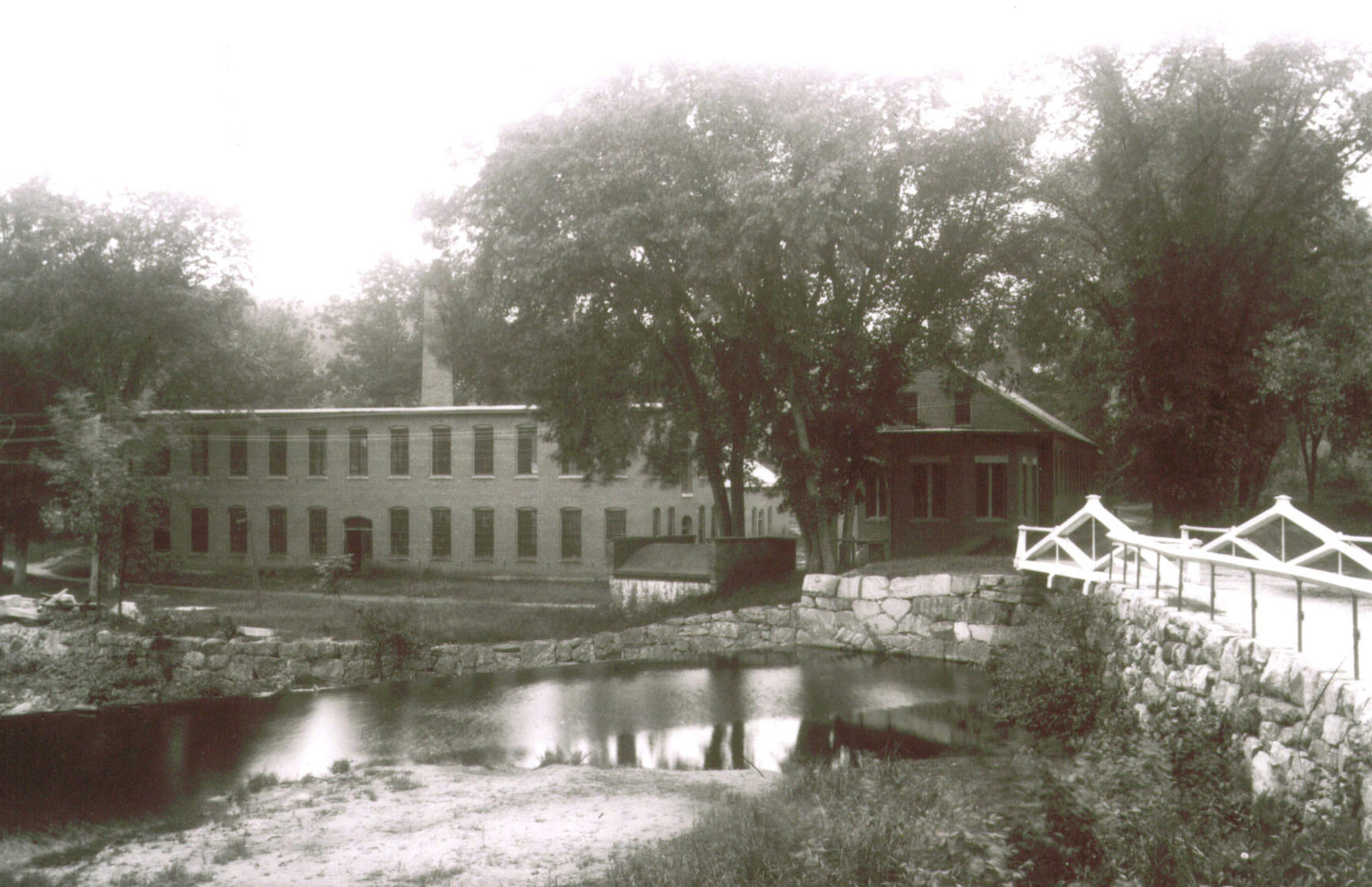
Photo: Courtesy of Robert P. Emrick, Forbs Library.
ADDITIONAL RESOURCES
Emrick, Robert P., comp. Leeds: A Village Within the City of Northampton, Massachusetts. Edited by James Parsons, Northampton, Mass., 1999.
Hannay, Agnes. A Chronicle of Industry on the Mill River. Smith College History Department, 1912.
“Leeds,” Northampton Directory and Historical Register, 1875-6, Gazette Printing Company, Northampton, Mass. page 45-50.
Sharpe, Elizabeth M. In the Shadow of the Dam: The Aftermath of the Mill River Flood of 1874. NY: Free Press/Simon & Schuster, 2004.