Fitzgerald Lake Conservation Area
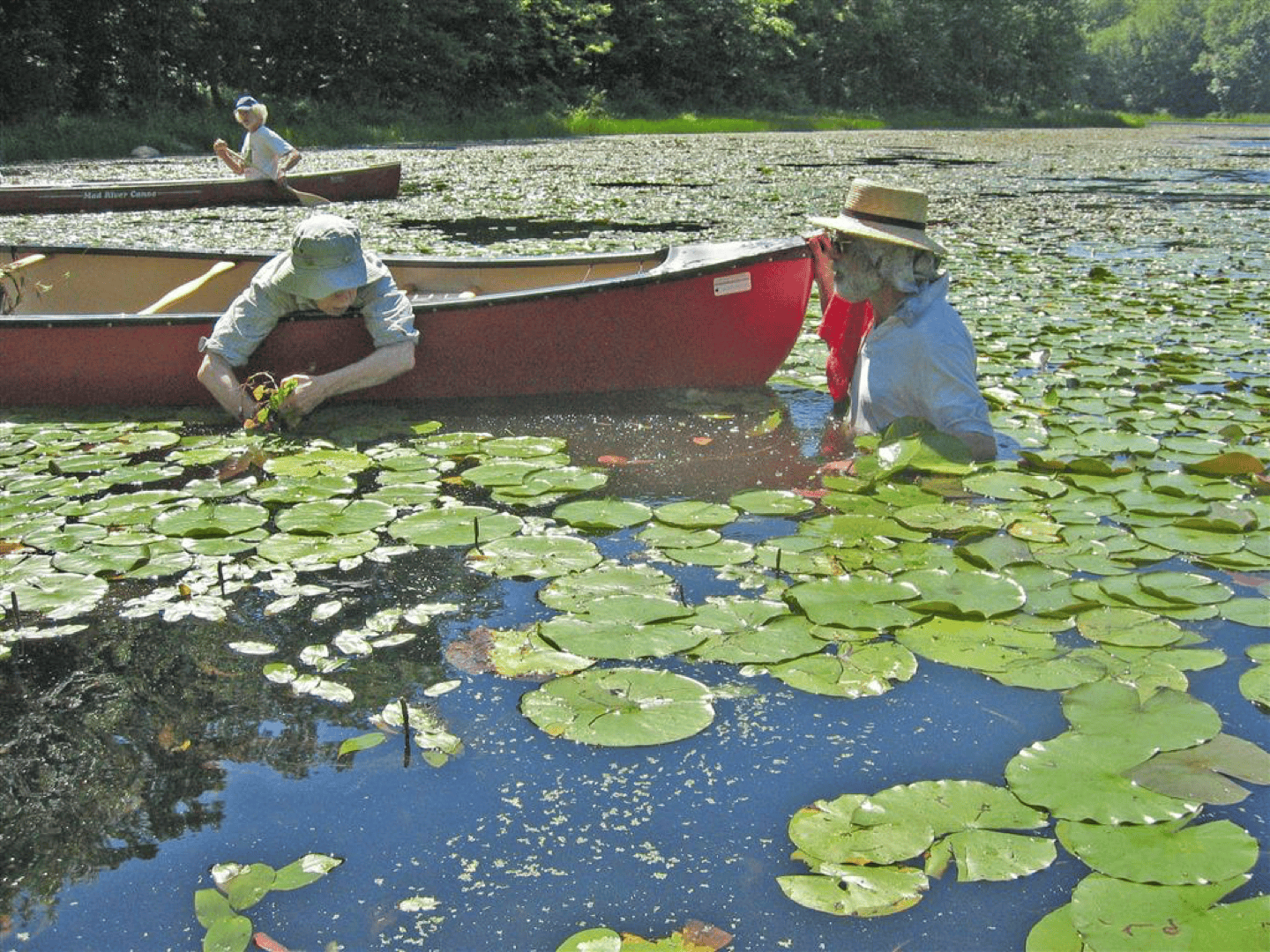
With nearly 1,000 acres of protected land, the Fitzgerald Lake Conservation Area is now the largest city-owned conservation area, with miles of trails, a pond for fishing and paddling, and a variety of habitats (vernal pools, rocky uplands, beaver ponds, wet meadows, marshes).
Fitzgerald Lake, a man-made pond, was created in 1965 by Harold Fitzgerald when he constructed an earthen dam across Broad Brook and flooded a former hay meadow and pasture. Fitzgerald’s plan was to construct a community of tightly packed cottages around the pond. When new regulations, as well as rocky conditions, created severe limitations for wells and septic systems, he gave up on that plan. In 1967, he proposed a development with fewer and larger homes, but learned that they would require expensive pumping to meet new sewage regulations. In 1977, Fitzgerald sold 152 acres—including the pond—to the city as conservation land.
A decade later, when another large-scale housing development was proposed downstream from Fitzgerald Lake, nearby residents formed a nonprofit organization called the Broad Brook Coalition. The city of Northampton has worked closely with the BBC to protect more than 800 additional acres.
For a more complete understanding of the human and natural history of this conservation area, click here.
Wildlife Camera Footage from FLCA
Wildlife Highlights, Spring 2025
The sights and sounds in this short video would have been impossible to experience during most of the last 300 years. Today, because of reintroduction efforts, changes in wildlife laws, shifts in fashion, and land protection efforts, observations like these can take place within a 15-minute drive of downtown Northampton, Massachusetts.
Winter Wildlife Scenes, Feb. – March, 2025
This 3-minute compilation gives us a look at how animals manage during changing snow conditions as well as other unexpected/interesting behaviors. The variety and abundance of wildlife is very, very different than what we would have been able to observe a century ago…or 55 years ago when the nation’s first Earth Day took place!
After the 2024 Brush Fire, Winter 2024
In early November 2024, a brush fire occurred in the northeast corner of the FLCA. This accidental fire affected about 50 acres of woods and wetlands. This compilation starts two days after the fire was officially declared out. Low-burning fires like this one were common during the thousands of years that the Nonotuck people used fire as a management tool in what we now know as Northampton. This video gives us a glimpse into how animals might have responded in the wake of a burn.
One Week in Summer, June 2024
If it had been possible to send a wildlife video from Northampton in 1500, 1600, or even 1700, it might have looked like this 2-minute compilation. After ~1700, black bears had been extirpated from Massachusetts due to bounties, hunting, and habitat changes. Deer had been overhunted. River otters were similarly scarce. Even a great blue heron was an extreme rarity during the 19th century due to hunting pressure. But with the introduction of game laws, environmental regulations, and conservation efforts during the 19th and 20th century, many animal species that thrive in forests and in and around wetlands rebounded.
See our Youtube channel playlist “Wildlife in Wilder Places” for more wildlife content at Fitzgerald Lake Conservation Area.
ADDITIONAL RESOURCE
“Fitzgerald Lake Conservation Area,” Broad Brook Coalition.