Clarke Schools for Hearing and Speech
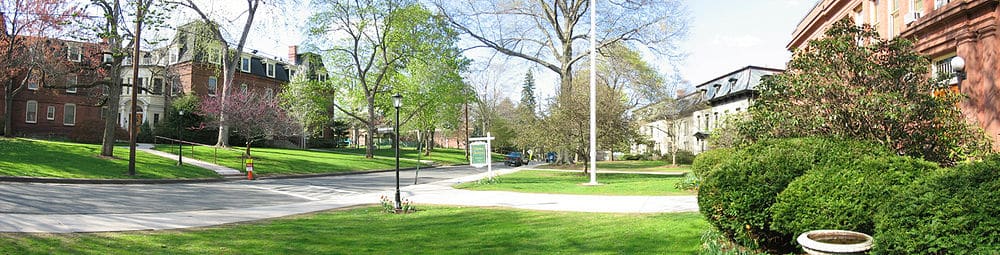
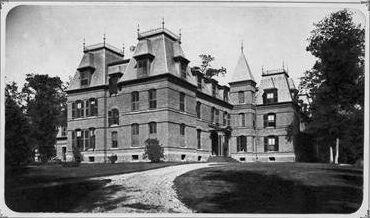
Clarke School for the Deaf (today Clarke Schools for Hearing and Speech) opened in 1867 as the Clarke Institution for Deaf Mutes. It was founded by Gardiner Greene Hubbard (1822–1897) after his daughter Mabel, became deaf after having scarlet fever.
The school’s namesake is local philanthropist John Clarke, who provided the initial funding of $50,000. It was the first school in the U.S. to teach oralism, an educational philosophy in which deaf students were instructed in lip reading and speech, rather than sign language. The first principal was Harriet B. Rogers, who had taught deaf children in Chelmsford, Massachusetts, using European methods of lip reading and speech.
Alexander Graham Bell was an early and ardent supporter of oralism, and the school achieved national renown partially because of him. Future First Lady Grace Coolidge worked and lived at the Clarke School in 1902.
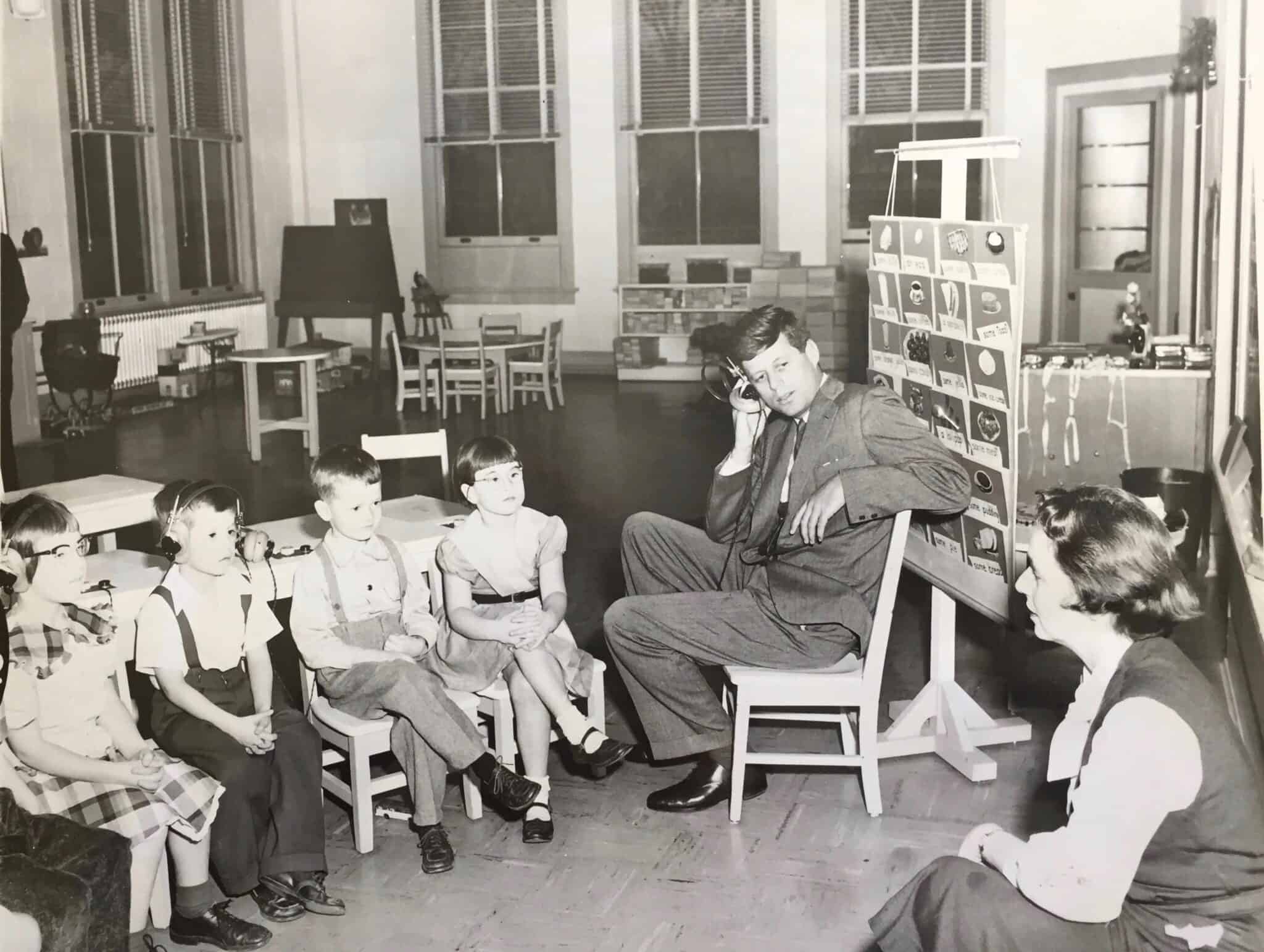
Clarke was a leader in training teachers to work with deaf students. In 1899, Caroline A. Yale began a formal teaching program to prepare teachers to instruct students in the oral method. From 1962 until 2015, Clarke collaborated with Smith College to offer a master’s in deaf education (M.ED).
The Clarke School is part of Northampton’s long legacy as a center of education. Clarke School and Smith College were founded within a decade of one another. The Clarke School’s various Northampton locations reflect the city’s educational history. The first location of the Clarke School was on Gothic Street, in the former Gothic Street Seminary. By 1870, enrollment had outgrown the space and the school moved into the former Round Hill School for Boys, which had been founded by historian George Bancroft in the 1820s. The campus had living quarters for students as well as instructional buildings.
After the sale of the campus in 2011, Northampton citizens petitioned to have the area added to the nearby Elm Street historic district. The school was also added to the National Register of Historic Places in 2022.
ADDITIONAL RESOURCES
The school is still in operation in four states. You can visit their website here.
Historic Northampton has archival materials related to the Clarke Schools. Browse our catalog, or contact us to schedule a research appointment.
Recent acquisitions include:
- Oral history with Janice Gatty, educator at Clarke Schools for 50 years, View excerpt from interview.
- Photographs, objects, and a scrapbook of Northampton resident Rodney Kunath, from his time as a student at Clarke School, 1946-1958.
The Clarke School records are held in Special Collections at the University of Massachusetts.
“Oral schools form on the principle of ‘pure oralism’,” National Deaf Life Museum, Gallaudet University (part of the “History Through Deaf Eyes” exhibit).
Douglas C. Baynton, Jack R. Gannon, and Jean Lindquist Bergey. Through Deaf Eyes: A Photographic History of an American Community. Gallaudent University Press, 2007. See especially Chapter 4: “The Struggle over Sign Language.” There is also a related PBS documentary titled “Through Deaf Eyes.”