Grace & Calvin Coolidge in the Meadow City
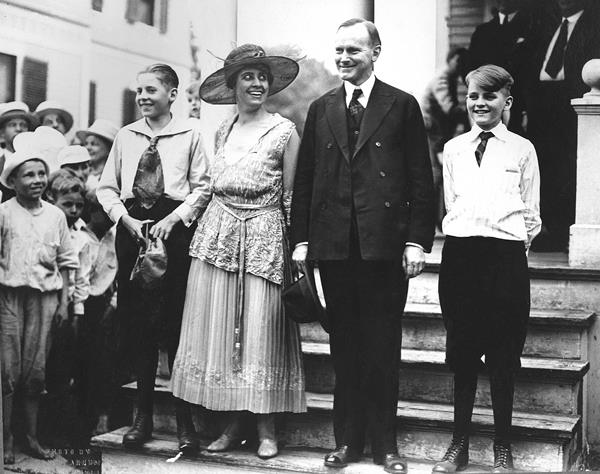
Calvin Coolidge, the 30th president of the United States (1923–29), his wife Grace Goodhue Coolidge, and their two sons lived in Northampton, where Coolidge began his political career. Calvin Coolidge died in Northampton on January 5, 1933. Grace Coolidge died in Northampton on July 8, 1957.
In his 1929 autobiography, Calvin Coolidge wrote of his wife Grace Coolidge:
From our being together we seemed naturally to come to care for each other … I have seen so much fiction written on this subject that I may be pardoned for relating the plain facts. We thought we were made for each other. For almost a quarter of a century she has borne with my infirmities, and I have rejoiced in her graces.
The Autobiography of Calvin Coolidge
One morning in 1950, during April school vacation when I was 10, a friend and I exited the Winthrop Foster camera store on Main Street near city hall. A woman on the sidewalk said to us in a hushed voice, “Stay back. It’s Mrs. Coolidge.” I looked to my right and saw an elderly woman crossing Old South Street while holding a small shopping bag in one hand. Walking behind her was a man carrying her shopping. The pedestrians on the sidewalk had cleared a path for Mrs. Coolidge, and she smiled and nodded her head to all of us. She and her driver then entered a car parked right in front of me and drove off. Even as a boy, I was struck by the display of respect I had just witnessed.
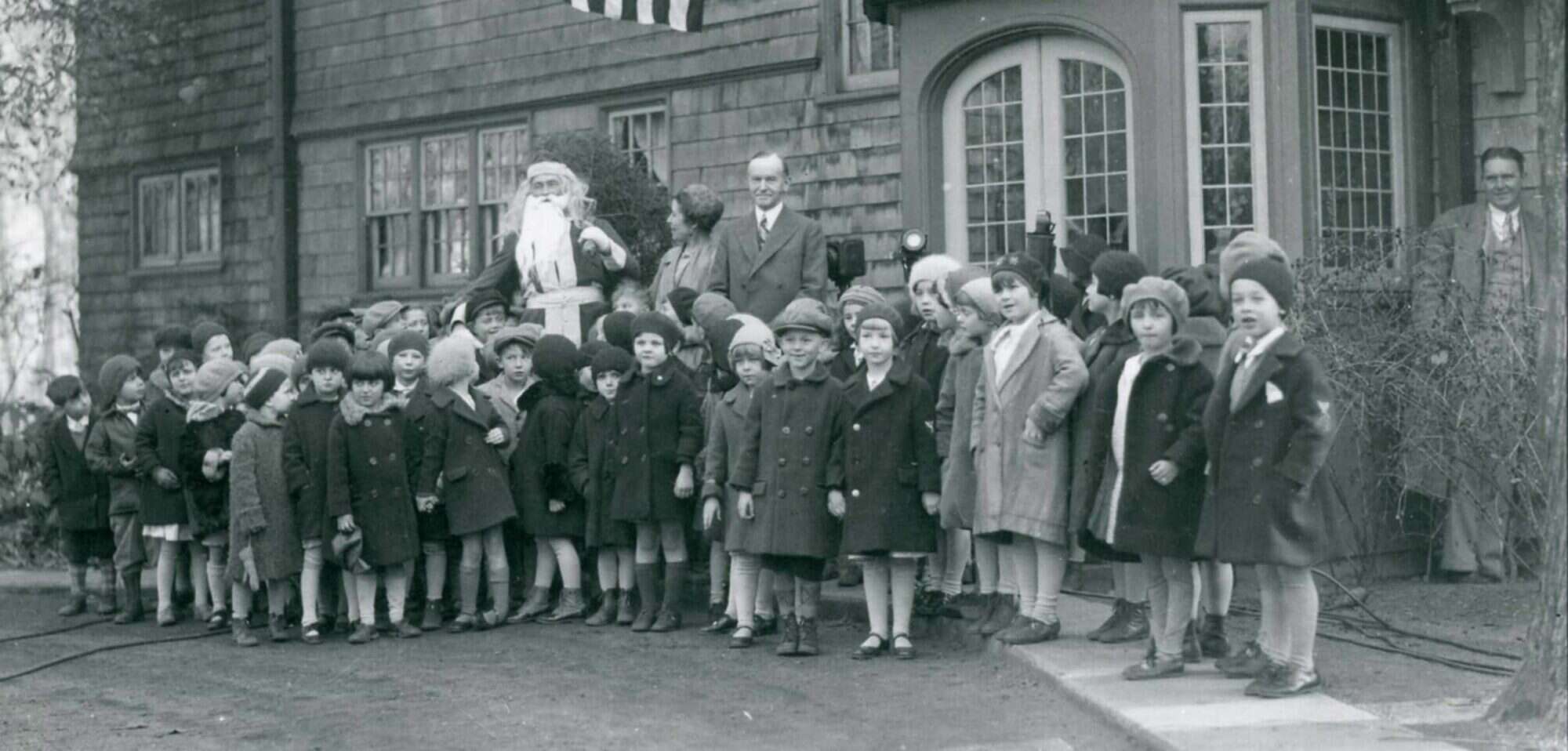
It wasn’t always this way. After their marriage in 1905, Calvin and Grace Coolidge seemed destined to live a life of quiet obscurity in Northampton, Massachusetts. Grace had given up her position as a teacher at what used to be called the Clarke School for the Deaf to become a housewife, and Calvin was a local lawyer with political ambitions who had just been defeated for a seat on the School Committee. They were renting living quarters in the soon-to-be-demolished Norwood Hotel. Their future was uncertain, and yet in less than 20 years they would be living in the White House as the first couple of the nation. And it would not have happened if two Vermonters had not separately chosen to make Northampton their home.
Establishing a Law Career
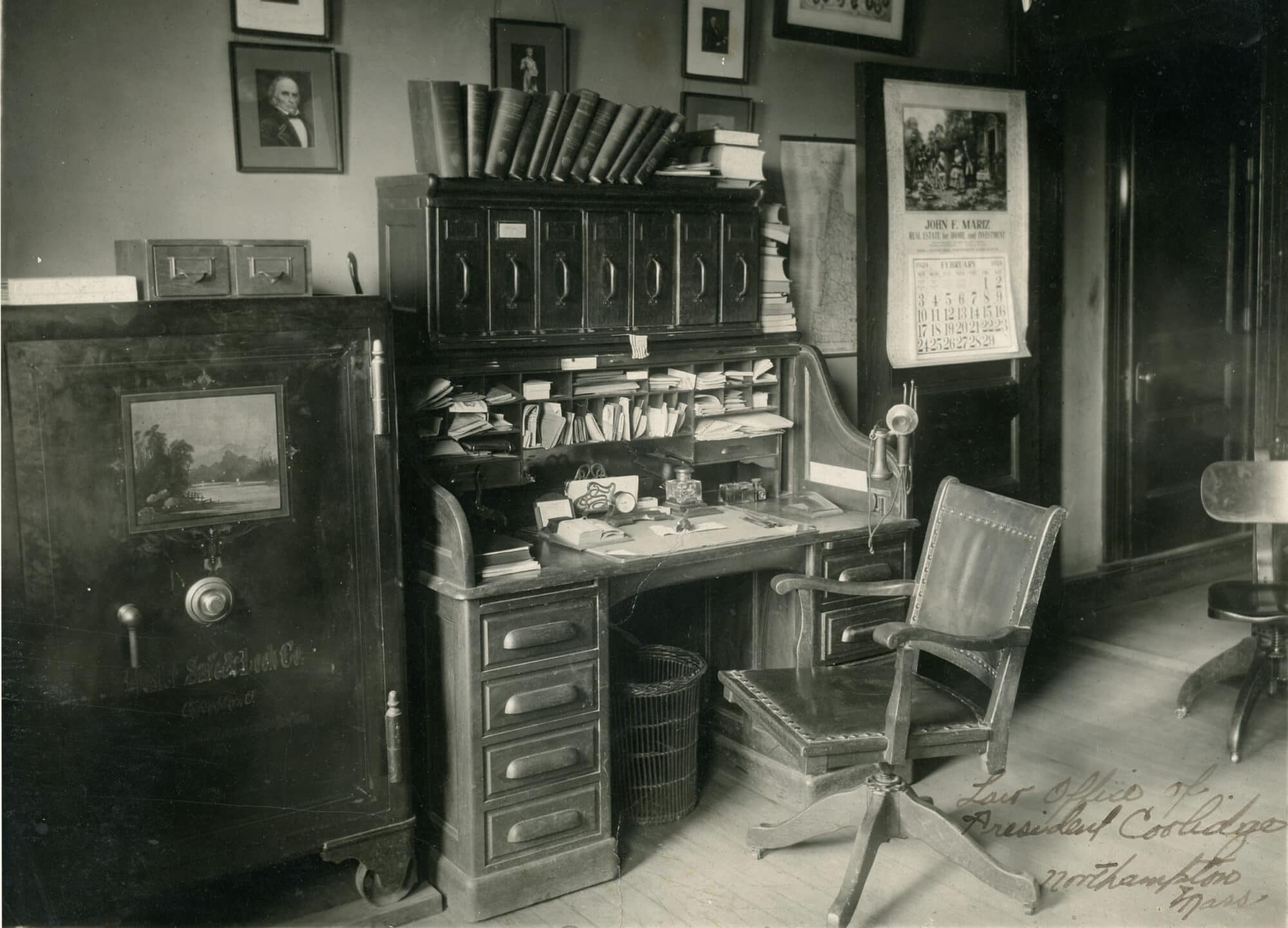
Calvin was the first to settle in Northampton. In 1895, just weeks after his graduation from Amherst College, he accepted a position as a law clerk in the firm of Hammond and Fields. By 1897, Coolidge had passed the bar exam and opened his own law practice at 25 Main Street. His self-confidence grew, and he dropped the first name of John, preferring to be called simply Calvin Coolidge. He quickly joined the Republican Party and delved into local politics by serving on the City Council, as city solicitor, and clerk of courts. By 1903, the red-headed, introverted Vermonter had definitely decided on Northampton as his future home. However, he had not settled down. He had lived in various places in town, usually sharing living quarters with other young bachelors. That was about to change.
First Meeting
Unlike Calvin, who had been born and raised in the tiny village of Plymouth Notch, Vermont, Grace Goodhue was a native of Burlington, Vermont’s largest city. For her entire life, she was interested in the education of young children. After graduating from the University of Vermont in 1902, she came to Northampton to teach deaf students at the famous Clarke School. She had a room on campus near where Calvin was sharing living space with a friend. Grace later recalled that, while watering some flowers outside her dormitory, she heard someone singing at the top of his voice. In the nearby building she spied a red-headed man in a Derby hat who was in his long-johns while shaving his face. She burst out laughing, and the embarrassed Coolidge looked down and quickly knew he had to meet the young lady with the engaging smile. It is likely that, of all the first ladies, Grace was the only one to see her future husband for the first time in his underwear. The couple married on October 4, 1905, in a ceremony performed in the living room of Grace’s parents’ home in Burlington.
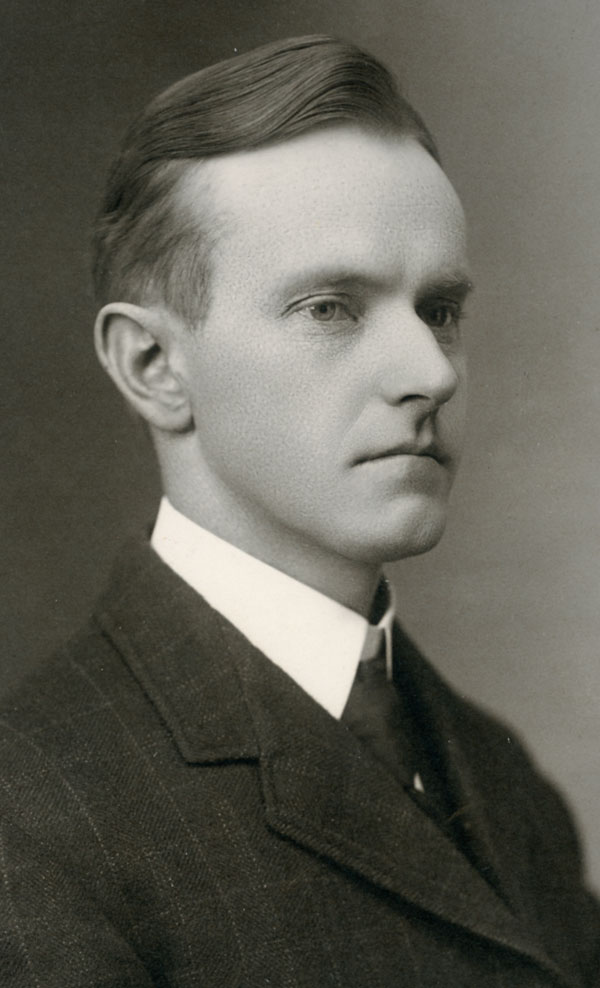
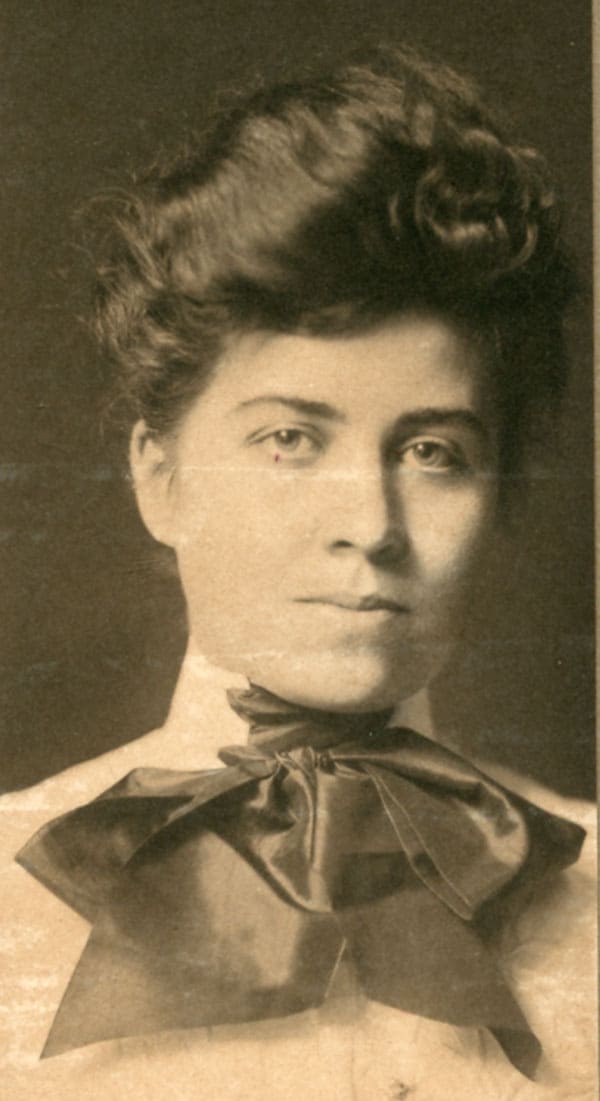
Photograph of Calvin Coolidge as a Young Man. Photographed by Elmer Chickering of Boston; Photograph of Grace Coolidge. Photographed by Sheldon. Historic Northampton (ID no. 1983.80.2-3).
Marriage and Political Office
In 1905, Coolidge, in what was to become his annual autumn habit, was running for office once again. (In early 20th-century Massachusetts, most elective offices had a term of one year.) This time it was for the School Committee and, for the final time in his political career, he lost. Afterward, he inquired of some of his neighbors why they had not voted for him. Their response was that he had no children in the school system. His retort was, “You could have given me a little time.” In fact, the Coolidges’ first son, John, was born on September 7, 1906, just 11 months after the wedding. By then the couple were renting half of a duplex at 21 Massasoit Street, which would be their home for the next 24 years.
The political itch was strong in Coolidge and, two months after the birth of his first son, he was elected a representative to the Massachusetts General Court. (He was re-elected the following year.) Coolidge would stay in Boston when the legislature was in session, returning home on the weekends. The burden of running the household and caring for an infant fell on Grace. Coolidge did not run for office in 1908, the year their second son, Calvin, was born. But in 1909 and 1910, he was chosen by the voters to be mayor of Northampton.
Coolidge’s two years as mayor were relatively quiet, but that ended as he began a meteoric rise from obscure small-city mayor to national figure. In 1911, Coolidge was elected to the state Senate and, for a decade, resumed the routine of traveling back and forth between Boston and Northampton. He was re-elected to the Senate in ’12,’13, and ’14, serving as Senate president for those last two terms. It was in that capacity that he first attracted the attention of influential Bostonians. The next step up was lieutenant-governor, and Coolidge was elected to that office in three straight elections.

Governor of Massachusetts
In 1918, Coolidge ran for governor and won a narrow victory. For all the years he had been in Boston, Coolidge had lived in a single hotel room. However, as chief executive, he would have social obligations to entertain and, since Massachusetts did not have an official governor’s residence, Coolidge had to rent a larger hotel space. Grace, who had continued to run the household and raise the boys, was now expected to be at her husband’s side at social functions. She began spending some time in Boston and, in contrast to Coolidge’s social stiffness, her natural affability made her a popular hostess.
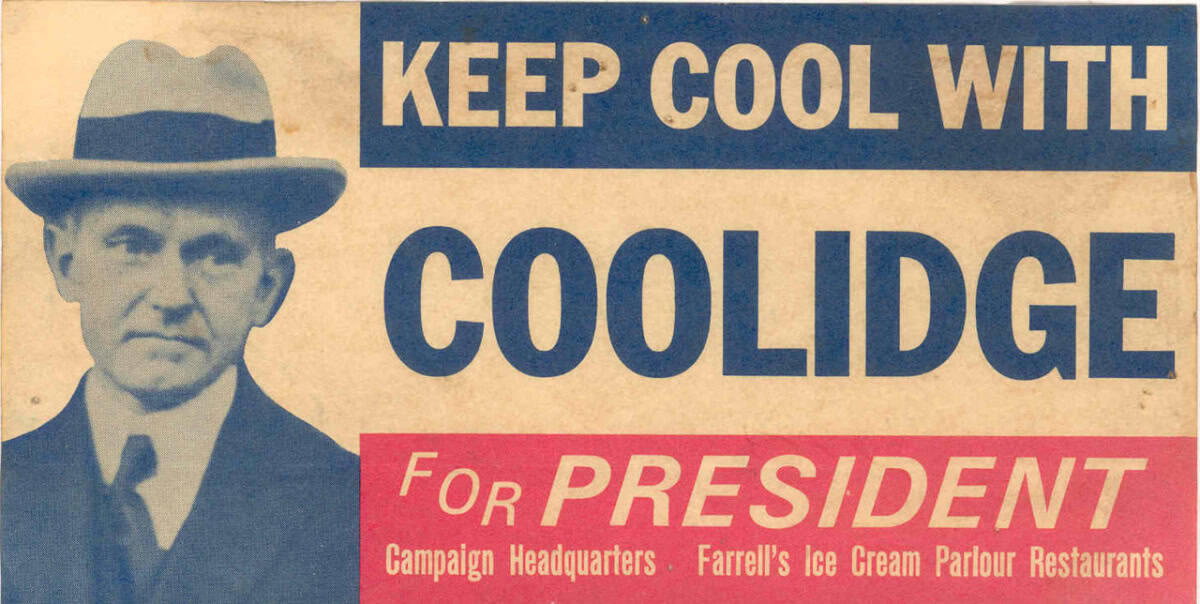
As governor, Coolidge’s position against the union in the 1919 police strike resonated with the public, and he was re-elected in 1919 by a landslide. Suddenly there arose a “Coolidge for President” boomlet in Massachusetts. His name was placed in nomination at the Republican convention in Chicago. The convention chose Warren Harding as their standard bearer, but Coolidge received the second spot by acclamation of the delegates.
Notification Day, July 27, 1920
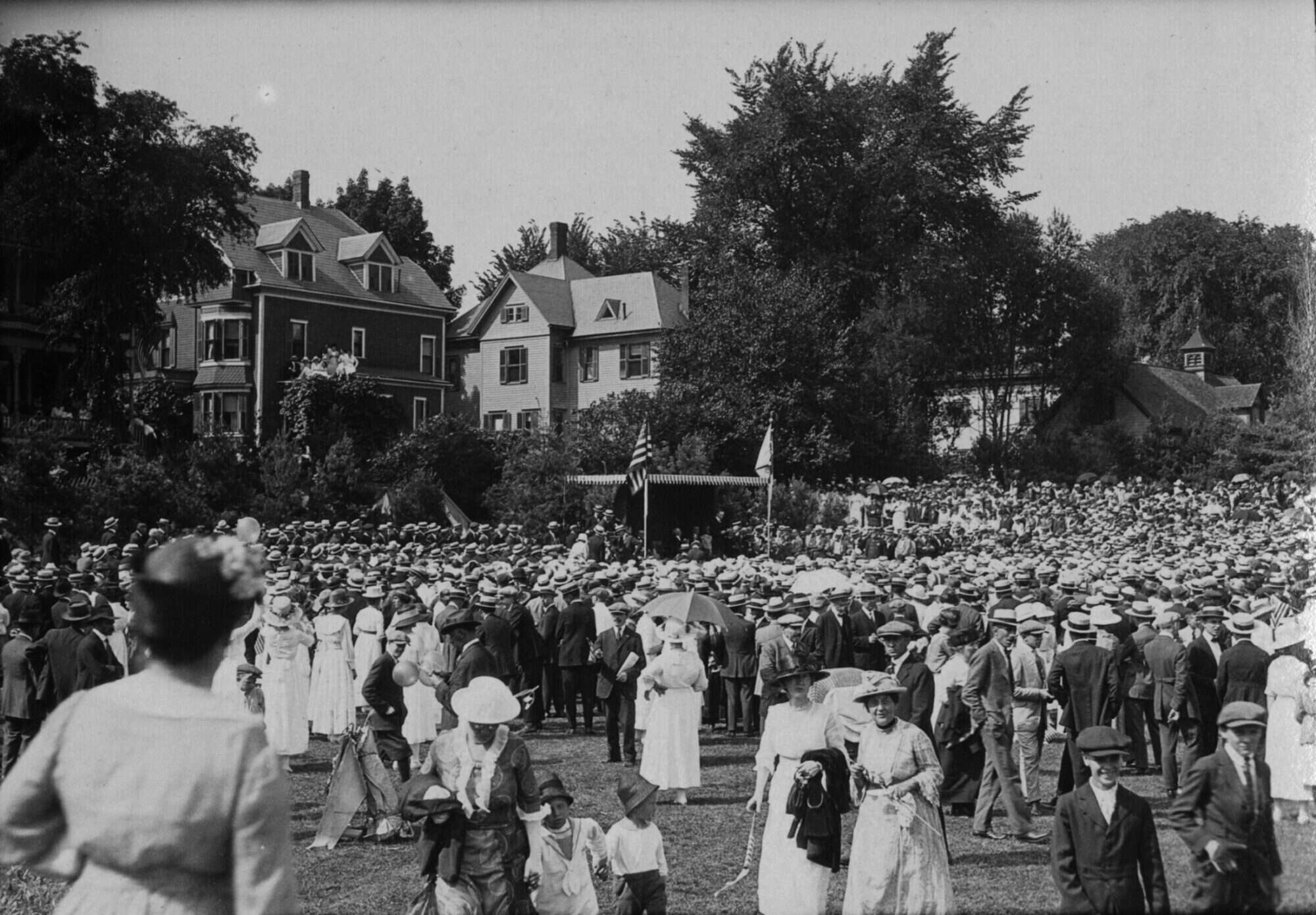
As was the custom then, Coolidge was notified of his selection on July 27, when the official notification committee came to Northampton. There was a parade from Main Street to the Coolidge residence to greet the family and then they all marched to the Smith College playing fields for the ceremony. It was estimated that 10,000 people gathered to hear Coolidge make his acceptance speech. The Harding-Coolidge ticket easily defeated their Democratic opponents that fall. On March 4, 1921, Calvin Coolidge was sworn in as vice president of the United States of America.
From Vice-President to President
Although the family maintained their rented home on Massasoit Street, once Coolidge was elected vice president, they had to move to Washington full time. The boys were enrolled at the Mercersburg Academy in Pennsylvania and, since there was no vice-presidential residence, the couple lived in the Willard Hotel. They sometimes returned briefly to Northampton before heading to Vermont to visit Coolidge’s father, to whom he was quite devoted. They were there on August 3, 1923, when they learned of President Warren Harding’s unexpected death. Coolidge was sworn in as president by his father, a notary public, in a home that had neither electric nor phone service.
Throughout Coolidge’s years of public service, much was made of the fact that, despite living in an eight-room two-story house, he never owned it but merely rented. Coolidge wrote in his autobiography that he feared, if anything should happen to him, he would not be able to maintain a mortgage but that he would be able to make the rent. After their full-time return to Northampton, the couple bought a house in 1930 known as “The Beeches” at 16 Hampton Terrace. Both Calvin and Grace were financially prudent and always lived within their means. Calvin’s ability to maintain that outlook and produce balanced budgets in the various offices he held added to his popularity.
Family Life and The Press
Calvin made certain that his two sons also became financially aware. In August 1923, the month he ascended to the presidency, both boys had summer jobs working in the tobacco fields of nearby Hatfield. One of their co-workers told Calvin Jr. that, if his father was president, he would not be working in the fields. Calvin Jr. reportedly replied, “If my father was your father, you would be.”
Calvin had a reputation for being tight with a dollar, but one area where he was willing to be generous was in purchasing Grace’s wardrobe. He wanted his wife to look good in public, especially in the hats she wore. Grace once wrote that she came upon Calvin measuring the inside of one of her hats with a piece of string prior to surprising her with another new chapeau. Calvin himself would never venture out without a hat on his head, even when he was sitting on his front porch reading the newspaper. Coolidge quite consciously created an image of himself and his family as highly respectful members of society, and he never relented from this type of public performance.
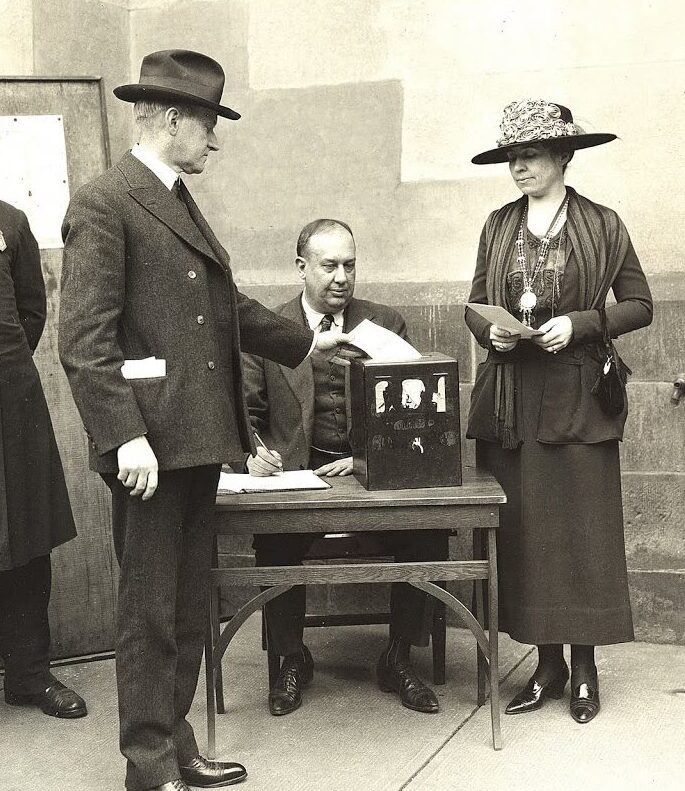
In 1920, when Coolidge was the Republican vice-presidential candidate, it was the first time women could vote in a presidential election. There is a photo of Grace, adorned in one of her broad-brimmed hats, casting her ballot alongside Calvin, in front of Northampton City Hall. This picture was another bit of harmless subterfuge, as the ballot box had been moved outside the building to accommodate the photographer. Seated behind the ballot box is Clarence D. Chase, city clerk, with police office John J. Ruddy standing guard.
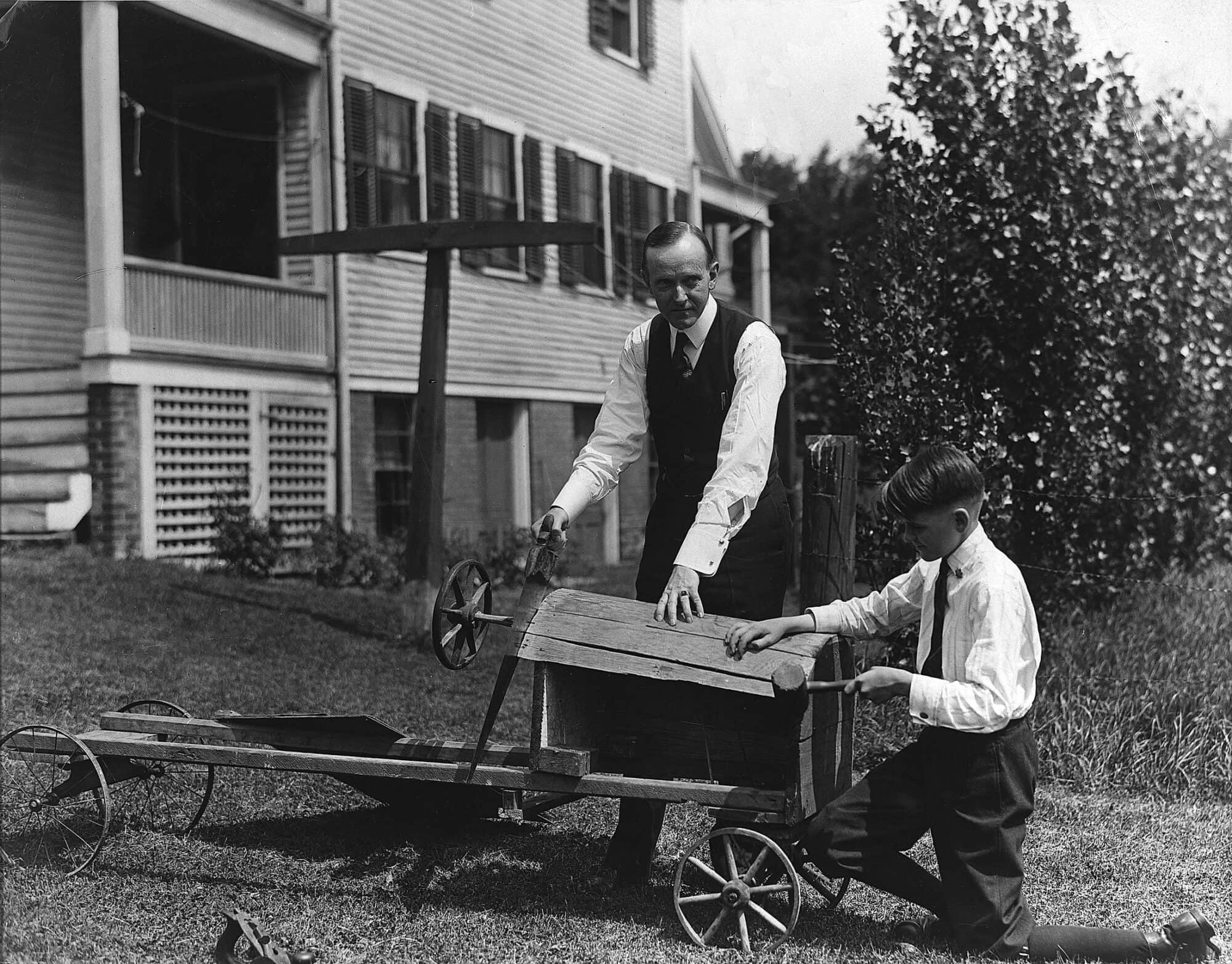
The role of a man of quiet dignity, financial responsibility, and family dedication came naturally to Calvin, but sometimes he was not above a bit of deception. John Coolidge, the eldest son, related that one day, when his father was running for governor, he was greatly surprised to see a picture in the newspapers that depicted his father and his brother, Calvin, building a go-cart in the backyard. John was chagrined because it was actually he and Grace who were constructing the vehicle. The two of them had been elsewhere when the reporter arrived at their home, and Coolidge was quite willing to momentarily create the image of the helpful father. In reality, the task of raising the boys had largely been taken care of by Grace over the years, as Coolidge split his time between Boston and Northampton.
1924 Presidential Nomination and Family Tragedy
On June 12, 1924, as he was serving out the rest of Harding’s term, the Republican Party selected Coolidge as their presidential nominee. With the nomination in hand, he celebrated his 52nd birthday on July 4. This should have been one of the happiest periods of his life. But tragedy suddenly struck on July 7 when their 16-year-old son, Calvin, died of blood poisoning from an infected blister contracted while playing tennis on the White House courts.
The death occurred just as the 1924 presidential election campaign was to begin, and both parents could have understandably disappeared from public view for a while. Calvin and Grace were both devastated, but they were extremely private persons, and it was not the Coolidge way to mourn in public. They dutifully carried on for the entire successful campaign despite their personal pain. Calvin wrote in his autobiography that, from the moment of his son’s death, the power and glory of the presidency were gone forever. It is generally thought that his early decision in 1927 not to run for another term stemmed from the continuing agony of Calvin Jr.’s death. Grace, too, was emotionally crushed. Below is an excerpt from her 1931 poem, “The Open Door”
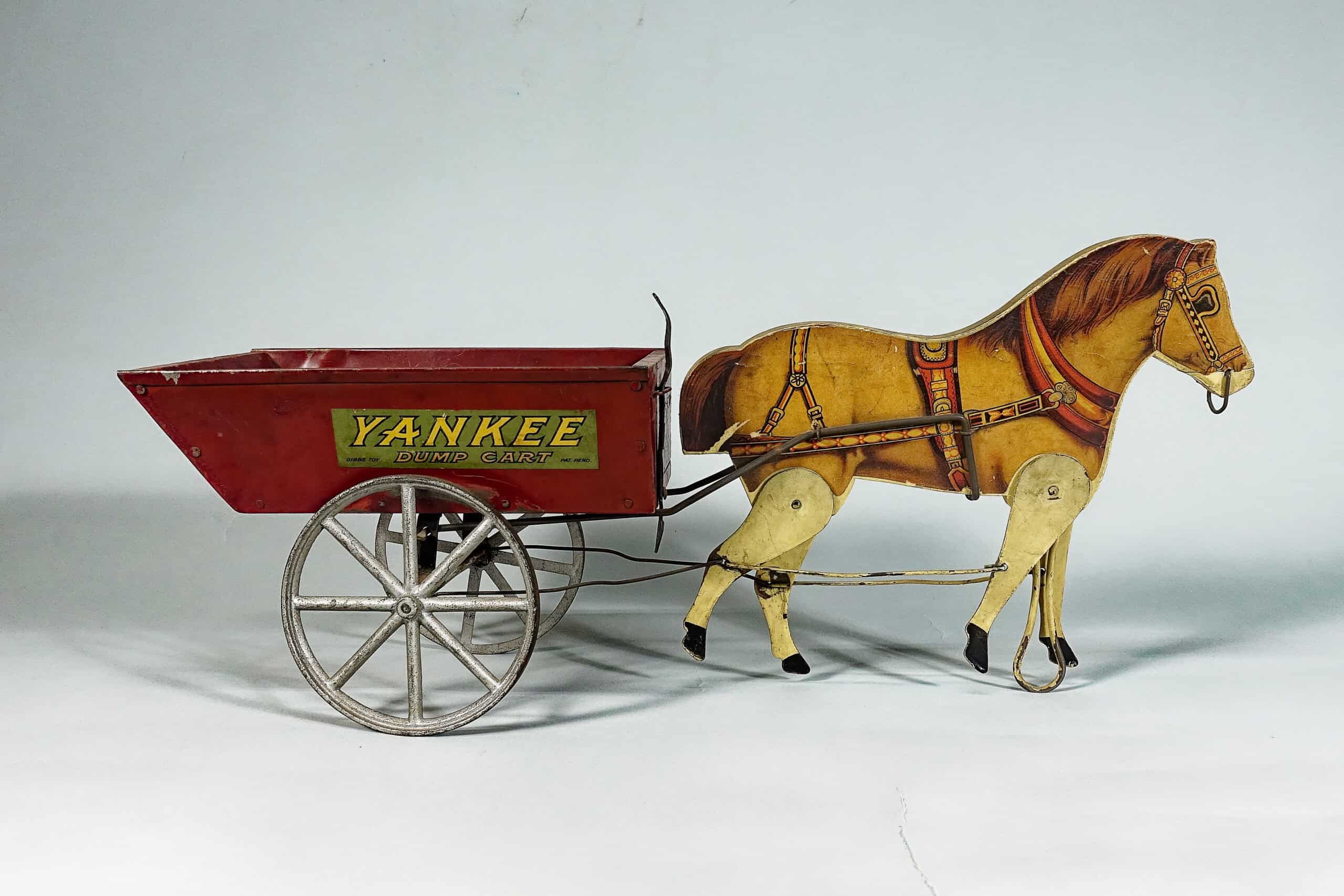
Toy that originally belonged to Calvin Coolidge, Jr. Calvin Jr. died in 1924 at age 16. Early in the 1930s, Mrs. Coolidge asked Charles Huxley, a neighbor about 5 years old, if he would like to come select one of Calvin Jr.’s toys for himself. Charles chose a mason jar full of marbles. A short time later Mrs. Coolidge appeared at the Huxley home and suggested to Charles’ mother that he might like to choose a nicer toy. The second time Charles selected this horse and cart. Historic Northampton (ID no. 1987.74.1).
… And when you went before,
You left the gates of Heaven ajar
That I might glimpse,
Approaching from afar,
The glories of His grace.
Hold, son, my hand,
Guide me along the path,
That, coming,
I may stumble not,
Nor roam,
Nor fail to show the way,
Which lead us to home.
That same year Grace was voted one of America’s 12 greatest living women, and she received a gold medal from the National Institute of Social Sciences. However, she eschewed fame for the remainder of her life. When Calvin died suddenly in 1933, she maintained her stoicism in public and, in less than a day, arranged the largest funeral ever held in Northampton. A special train brought President Hoover, Vice President Curtis, and members of Congress and the Supreme Court to town, where they joined the six New England governors and Eleanor Roosevelt, who was acting as Franklin Roosevelt’s emissary.
Grace had decided there would be no pomp and circumstance or flowery oratory, and Coolidge’s body lay in state for only an hour before the 20-minute funeral ceremony. There was then a funeral cortege from Northampton to Plymouth Notch, Vermont, where Coolidge was buried next to his parents, sister, and son.
Grace lived in town until her death on July 8, 1957. She had sold “The Beeches” in 1937 and built another home, called “Road Forks,” on Ward Avenue in the same general vicinity of her former Massasoit Street residence. Grace served on the boards of Clarke School and Mercersburg Academy, which her sons had attended while Coolidge was vice president. During her entire time in Northampton, she had supported the Red Cross and Visiting Nurse Association and had opened her home to the Smith College WAVES program during World War II. Grace was an avid Red Sox baseball fan and always listened to the games on the radio while knitting. She was often seen around town, and was unfailingly treated with the respect she had earned over the years. Just as Coolidge had done, the town gloried in her graces.