Caleb Strong Jr.
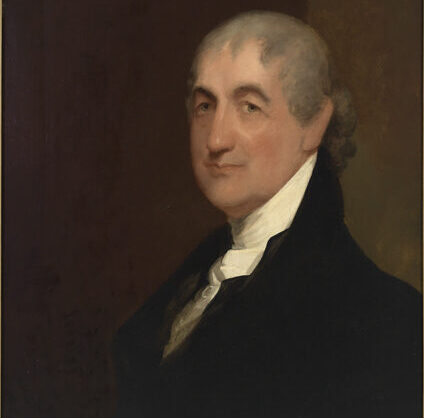
Caleb Strong Jr. served as a delegate to the 1787 Constitutional Convention in Philadelphia, as one of the first two U.S. Senators from Massachusetts, and as the Governor of the Commonwealth for eleven terms. Characterized as a man of integrity, simplicity, and dignity, the townspeople considered him Northampton’s “First Citizen.”
Early Life
Strong was born in Northampton in 1745, the only son of Lt. Caleb Strong and Phebe Lyman Strong. Caleb’s ancestor, the Elder John Strong, who settled in Northampton in 1659, established a tannery and became a leading man in the affairs of the town and of the church. The Strong tannery was inherited by Caleb’s father who was among the leading taxpayers in town.
In 1748, he built himself a grand house on Main Street; it was the first in town with a gambrel roof. One source described the home as “full of sunshine, and of the peace and presence of God.” It was located where Strong Avenue intersects with Main Street. In this house, Caleb Strong Sr. enslaved Moidore, who likely labored in the tannery. Moidore was known as an “accomplished fiddler.” Learn more about enslavement in Northampton.
Law & Politics
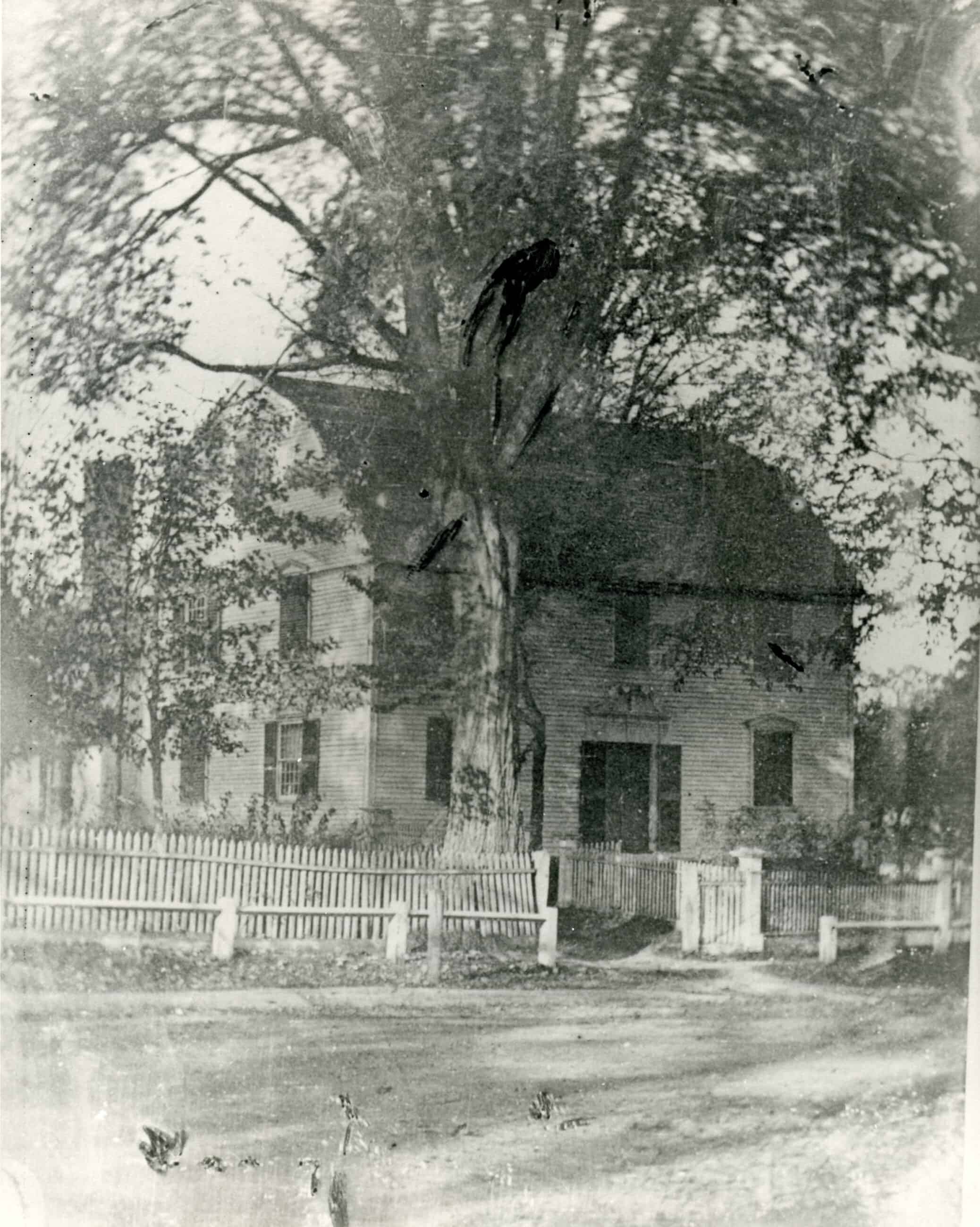
Caleb Strong graduated from Harvard College in 1764. He studied law with Northampton’s Joseph Hawley III. He relied on his family to read the law texts to him because smallpox had left him almost blind. In 1772, he was admitted to the bar, opened a law practice, and was elected selectman. In 1774, he was elected to the Provincial Congress of Massachusetts, along with Joseph Hawley III. A successful lawyer, only four years later he was appointed county attorney, a post he held until 1800.
Strong began his political career in 1776 when he was elected a member of the General Court, which was the Massachusetts legislature. The following year he married Sarah Hooker, the niece of John Worthington of Springfield. He opposed Shays’ Rebellion, a debtors’ uprising to block foreclosures.
In 1787, Strong was a delegate to the Constitutional Convention in Philadelphia. He helped break a critical impasse by supporting the “Connecticut Compromise,” whereby large states agreed to equal representation for all states in the Senate. When his wife became ill, he left the Convention and he never signed the Constitution.
The following year he was elected one of the two first U.S. senators from Massachusetts, serving until he resigned in 1796. While a senator, Strong was an incorporator of both the Proprietors of Locks and Canals and the Third Massachusetts Turnpike, which was chartered to build a road from Northampton to Pittsfield. Strong was president of the Hampshire Missionary Society and the Hampshire Bible Society, one of the founders of the Academy of Arts and Sciences, and a member of the Massachusetts Historical Society.
Position in the Community
The Federalist Party nominated Strong for Massachusetts Governor in 1799, despite objections that he was “a man who lives a hundred miles from salt water … and who, with his household, calls hasty pudding luxury.” Strong served eleven terms as Governor of Massachusetts from 1800 to 1807 and from 1812 to 1816, when he retired from politics and returned to Northampton. He was a delegate to the Hartford Convention (1814-1815) and his moderate influence was important when his faction succeeded in defeating the radical Federalists who wished New England to secede from the Union.
He was so revered by his constituency that not one single vote was cast against him in Northampton and in thirty surrounding communities during his first election for governor. At his death in 1819, he was eulogized as a man “who has been through the course of a long life alike distinguished for his private virtues and public service, and whose memory a grateful public will ever delight to honor.”
Caleb Strong Jr. died on November 7, 1819, at age 74. He is buried in Bridge Street Cemetery.
ADDITIONAL RESOURCES
Brown, Richard D. “Brief Life of a Federalist Politician Caleb Strong” in Harvard Magazine, Feb. 19, 2016.
Lodge, Henry Cabot. “Memoir of the Hon. Caleb Strong” in the Proceedings of the Massachusetts Historical Society, April 1820: 290-316.