Sojourner Truth
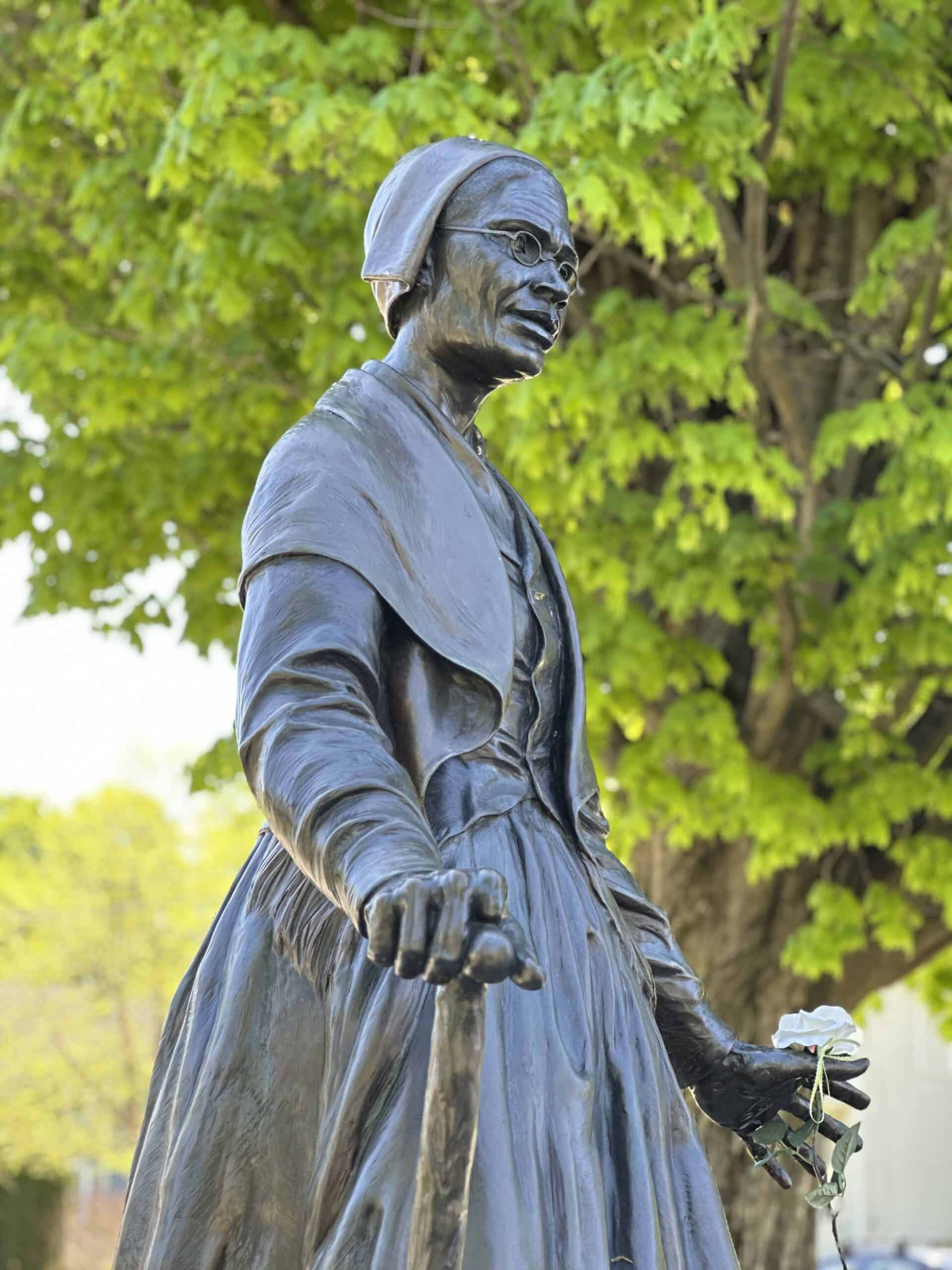
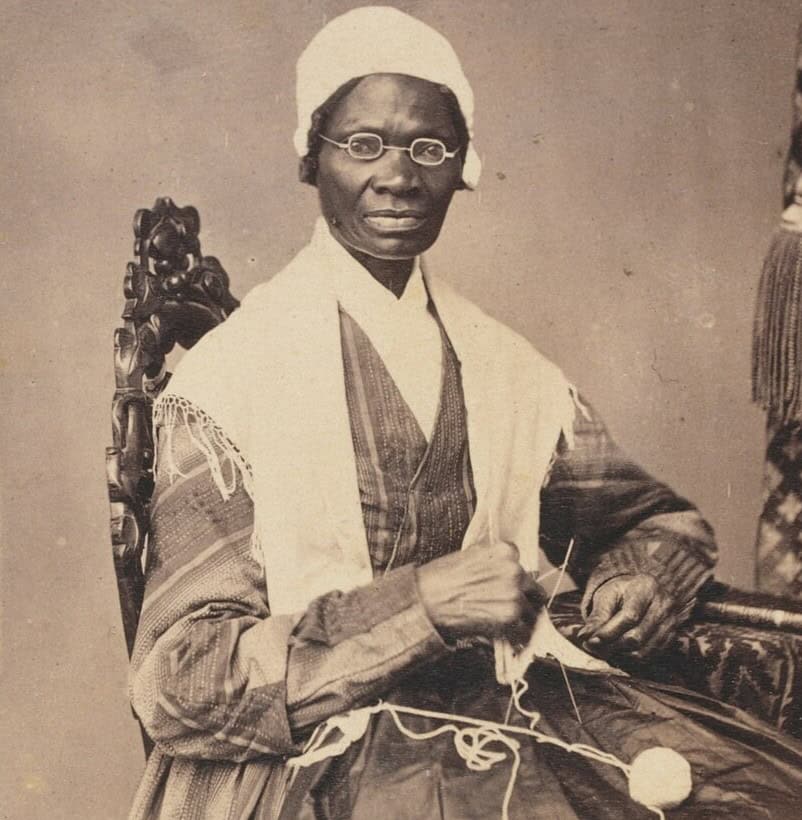
Sojourner Truth (1797–1883) is remembered throughout the country as a landmark activist for abolition and women’s rights. But she is also known in Northampton, where she was a resident for 14 years, as one of the most prominent figures to have been a member of the village of Florence’s Northampton Association for Education and Industry (NAEI). Her story and her work reveal not only Northampton’s role in shaping the anti-slavery movement nationally but also the experience of slavery and freedom in the North during the 19th century.
Early Years
Isabella Baumfree (the name Truth was given at birth) was born in 1797 enslaved in Ulster County, New York, about 100 miles southwest of Northampton, Massachusetts. Her father, James Bomefree, had been captured from the West African coast of what we would know today as Ghana. Her mother, Elizabeth, had been taken from what we would know today as Guinea. She would have grown up speaking Dutch with her family, alongside 16 percent of Black New Yorkers in the 18th century, and continued to have a Dutch accent for the rest of her life.
Truth was born enslaved to the Hardenbergh family. As a baby, Truth’s enslavers separated her from her 3-year-old sister and 5-year-old brother by selling them to owners of other estates. At the age of 9, the Hardenberghs sold Isabelle (as she was known at the time) on an auction block to John Neely, which separated her from her parents. Truth remembered Neely as a violent man who would beat her. After two years, he sold her to a tavern keeper named Martinus Schryver, who ultimately sold her to the Dumont family of West Park, New York, in 1810.
Truth spent the most of her enslaved life with the Dumonts, where she suffered physical, emotional, and sexual abuse from John and Elizabeth Dumont. Around 1815, John Dumont married her to an older enslaved man named Thomas. During her marriage, Sojourner Truth gave birth to five children: Diana (born around 1815, potentially the result of a rape by John Dumont), Peter (born 1821), Elizabeth (born 1825), Sophia (born 1826), and a boy possibly named Thomas, who died in infancy.
Becoming Sojourner Truth
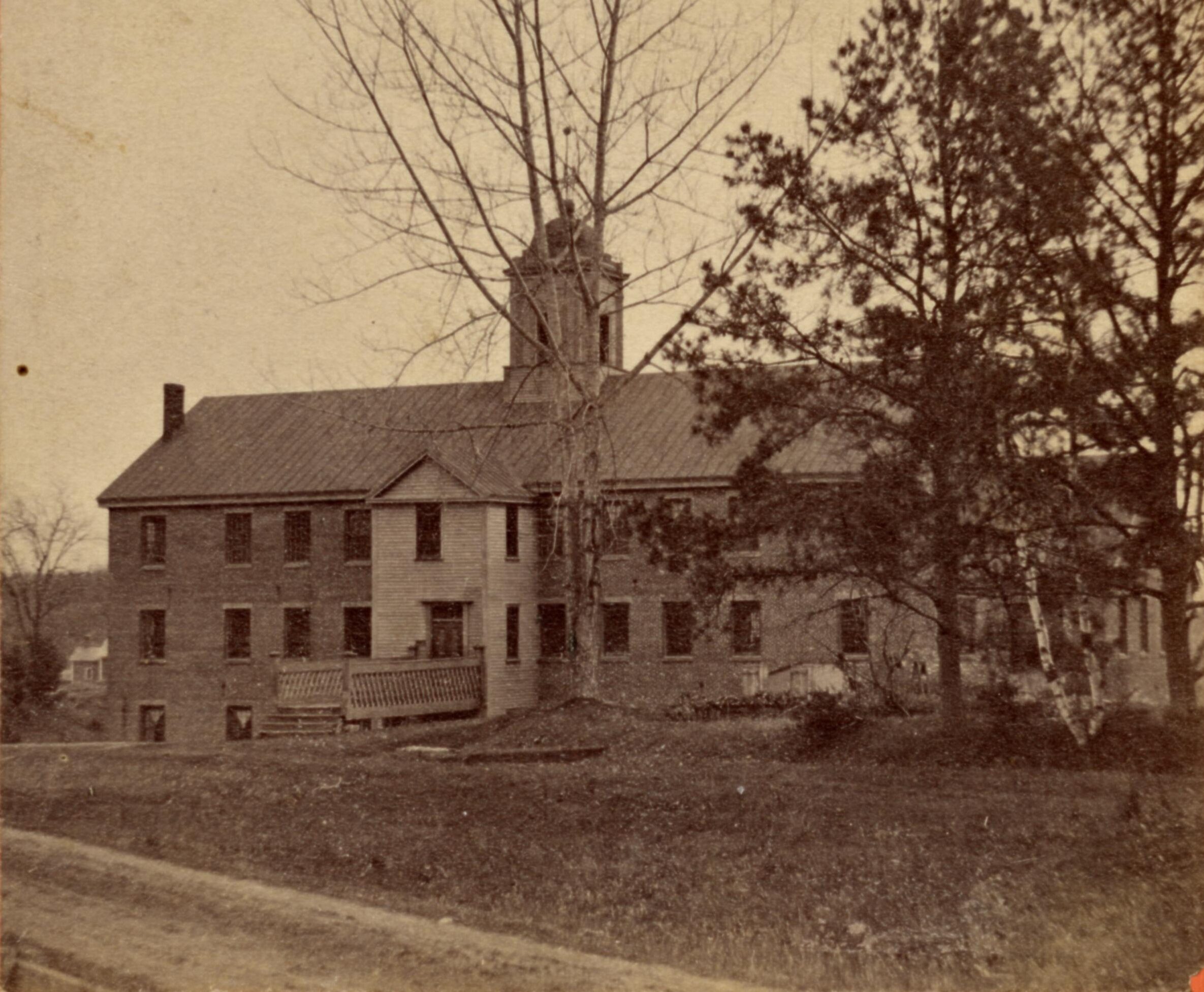
Isabella Baumfree’s journey to becoming Sojourner Truth started with freeing herself from enslavement at the hands of the Dumonts. Unlike Massachusetts, which fully abolished slavery in 1783, after the landmark cases of Elizabeth “Mumbet” Freeman and Quock Walker, the State of New York abolished slavery gradually. The 1799 Gradual Abolition Act declared that any children born to enslaved parents after July 4, 1799, would be born free, but any enslaved people (including Truth) born before that date would have to remain in bondage until July 4, 1827. Truth freed herself by leaving the John Dumont estate near the end of 1826.
Before Isabella Baumfree renamed herself Sojourner Truth in 1843, she spent a decade freeing herself by converting to Methodism and becoming a well-known itinerant preacher throughout the state of New York and New York City. Throughout this time, she lived in the houses of mainly white families for whom she provided domestic labor, even though she was now free.
She sought a communal living arrangement, though faced difficulty in finding one that would not exploit her due to her race and gender. In 1829 she joined The Kingdom, a millennial religious community led by a man named Robert Matthews who had renamed himself the Prophet Matthias. She faced physical and sexual abuse from Matthias. She left when the community disbanded in 1835 due to scandal and ruin. So when friends in Springfield, Massachusetts, introduced her to the Northampton Association for Education and Industry (NAEI), she was eager to visit.
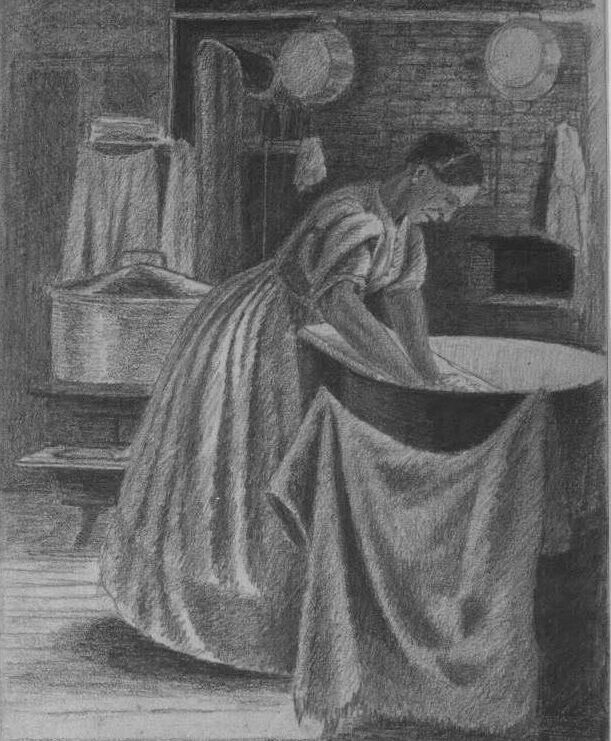
In 1843, Truth arrived at “the Community,” as the NAEI was called, in dismal cold weather, and was initially not impressed by her new home of Florence, Massachusetts. The NAEI was a utopian community founded on goals of racial, gender, and economic equality by George Benson (William Lloyd Garrison’s brother-in-law), Samuel Hill, Hall Judd, and Theodore Scarborough. She was sick at the time and did not plan on staying long, but soon changed her mind.
Abolitionism at “The Community”
At the Community, Truth was given respect and authority she had rarely experienced before. While there, she met famous abolitionists such as William Lloyd Garrison, Frederick Douglass, Wendell Phillips, and David Ruggles. By joining the Community, she became a part of the circle of abolitionist leaders changing the country from Florence, Massachusetts. She and Ruggles, a free Black man, lived in the factory boarding house alongside other white members. The two of them became responsible for overseeing laundry and were put in charge of managing Black and white men and women. The trust and freedom she experienced at the NAEI led her to stay in Florence for 14 years. She later recalled that of all the places she lived, no other offered the “equality of feeling,” “liberty of thought and speech,” and “largeness of soul” the NAEI did.
Her Narrative
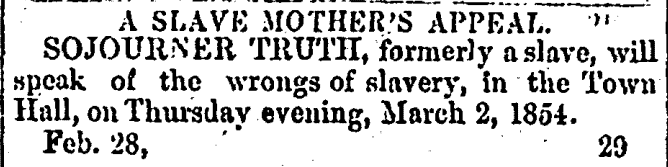
In 1844, while living in Florence, Truth began to develop her skills as an orator and made her first anti-slavery speech. Up until this point she had gained attention as a preacher speaking about God and religion, but with the support of the NAEI, she began to focus her attention toward politics. She would later speak all over the country about abolition and the rights of women and Black people. In her speeches, she told her story of escaping enslavement in upstate New York.
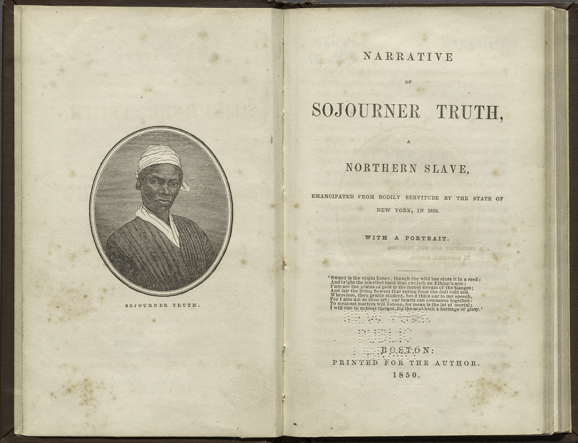
Truth rose to national prominence with the publication of the narrative of her life. In 1850, while in Florence, she worked with Olive Gilbert, a local abolitionist and early women’s-rights activist, and William Lloyd Garrison, another prominent abolitionist and friend, to publish The Narrative of Sojourner Truth: A Northern Slave. Harriet Beecher Stowe, the bestselling author of Uncle Tom’s Cabin, wrote an introduction to the 1855 edition of The Narrative. By sharing her story with the public, Truth attracted more support for the abolitionist movement and prompted her fellow Northerners to reflect on their own involvement with the institution of slavery
Truth’s Legacy: Fact and Fiction
Truth’s early years in Dutch-speaking New York challenge the popular image of Truth as a southern tale of slavery and escape to freedom akin to those of Harriet Tubman and her later colleague, Frederick Douglass. This false image is memorialized in her most famous speech, often called “Ain’t I a Woman,” published in 1863. The common version of this speech found in textbooks and taught in schools was actually an altered version of an original 1851 speech titled “On Woman’s Rights.” White abolitionist, Frances Dana Barker Gage, rewrote the speech, changing the words to depict Truth as speaking with a stereotypical “southern Black slave accent” rather than the Afro-Dutch accent she would have really had.
Nell Irvin Painter, a history professor at Princeton University and the first major scholar to point out this historical discrepancy, argues for the importance of recognizing Truth’s Afro-Dutch culture as a New Yorker specifically because it upends popular myths about slavery as solely a Southern phenomenon. She writes:
With southern slavery as the symbol of American slavery, Truth’s early life automatically migrated into a vague, composite antebellum South, a Southern Nowhere that for all its lack of specificity is definitely south of the Mason-Dixon line.
In honoring the true story of Sojourner Truth, it is essential that we understand her experience of both enslavement and freedom as taking place in the Northeast.
Her Own Home
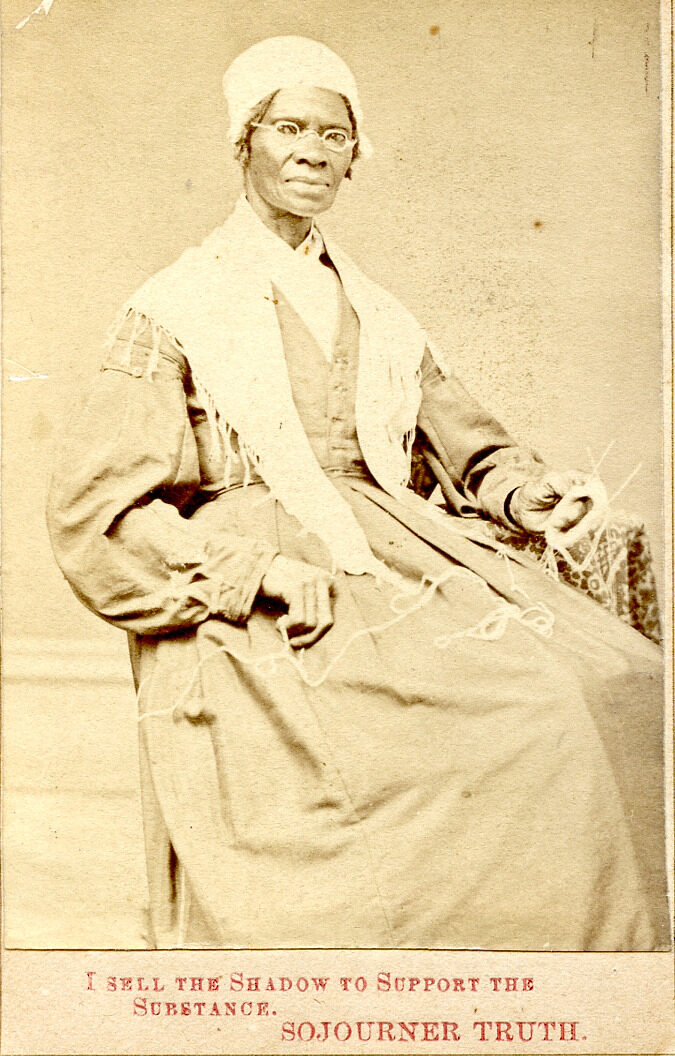
Her newfound fame, along with the proceeds of her work, allowed Truth to finally purchase her own home. She sold carte-de-visites (photographs) of herself with the words “I sell the shadow to support the substance” printed on them to raise money for the cause of abolition. In doing so she recognized the social and financial value of her own image (“the shadow”) and how she could be compensated for it via “the substance”.
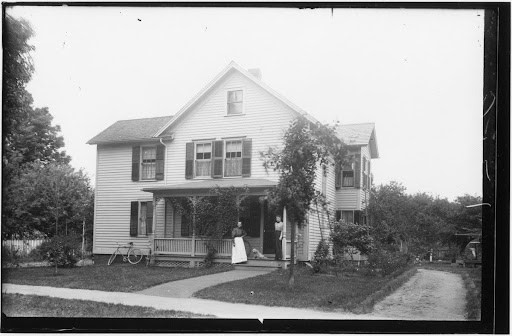
Truth bought a house on Park Street in Florence from Samuel Hill on April 15, 1850. In 1854 she officially paid off her mortgage—a very significant event. As an enslaved woman and later as a domestic servant, she had always lived in the houses and on the land of others. Even at the NAEI she shared living quarters and domestic duties with people who were initially strangers. In her own home, she could control the labor she did, the people she allowed entry, and the environment that made her feel safe. She would have been one of very few Black women to own land in her own name in Northampton at the time. In order for her to achieve this, she chose to publicize her identity and to share with the world some of her most intimate and traumatic experiences.
Leaving Northampton for Michigan
In 1857, she left Florence for Michigan and the Quaker community of Harmonia to reconnect with her children and family and to return to living in a utopian community. But she continued to be a familiar face to the abolitionist community in Florence. Her work as an orator took her all around the country and she continued to stop frequently in Florence to visit her friends.
She continued to travel extensively, speaking publicly against slavery and for women’s rights. During the Civil War she worked with the Union Army recruiting Black soldiers, including her own grandson, James Caldwell, who enlisted in the 54th Massachusetts regiment.
After national abolition in 1863, she worked in Washington D.C., with the National Freedman’s Relief Association to advocate for better living conditions for formerly enslaved people nationally. She had seen herself what it was like to escape enslavement only to find few options for housing or employment.
In 1864, she met with President Abraham Lincoln to discuss the issue. After the Civil War was over she advocated awarding land grants in western territories to formerly enslaved people, meeting again with the president at the time, Ulysses S. Grant. Time and time again, she used her own experiences of discrimination based on race and sex to advocate for the welfare of women and Black people alike, specifically her fellow Black women.
Final Years
At the end of her life, Truth lived in Battle Creek, Michigan, alongside her family, including her daughters, Diana and Elizabeth, who cared for her; son-in-law William; and grandsons William and Sammy. She died at the age of 86 on November 26, 1883. In Washington D.C., her friend and colleague Frederick Douglass wrote her eulogy: “Venerable for age, distinguished for insight into human nature, remarkable for independence and courageous self-assertion, devoted to the welfare of her race, she has been for the last forty years an object of respect and admiration to social reformers everywhere.”
Since her death, Truth has been venerated and memorialized by activists throughout the country, and by the communities for whom she advocated and in which she lived, including Northampton. Today a memorial statue of Sojourner Truth stands at the intersection of Pine Street and Park Street in Florence, where she once lived.
ADDITIONAL RESOURCES
Websites to Visit
Pasquale, Andrew. “Sojourner Truth.” David Ruggles Center for History and Education. Last modified August 18, 2018. Accessed February 19, 2026.
Podell, Leslie. “The Sojourner Truth Project.” The Sojourner Truth Project. Accessed February 19, 2026.
Sojourner Truth Memorial Committee. “Her History.” Accessed February 19, 2026.
Sojourner Truth’s home within the African American History Walking Tour.
Books to Read
Painter, Nell Irvin. Sojourner Truth: A Life, a Symbol. New York: W. W. Norton & Company, 2024.
Truth, Sojourner. The Narrative of Sojourner Truth: A Northern Slave, Emancipated from Bodily Servitude by the State of New York, in 1828. Edited by Olive Gilbert. Appendix by Theodore D. Weld. For the Author, 1850.
Washington, Margaret. Sojourner Truth’s America (University of Illinois Press, 2009)