Sophia Smith
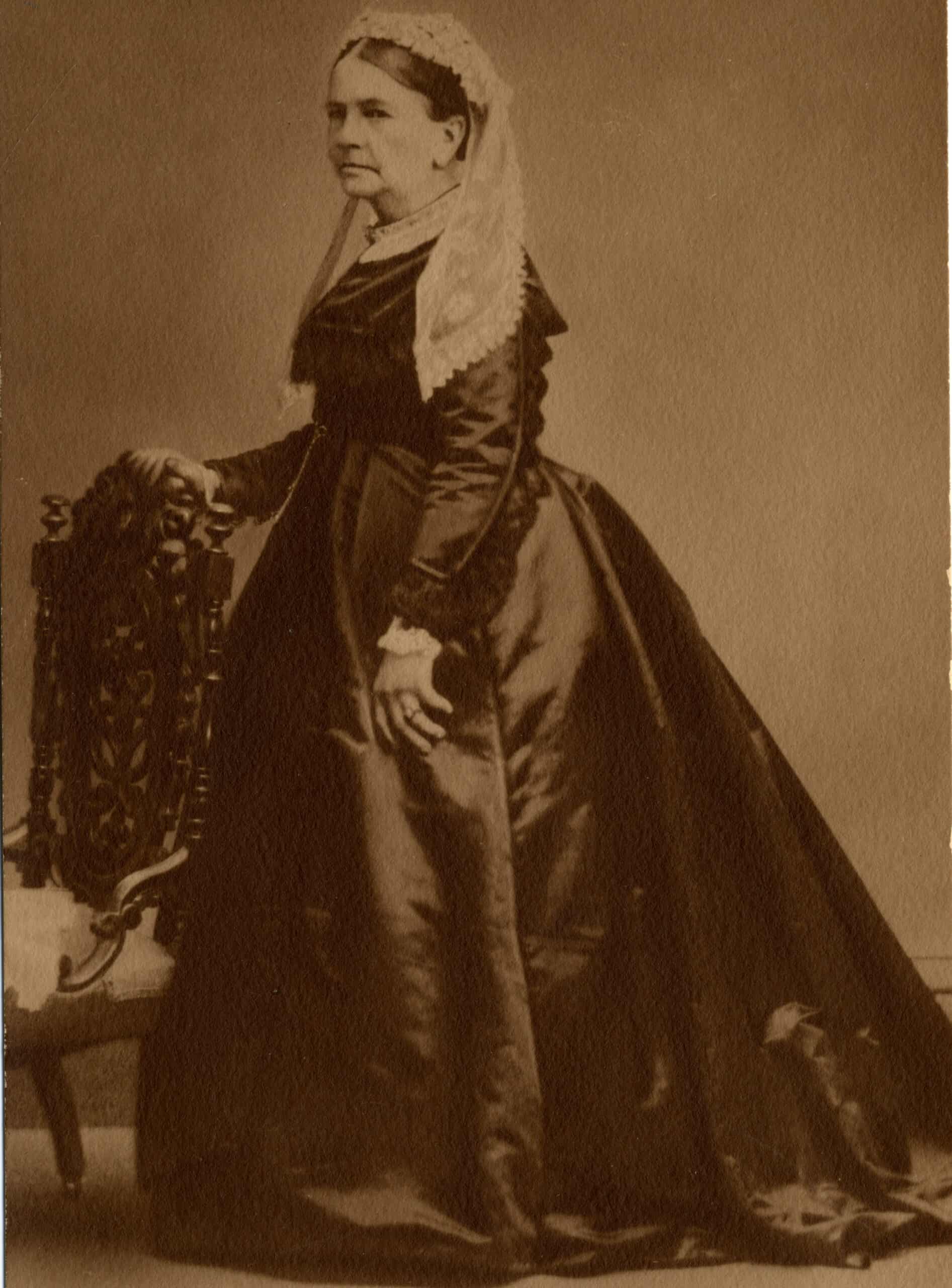
Sophia Smith (1796–1870), a lifelong resident of Hatfield, Massachusetts, was a philanthropist who changed the history of women’s education by leaving funds in her will to establish Smith College. When she selected Northampton as the site of her future college, she also changed the history of Northampton.
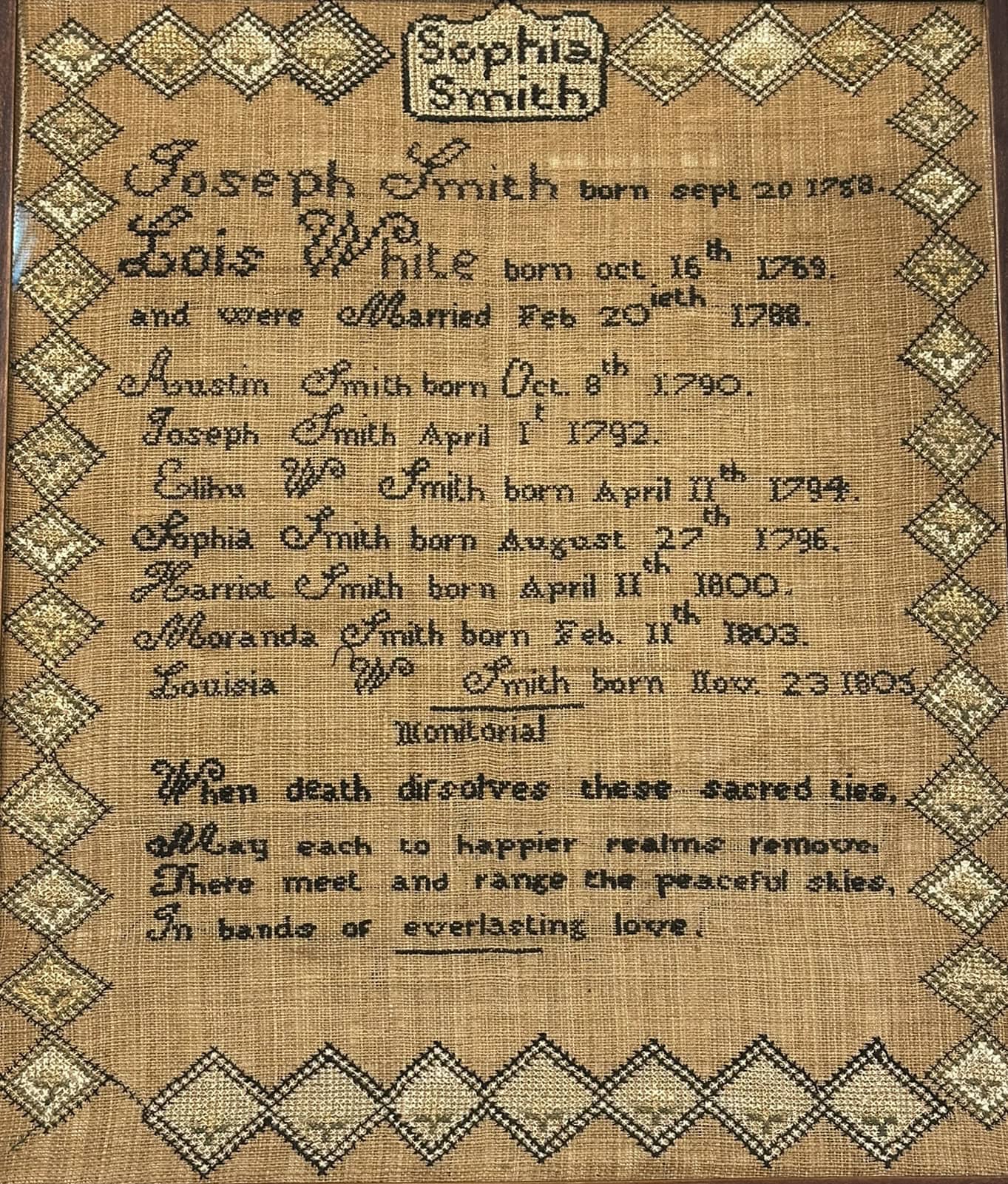
Early Years
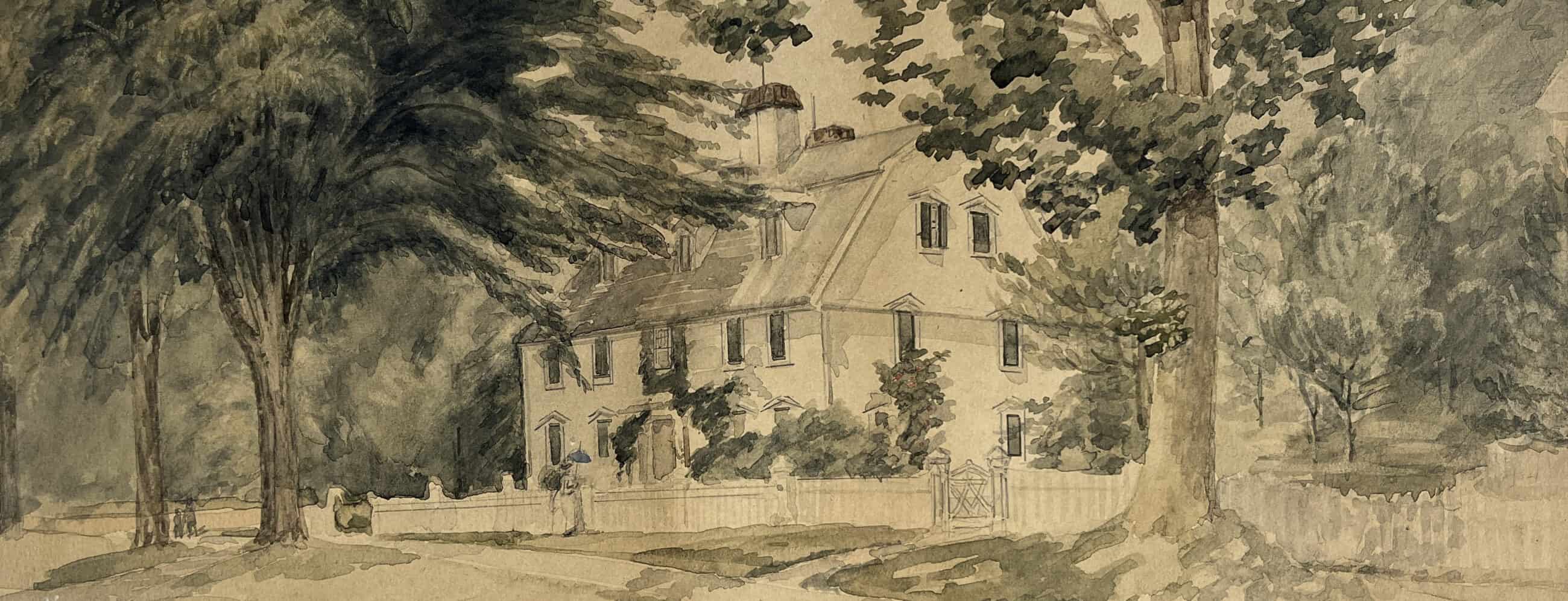
Born a decade after the end of the Revolutionary War, Sophia Smith was the first daughter of Joseph and Lois White Smith and the fourth of seven children (three older brothers, three younger sisters). She was born and raised in a home that her parents had built on the main street (now 22 Main Street) in Hatfield. Behind the house were extensive fields that bordered the Connecticut River, which was less than one-quarter mile away.
As a girl, from the age of 4 until she reached 18, she was schooled in Hatfield, likely in someone’s home. She also may have attended another school for an additional year or more, but did not go beyond a secondary education. With the births of her younger sisters, she likely helped with their care and later helped them with their schoolwork.
Sophia’s family was one of Hatfield’s most prosperous. Her father and his brothers were farmers who raised beef and wheat to supply to Boston markets. The Smiths also owned a dry-goods store in Hatfield and were involved in shipping goods on the Connecticut River, probably between Northampton and Greenfield. In addition to their work, all the men in her immediate family—her father, her uncles, and, when they became adults, her brothers—were engaged in civic affairs at the local, regional, and state levels.
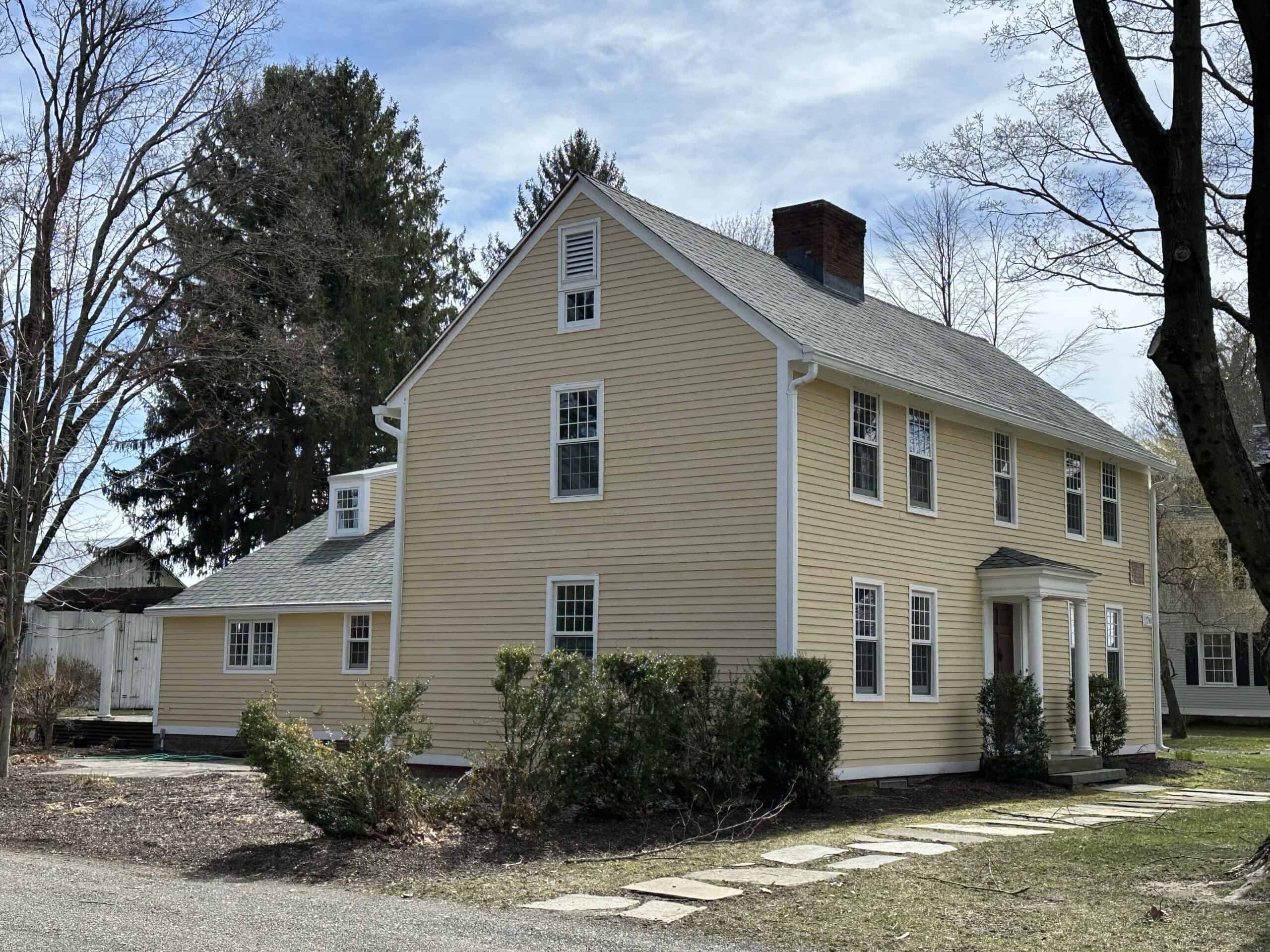
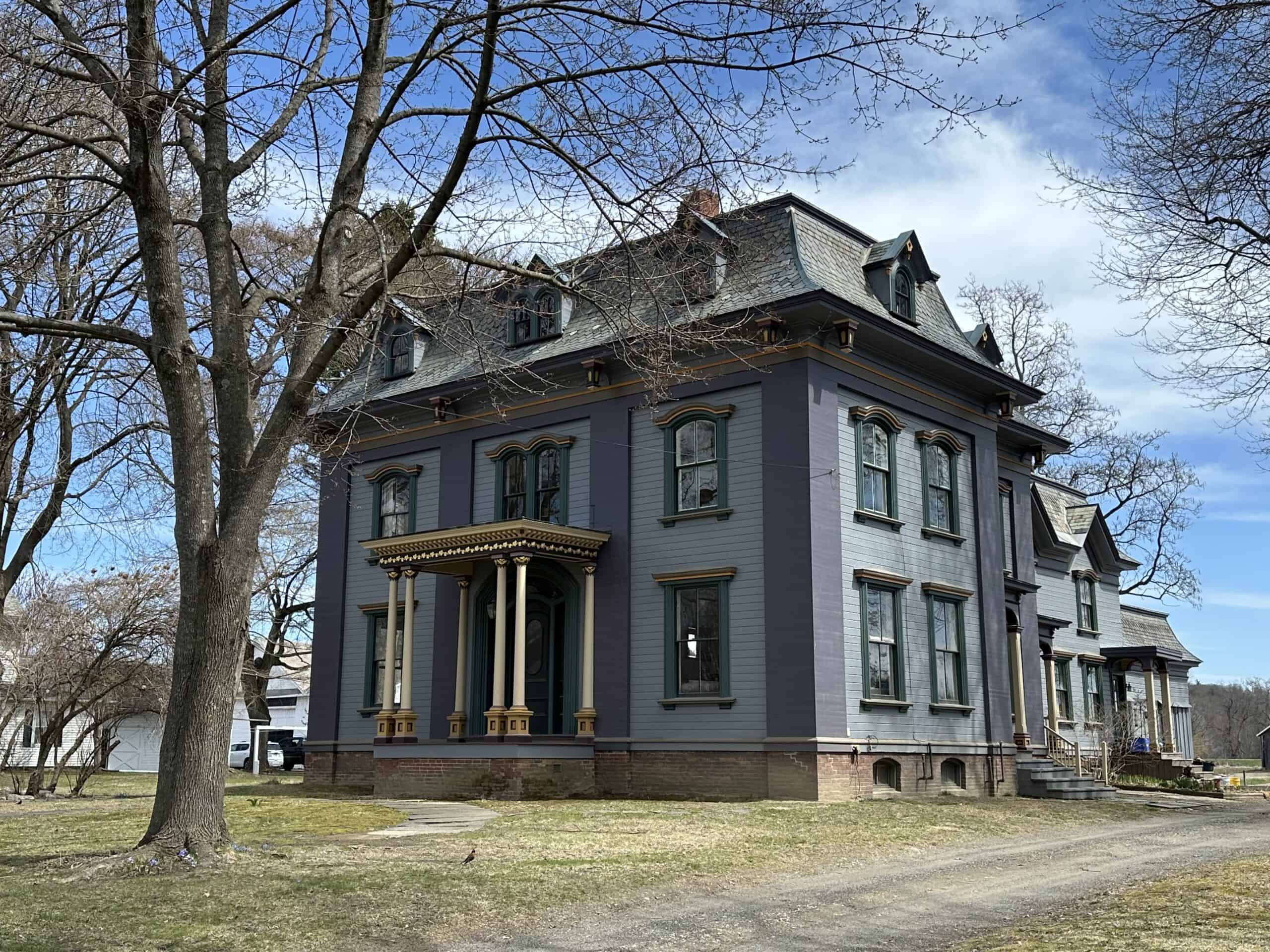
Photographs of the two houses that Sophia Smith lived in. On the left is the original house that she grew up in and the second is a fancier property brought later.
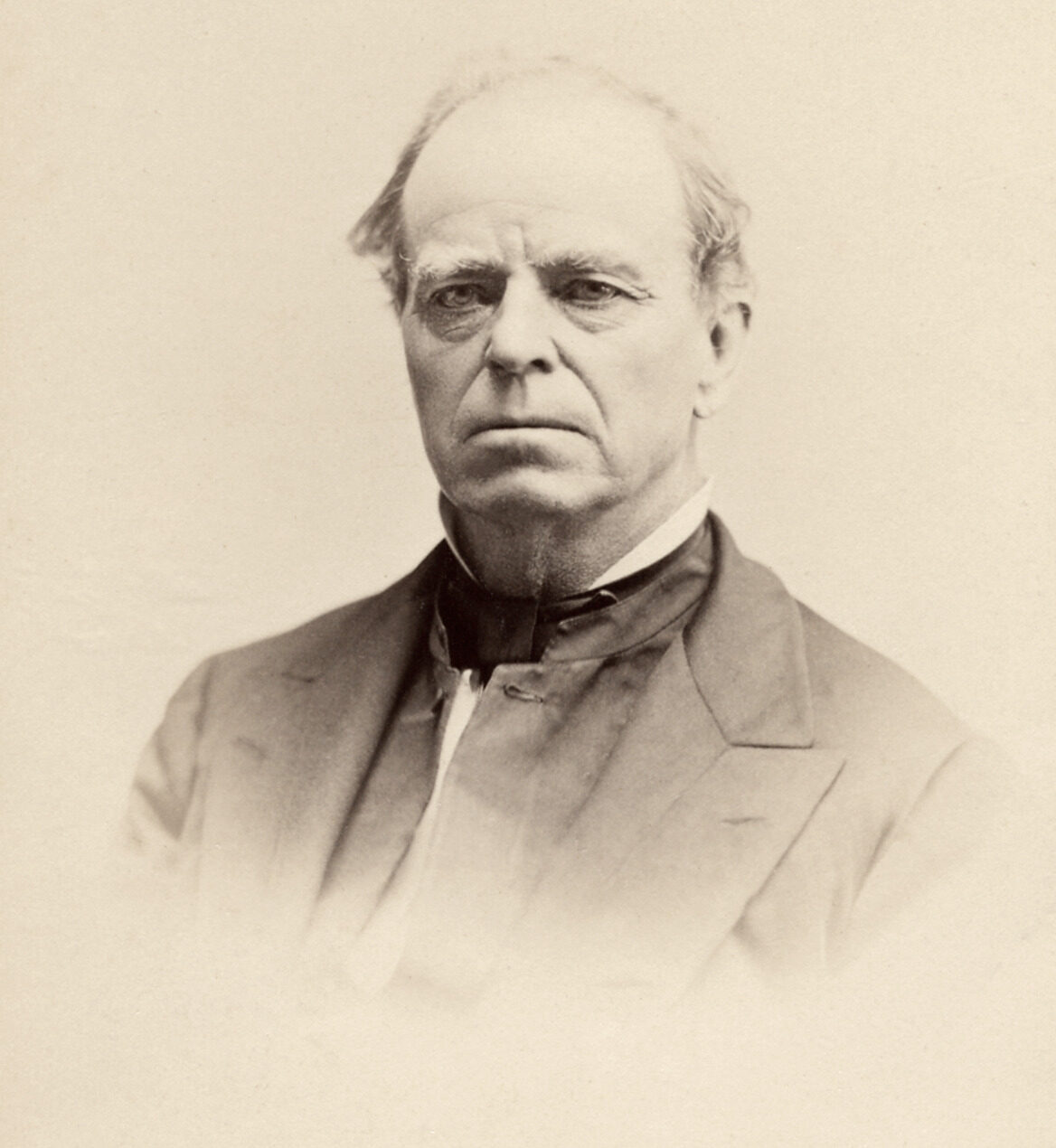

Throughout Sophia’s childhood and into her 30s, the family attended the nearby Congregational Church, but the Smiths were not official members of the church. Sophia finally became a member just a month before she turned 38. Her interest in having a closer tie with the church may have come about following the deaths of three of her siblings and her mother, all of whom died between 1828 and 1831. Until those deaths, Sophia and five of her six siblings were all living as unmarried adults with their parents in the same home they had grown up in.
In 1835, when Sophia was 39, her father died, leaving her and her three remaining siblings each $10,000, or about $350,000 in 2026 value.
Sophia: Her 40s, 50s, and 60s
In her 40s, Sophia’s hearing began to diminish, and while she never became completely deaf, by her 50s, she was relying on an ear trumpet to hear conversations. During this time, she began traveling more. She made annual trips to Saratoga Springs with her brother and his wife and her younger sister, Harriet, and traveled to New York City, Washington, D.C., and Boston with family and friends. She also began making her first philanthropic gifts: an organ for the church and a donation of funds to the local library.
When Sophia was 63, her beloved younger sister Harriet died, and left her estate to be divided equally between Sophia and her brother, Austin. At Austin’s urging, he and Sophia created reciprocal wills, leaving one another their fortunes in case one of them died. Two years later and just a month before the Civil War began, Austin died while in New York City, leaving all of his wealth to Sophia. At the time, Sophia’s last remaining sibling, Joseph, was also ill; he died six months later.
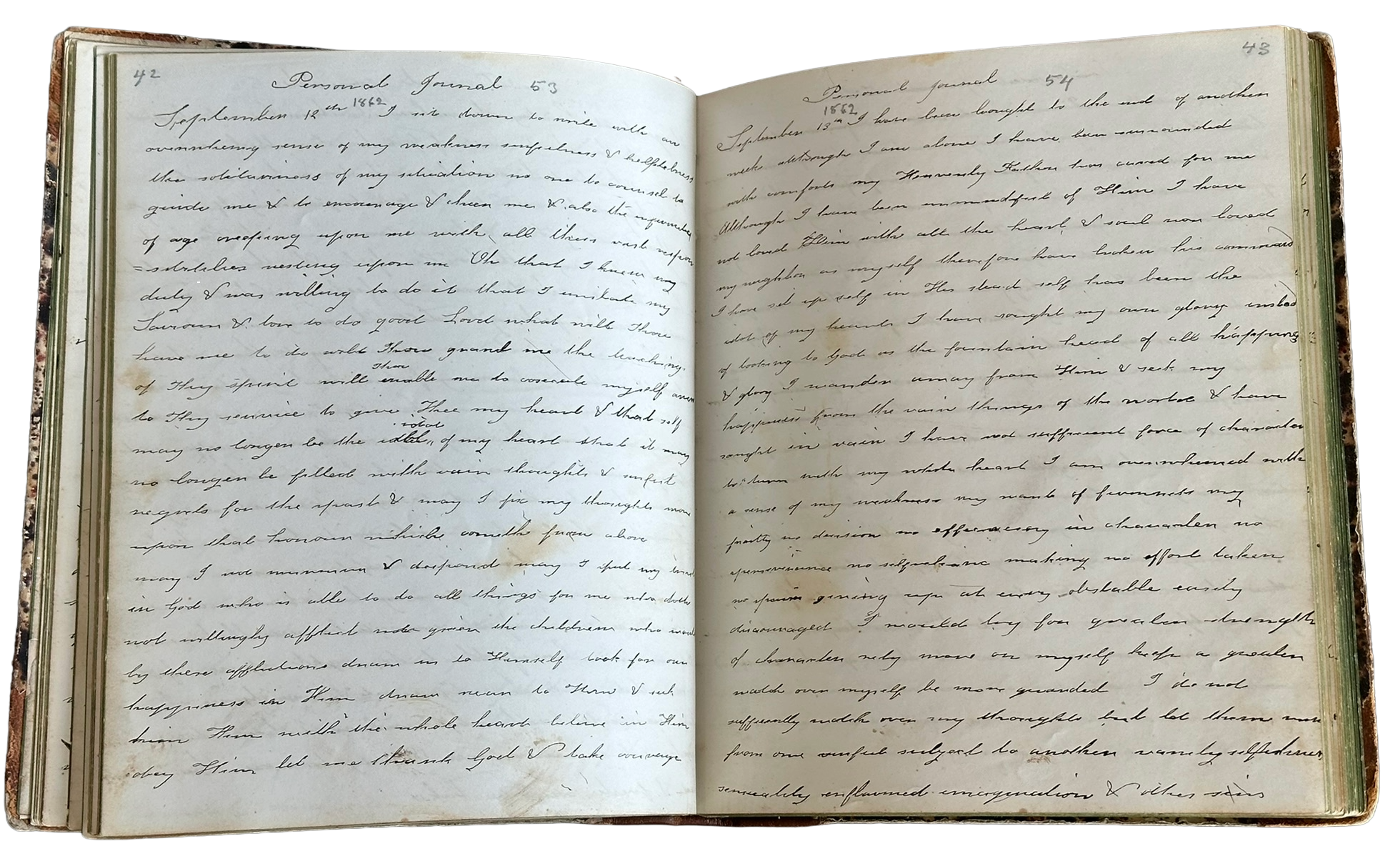
As the last remaining member of the Smith family, Sophia struggled with grief. She shared these feelings in her journal, or Sabbath record, which she wrote in on Sundays. During the nine years she wrote in her journal, she often asked for divine guidance in making difficult decisions, in particular what to do with her wealth and how to achieve the most good for others. In 1845, her uncle, Oliver Smith, had left $400,000 to create Smith Charities and the Smith Vocational School, providing a model that she might follow.
During her 60s, she also became close friends with Reverend John Morton Greene. Originally from Hadley, Greene had begun serving as the minister in Hatfield in 1857 when he was just 25, and after Harriet’s death he occasionally traveled with Sophia. He was also an important member of her inner circle and one of the advisors whom she asked for guidance regarding how to use her wealth. As one of the wealthiest women in the area, Smith was repeatedly approached by people with their own ideas about projects needing financial support.
Sophia Smith’s Wills & Death
Just months after Austin’s death in 1861, Sophia prepared a new will. It included giving funds to the Andover Theological Seminary, creating a high school for boys and girls in Hatfield, donating $50,000 to Amherst College for a Scientific School, and establishing a “deaf mute asylum” in Hatfield. The following year, she revised her will again–removing the donation to Amherst College and replacing it with a library.
Sophia was an avid reader throughout her life, and in her 60s she subscribed to several newspapers and magazines. It is likely that she read about the founding of Vassar College in 1861 in Harpers, and this may have given her the idea of founding a women’s college. By the early 1860s, the Mount Holyoke Female Seminary (now Mount Holyoke College) had been operating for more than two decades. While her brothers and uncles had been dismissive of the value of a secondary or college education (none of them attended nearby Deerfield Academy or Amherst College), Sophia was intellectually curious. Her personal library reflected her wide-ranging interests—from the latest novels recommended by Harper & Brothers to the history of religions, geology, biographies, and more. Among the notable titles in her collection was Eminent Women of the Age. What sparked her passion for learning is unknown, but she was living during a time when women’s suffrage and women’s education were important topics. In 1859, for instance, the Atlantic Monthly, to which she subscribed, published “Ought Women to Learn the Alphabet,” which strongly advocated for women’s education.
During the last decade of her life, she traveled by horseback up Mount Washington, had surgery on her ears, and in 1867, built a new, much grander home—with a music room and a new piano—next to her original family house. That same year, the Clarke School for the Deaf opened in Northampton.
The opening of the Clarke School may have been what prompted Sophia to revisit her will. In January 1868 she asked her financial advisor in Northampton for an accounting of her assets, which had grown to about $400,000. As she considered founding a women’s college, she asked the opinion of her close advisors. Her pastor John Morton Greene opposed the plan as the chance of failure for a new women’s college was high. Instead, he encouraged her to leave her funds to Amherst College (where he’d gone) or to the Mount Holyoke Female Seminary, which his wife had attended. Others also tried to dissuade her.
Later that year, Sophia’s ideas and intentions were transcribed into a will by another close advisor, fellow Hatfield resident and lawyer George Hubbard. Her new will eliminated establishing a school for the deaf and replaced it with the creation of a women’s college.
Because Sophia did not mention establishing a women’s college in her Sabbath record and no letters or diaries exist that reveal her thinking, it is unclear who, if anyone, might have influenced her decision in founding a college. Greene, although originally opposed, would later take full credit as the originator of the idea. Based on the research of Smith College’s Quentin Quesnell, Greene changed the story of his role over time, from advisor to originator. He also pasted on top of original journal entries new descriptions of the college’s history. Further, after all the other advisors had died and couldn’t counter his version, Greene wrote a series of newspaper articles “documenting” the history of the college and his foundational role, reducing Sophia Smith’s to merely its funder.
Selecting Northampton over Hatfield
In her 1868 will, Sophia Smith had originally specified that her future women’s college be established on Main Street in Hatfield. Her inner circle of advisors, who knew of her plans, tried to persuade her to consider other locations. Greene, who had left Hatfield and was now serving another church, thought that Hatfield’s main street was a terrible location. He recommended building closer to Hatfield’s railroad track and on a hill not far from Northampton’s town line, near today’s Laurel Park. Northampton was another option suggested.
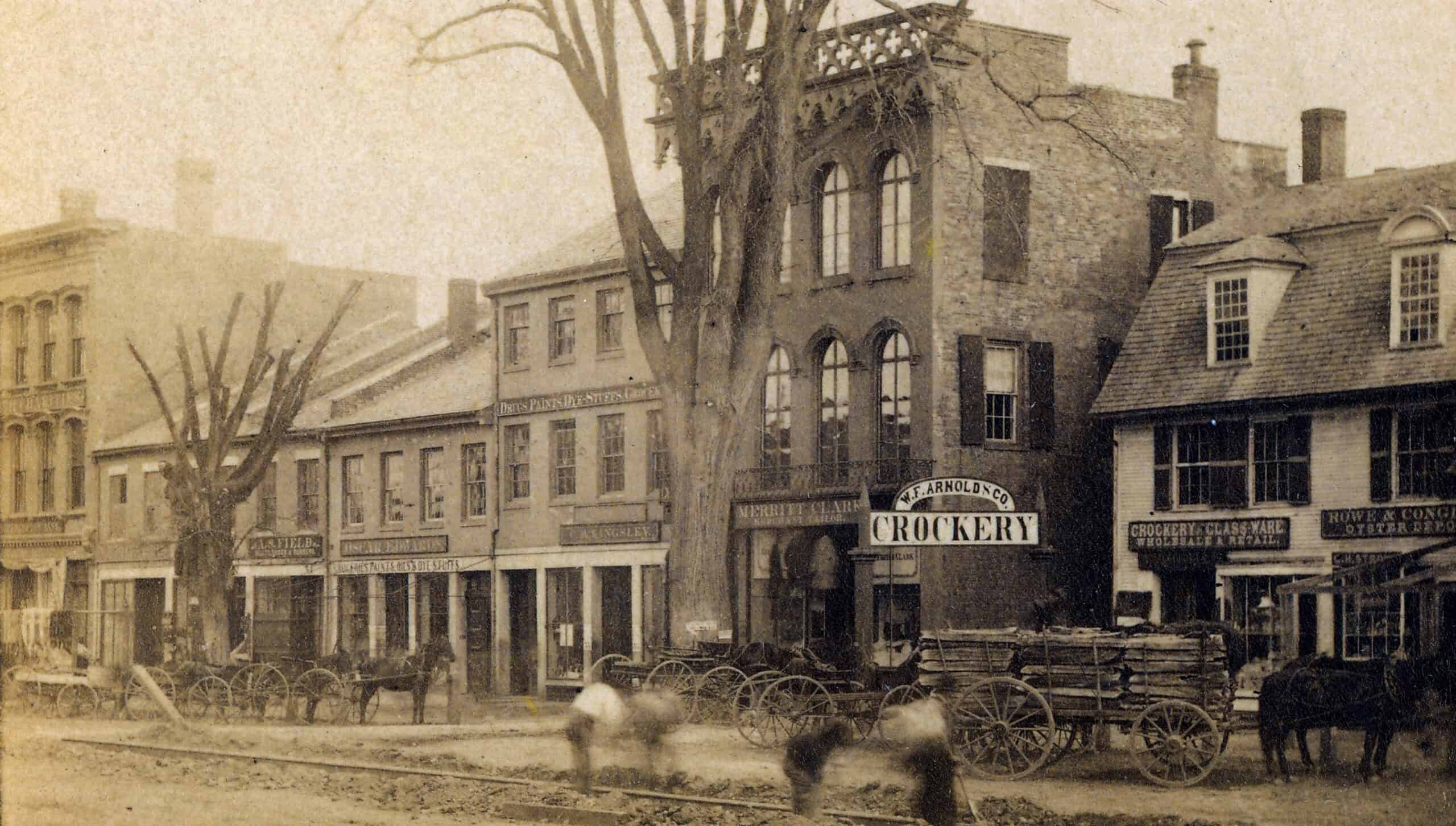
A year passed. Then in January 1870, two months after asking George Hubbard his opinion about Hatfield vs. Northampton, Sophia Smith asked him to change her will again and shift the location of the future college to Northampton. Northampton had “superior advantages,” including access to multiple churches, better transportation services, a downtown with retail shops, a newly established library, and a larger population. But in her will, Smith included a caveat. She required that the citizens of Northampton contribute $25,000 to the new college, and, if not accomplished within a year, the college would be built in Hatfield.
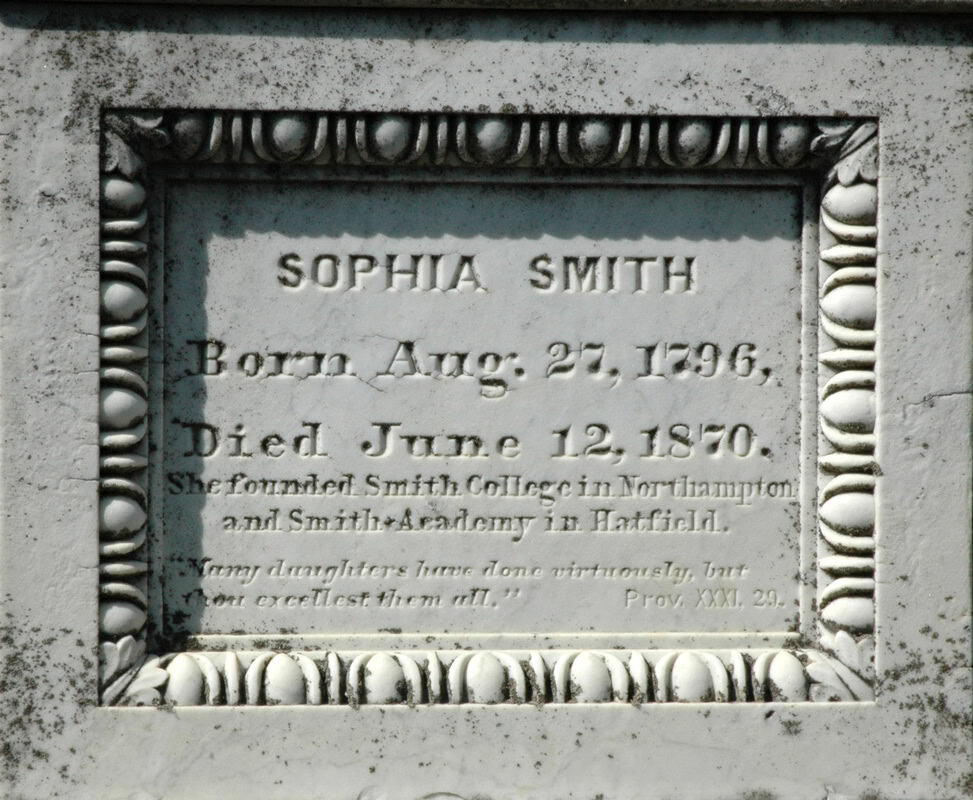
At the time Smith signed the revised will in March 1870, she was in good health. At 73, she had just returned from an extended stay in Boston and was planning another trip during the summer. But just three months later, she suffered a stroke or heart attack, dying a few days later on June 12, 1870.
Sophia Smith’s Last Will and Testament: “A Perennial Blessing to the Country and the World”
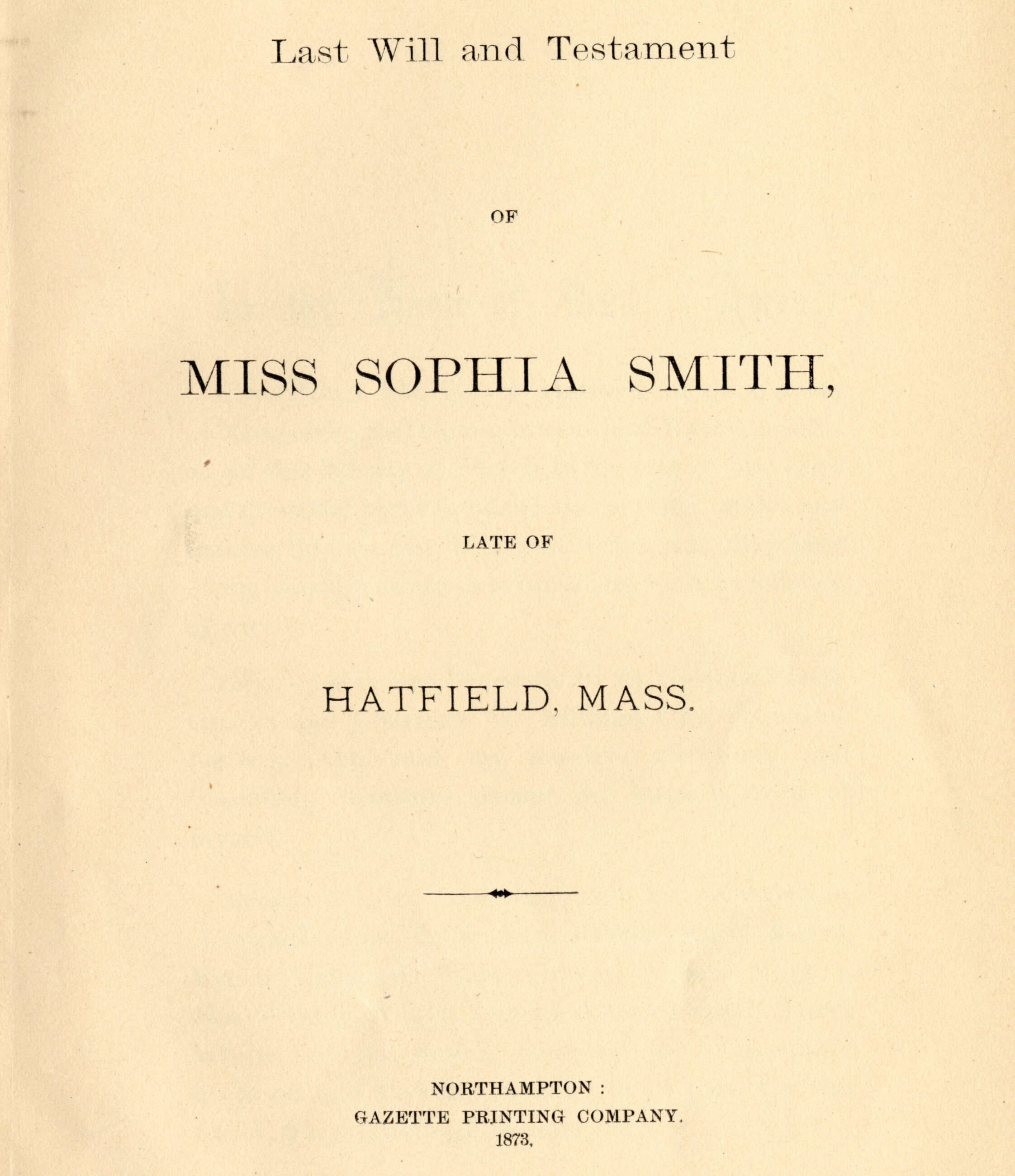
In the afternoon following her funeral, Sophia Smith’s will was read publicly. Here is an excerpt related to the future Smith College:
[F]unds … shall be appropriated to the founding & conducting of an Institution for the higher education of young women, with the design to furnish for my own sex means and facilities for education equal to those which are afforded now in our Colleges to young men. It is my opinion that by the higher and more thoroughly Christian education of women, what are called their “wrongs” will be redressed, their wages will be adjusted, their weight of influence in reforming the evils of society will be greatly increased; as teachers, as writers, as mothers, as members of society, their power for good will be incalculably enlarged…It is my wish that the institution be so conducted, that during all coming time it shall do the most good to the greatest number. I would have it be a perennial blessing to the country and the world.
—From the Last Will and Testament of Sophia Smith (1870)
With these words, Sophia Smith created her legacy: a women’s college founded by a woman and with an education on a par with that previously available only to men.
Following Sophia Smith’s Death 1871–1875
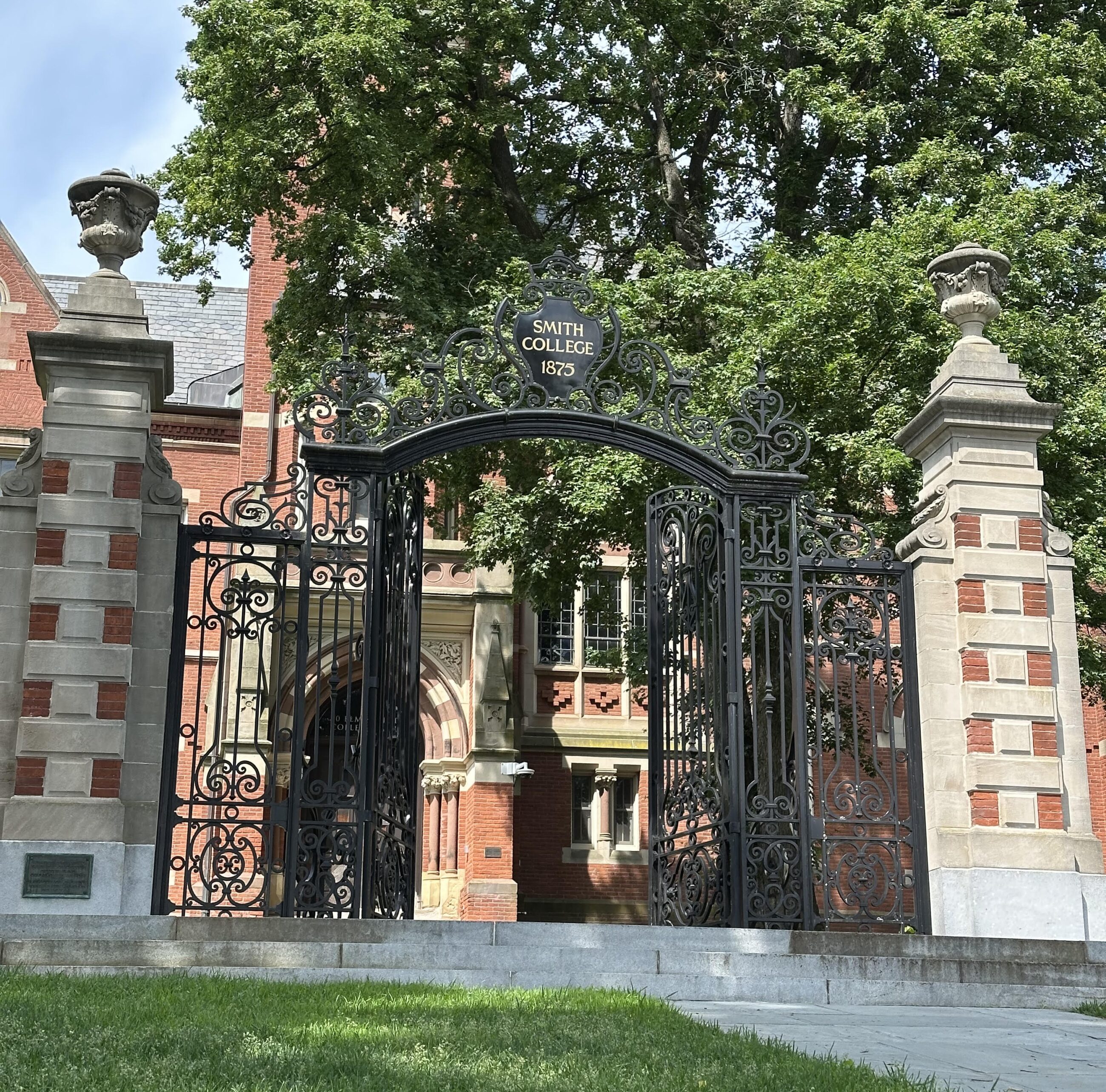
The trustees named in her will included Greene, Hubbard,and other key advisors, and while they may have felt ambivalence before Smith’s death, they were faithful to the terms of her will. A year after her death, Northampton had committed to contributing $25,000, the legislature granted the college’s establishment, and the trustees purchased 13 acres that were “unsurpassed for beauty and convenience, lately owned and occupied by Judge Dewey and Judge Lyman.” During the next few years, College Hall and the president’s house were built on the property, which sits prominently above nearby downtown Northampton. And in 1875, the first convocation, with 14 students and six faculty, was held.
Smith and Northampton’s Historic Character
Sophia Smith’s will specifies that students were to live in “cottages” rather than large buildings, to create a deeper sense of family and friendship. In addition to on-campus houses, early on, many students received room and board from local townspeople. These living arrangements brought students directly into the social life of the town. Even now, Smith’s student residences are called houses, and many of them are older homes along Elm Street that were acquired by the college and adapted for student housing. Although Smith has removed a number of historically significant buildings from its campus, for the most part, the college has preserved the architecture and character of Elm Street.
Since its original 13 acres, Smith College has continued to acquire more land, expanding its campus to more than 125 acres today. A significant acquisition took place in the early 20th century when the college purchased lots along Mill Lane (which became College Lane), culminating in 1916 with the acquisition of the Clement and Hawks Manufacturing Company (built in 1866 and known as the Hoe Factory), which included land on both sides of the Mill River dam at Paradise Pond. Historically, the area near this dam was known as the Upper Mills and had been the center of Northampton’s mill industries since the 17th century. In a real sense, the large residential parcels and mill industries in the Upper Mills were replaced by the education industry on the Smith campus.