10-40 Main Street, Florence
The Florence Sewing Machine
Leander W. Langdon, born in Vermont in 1833, was working in a machine shop in Rochester, NY, when he became fascinated by sewing machines, building the first one of his own design in 1850. This was followed in 1852 by a second design. Langdon exhibited his sewing machine at the New York City Crystal Palace, where Samuel Hill saw it and arranged for Langdon and his operation to move to Florence. While working in Florence at Hiram Wells & Company, manufacturer of circular sawmills and various kinds of machinery, Langdon continued to improve his invention.
With financial backing from Daniel Greene Littlefield and Samuel L. Hill, Langdon developed the machine that came to be the Florence Sewing Machine, and was issued his first patent in 1855. Langdon’s sewing machines were capable of maintaining even tension and could take advantage of the machine-twist thread manufactured by Nonotuck Silk Mill, hence Hill and Littlefield’s interest in having a financial stake in both endeavors.
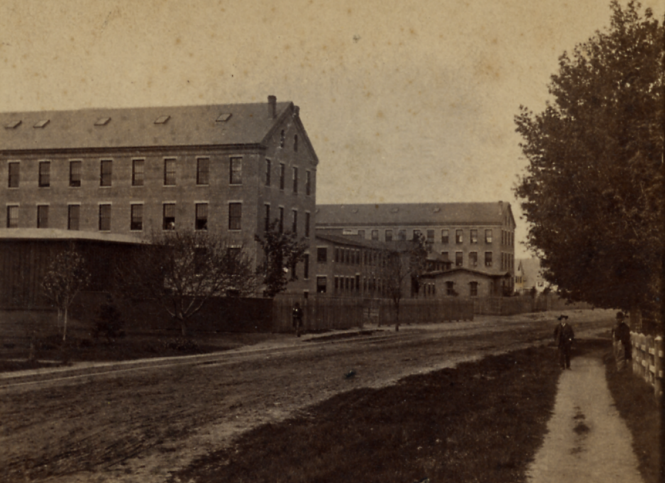
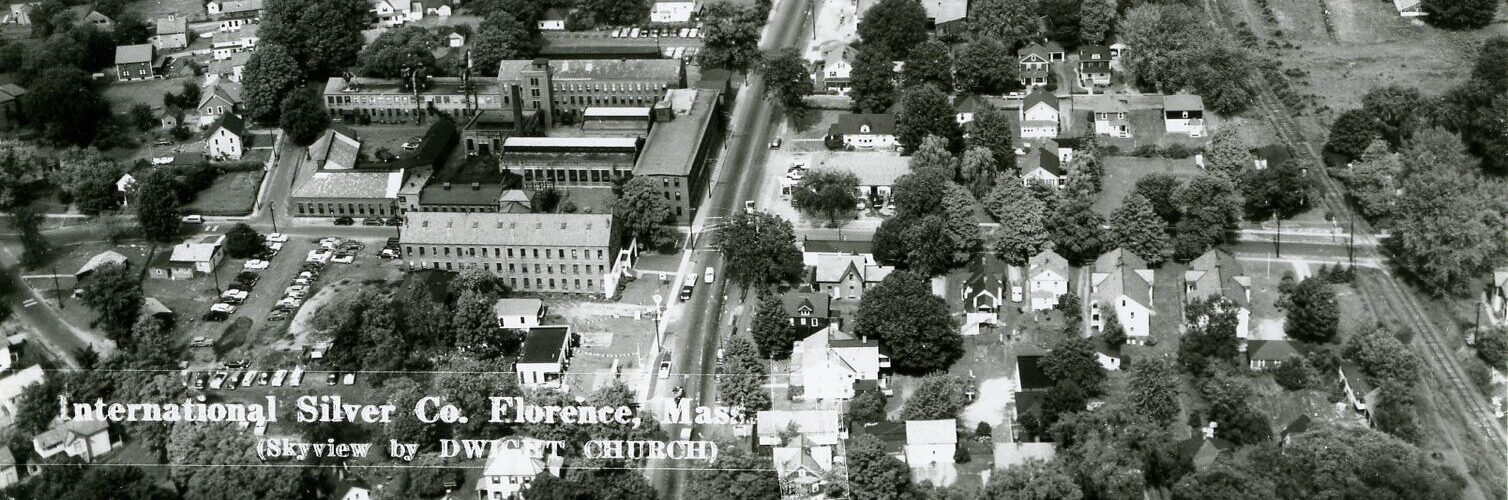
At its height, 350 employees worked in the Florence Sewing Machine Company complex, which covered three acres between Chestnut, Main, and Middle Streets. The company built its own housing in the village for its employees. Manufacturing of the Florence sewing machine peaked in 1870 with sales of 76,000 machines, but by 1876, that number had decreased to 3,000.
An improved design, which had been rebranded as the Crown or New Crown, was then produced at this site. The company diversified its production, manufacturing stoves for cooking and heating as well as wooden cabinets for silk thread manufacturers and the Crown sewing machine.
Late 19th Century
By the late 1870s, Florence Sewing Machine Company was bankrupt. In 1890, the Central Oil Gas Stove Company was incorporated, and had absorbed several other oil and gas stove companies as well as the Florence Machine Company by the next year. At the end of 1890s, the endeavor moved to Gardner, Massachusetts, and did business as Florence Stove Company.
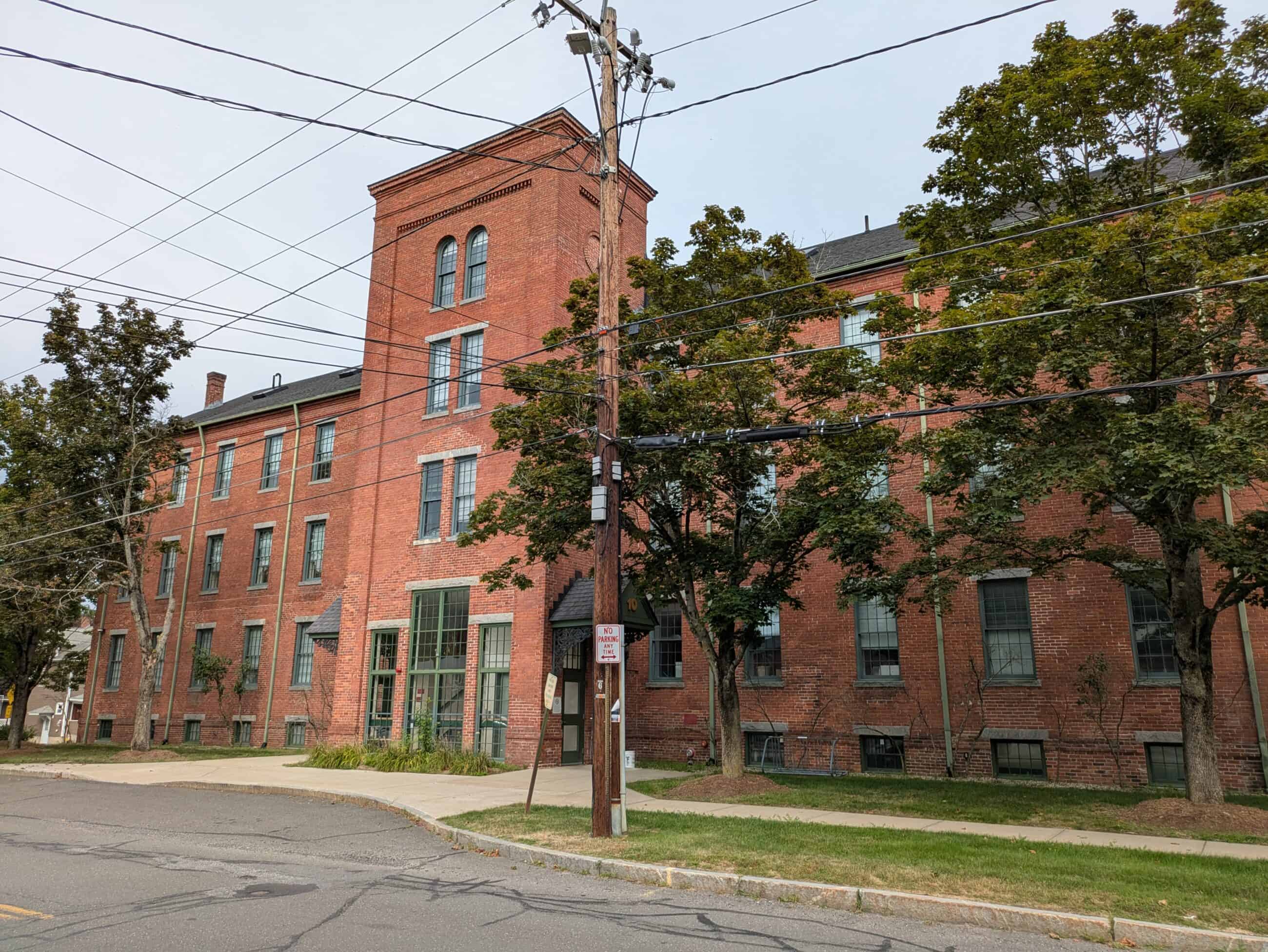
Built in 1860 for the Wells and Company Machine Shop, the factory at 10 Main Street became the home of the newly established Florence Sewing Machine Company, with Littlefield as its president. The company brought its first sewing machine to market in 1861 and sold 50 machines that year. Production soon grew and brought a need for additional space.
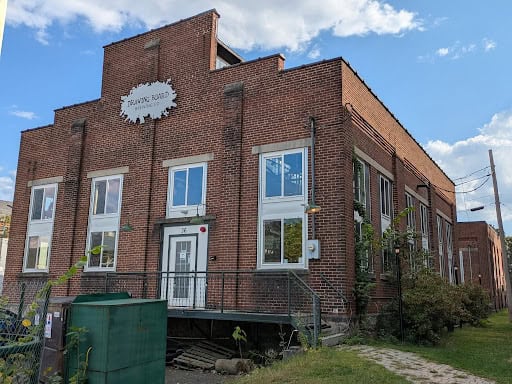
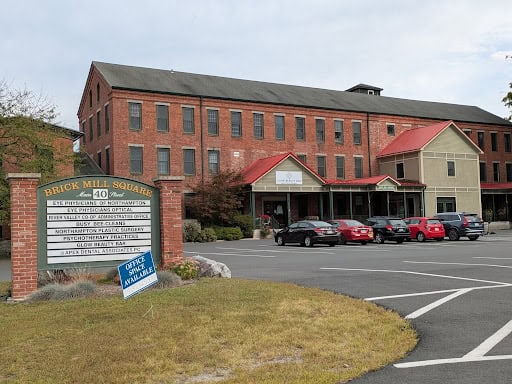
The first new building was erected in 1864 just north of Chestnut on Main Street, followed by several additions, including a long narrow factory structure set perpendicular to Main Street (number 40) and a smaller structure at number 36. A fourth building was set parallel to Main Street at number 22 (this was demolished in the 1960s). At some point a spur track from the railroad connected to the sewing machine company.
20th Century Changes
In the 20th century, number 10 was home to the Hampden Bottling Company (at this location 1936–45) and the Pioneer Valley Ginger Ale Company (1946–74). From the mid 1930s to the early 1960s, the large complex north of Chestnut Street housed the International Silver Company. Both 10 and 40 Main Street currently house medical and professional offices. The other remaining parts of the factory complex house Toad’s Kin Car Company (5 Middle Street), Wild Chestnut Cafe (22 Chestnut) and, formerly, the Drawing Board Brewery (36 Main).