Lydia Maria Child
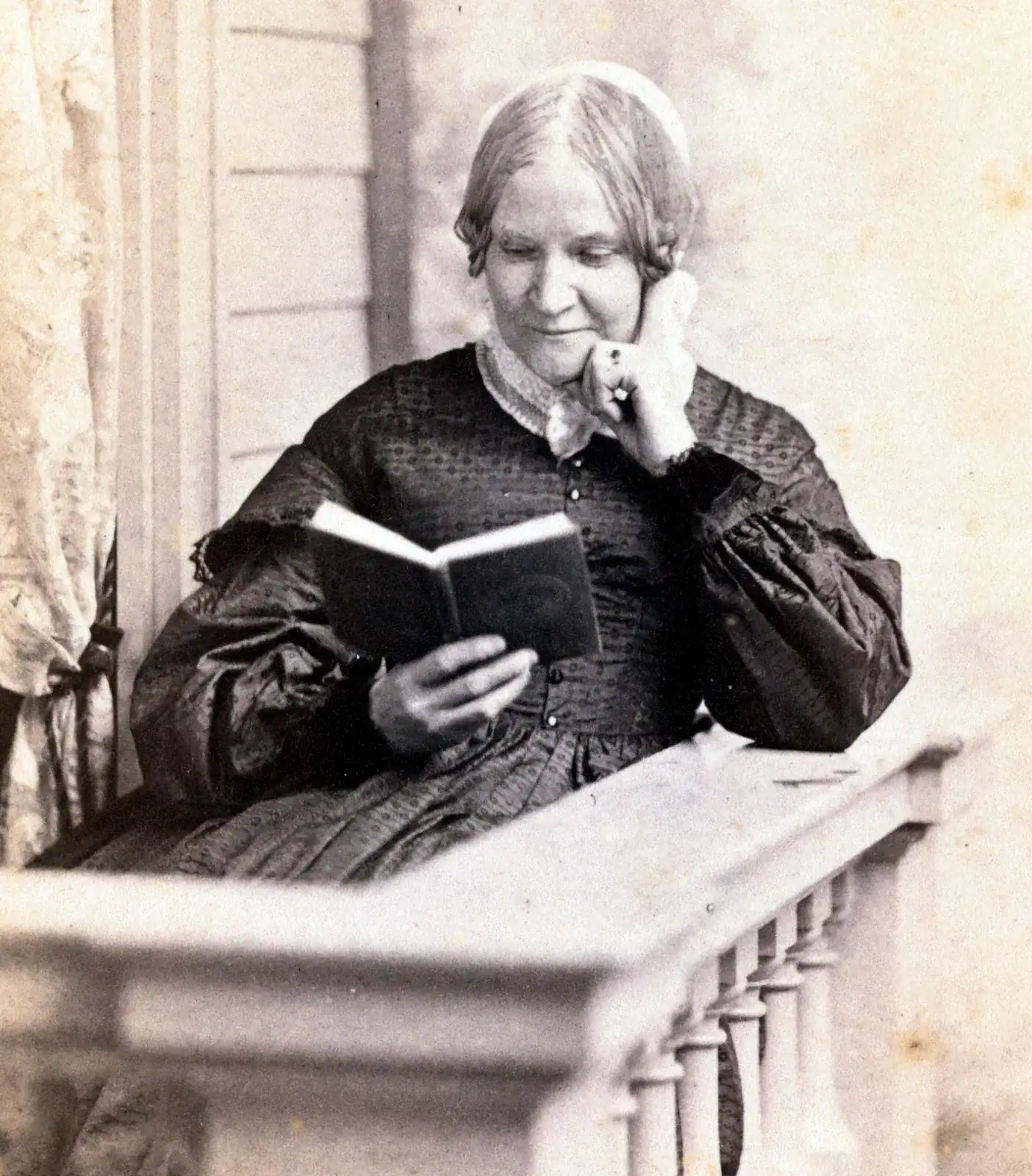
One of the most influential female figures of the abolitionist movement, Lydia Maria Child (1802–1880), was an author, journalist, and activist who brought her causes with her to Northampton, where she lived from 1838 to 1841.
Early Writing on Abolition
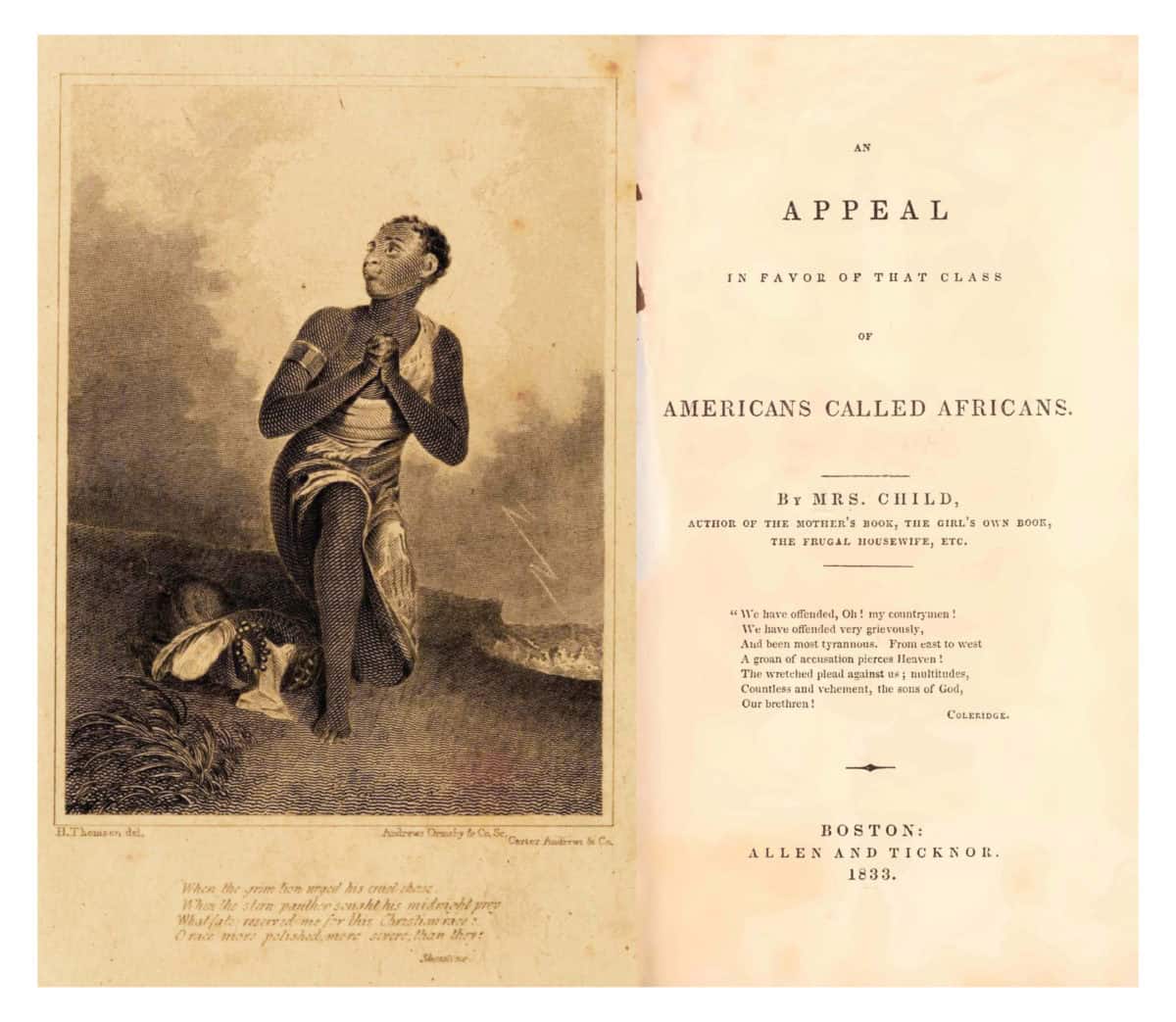
Lydia Maria Child was born in 1802 into an upper-middle-class family in Medford, Massachusetts. After establishing her career as a writer through children’s literature, she shifted toward works that voiced her opposition to slavery. In 1833, her book An Appeal in Favor of that Class of Americans Called Africans argued for the immediate emancipation of enslaved peoples. This resulted in widespread backlash in which her books were removed from shelves, subscriptions to her children’s magazine were canceled, and a once-adoring audience suddenly abandoned her.
Lydia Maria Child in Northampton
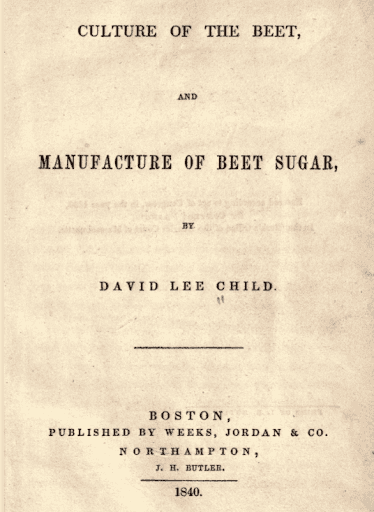
Her husband David Lee Child, whom she married in 1828, was also involved in social and political activism. In 1838, they moved to Northampton together to grow sugar beets as a protest against cane-sugar production in the West Indies, which relied heavily on slave labor. The couple expanded the beet growing to 100 acres in Florence and installed sugar-making equipment in an old oil mill. Accustomed to the more radical nature of Boston’s abolitionists, Child was hoping to find a similar scene upon arriving in Northampton.
Instead, Child found that those who were involved in abolitionist causes in the Northampton area were far too reserved for her liking, and were more concerned with appeasing their neighbors. Much of this resentment also stemmed from Northampton being a popular summer destination for enslavers, who often brought the people they enslaved along with them, despite slavery being illegal in the state. She described this frustration in a letter to a friend from 1838:
This town is a great resort for the Southerners in the summer season; and never in my life have I witnessed so much of the lofty slave-holding spirit. Will moral influence ever reach these haughty sinners? Never.”
In Northampton, Child lived next door to a former slave auctioneer named Thomas Napier, and she expressed this frustration to a friend in 1838:
Mrs. Judge Lyman asked me the other day whether I had become acquainted with this neighbor [Napier]. I told her that a slave-auctioneer and a warm abolitionist would not be likely to find much pleasure in each other’s society. ‘Oh,’ said she, ‘no doubt Mr. Napier would treat you with great politeness.’”
Adding to her displeasure, Napier also paid the salary of John Mitchell, the pastor of Edwards Church, toward whom Child already felt resentment for his lack of participation in the abolitionist movement. In another letter that same year, she wrote that Mitchell “refuses to permit an anti-slavery lecture in his meeting house…[he] thinks slavery wrong in the abstract, but finds something very lovely in slave-holding Christians.” Mitchell’s ties with slave-auctioner Napier only further solidified Child’s negative opinion of him.
After Northampton
The Childs’ time in the sugar beet industry was somewhat short-lived, as they were unable to make enough money from it. By 1841, exhausted by her dislike of the town and failing to bring in a substantial income, Child was quick to accept an offer as editor of The National Antislavery Standard in New York City. Her husband stayed behind in Northampton to continue growing sugar beets, with little success.
After two years, Child left her job at The Standard to continue her writing career, as her views were becoming more widely accepted in the North. One of the most famous projects she worked on was the book Incidents in the Life of a Slave Girl. It was written by self-emancipated enslaved person Harriet Jacobs, with Child as editor and publisher. The Childs moved to Wayland, Massachusetts, in 1856, and Lydia Maria Child continued to write actively until her death in 1880. Her advocacy of abolition and women’s rights never ceased.
ADDITIONAL RESOURCES
Child, David Lee. The Culture of the Beet and Manufacture of Beet Sugar. Weeks, Jordan & Co., 1840.
Child, Lydia Maria. An Appeal in Favor of that Class of Americans Called Africans. Allen and Ticknor, 1833.
Meltzer, Milton and Patricia G. Holland, editors. Lydia Maria Child, Selected Letters, 1817–1880. University of Massachusetts Press, 1982.
Moland, Lydia L. Lydia Maria Child: A Radical American Life. University of Chicago Press, 2022.