Betty Allen
Introduction
Betty Allen was a midwife in the Northampton area in the second half of the 18th century who assisted at 3,000 births. Her daughter Eunice Breck also became a midwife.
The Birth of a Midwife
Elisabeth Parsons, or “Betty Allen,” was born in Northampton on March 13, 1716, to Mindwell Edwards Parsons and her husband Noah Parsons. We do not know who assisted with the birth, but Mindwell would not have been alone.
In the 18th century and before, women rarely gave birth by themselves or with professionally trained physicians. Midwives not only assisted at the bedsides of women in labor but also cared for expectant mothers during pregnancy and in the early days post-partum, as well as sometimes caring for the bodies of the dead. Midwives were trusted medical practitioners, far more accessible and sometimes more trusted than their male physician counterparts. Elisabeth “Betty” Parsons Allen would grow up to be one of the most significant midwives in Northampton’s history.
When Elisabeth Parsons was 17 years old in 1733, she married the 21-year-old Joseph Allen. The famed minister of Northampton, Jonathan Edwards, officiated the wedding. The couple moved to a new home on King Street, where Elisabeth would give birth to 13 children. Only 11 would survive to adulthood: Joseph, Jonathan, Sarah, Thomas, Phinehas, Moses, Solomon, Elisha, Elijah, Elisabeth, and Eunice. Her frequent experience with childbirth gave her expertise in assisting at the births of others.
Her Library of Midwifery
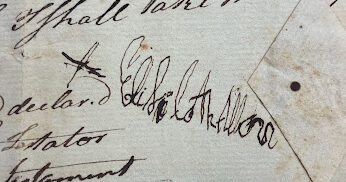
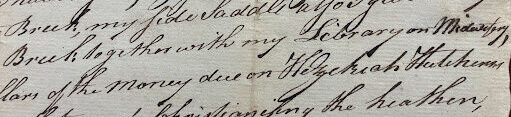
Betty Allen, as she became known after marriage, learned her trade of midwifery not only from her own experiences with birth but also from publications. Her will reveals that at her death she left her youngest daughter Eunice (later Eunice Breck) her “library on midwifery.”
We do not know exactly what books were contained in this “library of midwifery” but we can make some educated guesses.
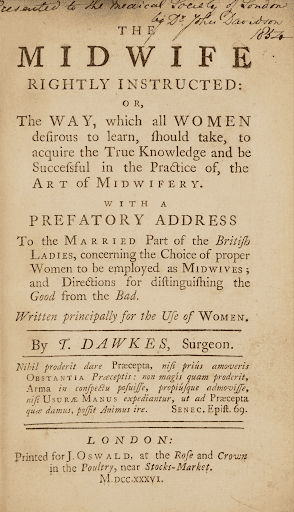
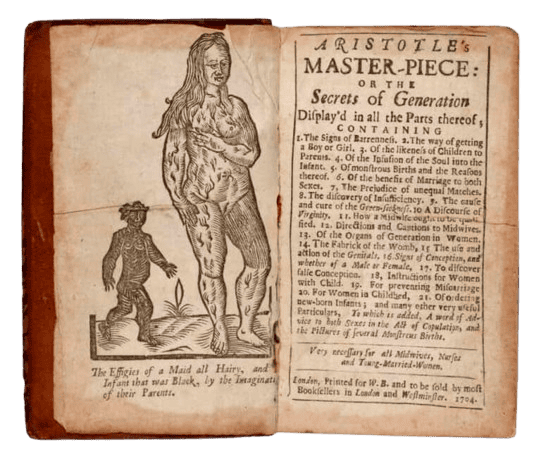
At the time, two books on female anatomy and midwifery were known to have circulated around Western Massachusetts, Aristotle’s Master-piece, a 1684 anonymously written manual on sex and midwifery, and the more modern 1736 Thomas Dawkes’ The Midwife Rightly Instructed. These books are believed to be the texts central to Northampton’s “Bad Books Case,” in which a group of young men found and distributed illustrations of female anatomy found in midwifery textbooks.
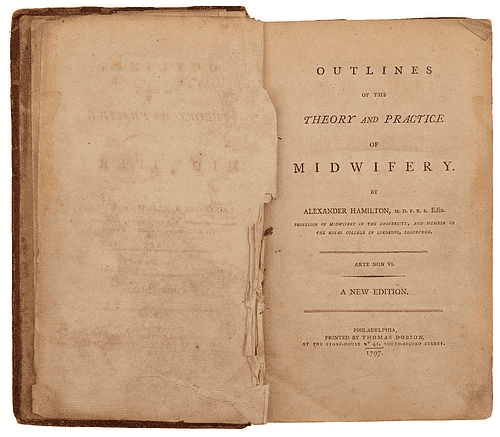
Other books that could have been part of Eunice Breck’s inheritance may have included William Smellie’s Collections of Cases and Observations in Midwifery and Edinburgh University’s Alexander Hamilton’s Outlines of the Theory and Practice of Midwifery, which had been published in Northampton in 1797 by printer William Butler.
Experiential Knowledge
In addition to written works on the subject, the majority of midwives’ knowledge of their trade came from experience assisting at real births. Betty Allen likely worked with another midwife, now unknown, to learn the trade. As Betty raised her daughter Eunice, she would have brought her along to instruct her in the medical knowledge required to assist at births.
We know Betty’s daughter became a midwife because Betty left her several books on midwifery and her sidesaddle, which was an essential tool for midwives who often traveled great distances in their community to attend births. Both Eunice and her mother were recorded as having attended births in Hadley.

In August 1772, Elizabeth Porter Phelps, a wealthy woman in Hadley, wrote in her diary that she had sent for “Mrs. Elizabeth Parsons Allen” to assist with the birth of her son Charles at “just six minutes before six in the morning.” Years later, in August of 1803, Elizabeth Porter Phelps again contacted Betty Allen’s family, only this time her daughter Eunice Breck came to assist.
Enslaved Pregnancy
Betty Allen’s work as a midwife did not extend just to caring for white wealthy individuals. She also attended the births of enslaved women at the request of their enslavers, who undoubtedly wanted to protect their financial interests.
In the spring of 1755, according to Elizabeth Porter Phelps’ diary, Betty Allen attended the birth of a 14-year-old girl named Rose. The Porter Phelpses enslaved Rose, meaning any children Rose had they would also own and profit from. In order to ensure that Rose’s children were born healthy enough to grow to adulthood and provide a lifetime’s unpaid labor for the family, they chose to pay Betty Allen to attend Rose’s birth. Betty Allen delivered Rose’s daughter Phillis into the world. Phillis would grow up enslaved to the Porter Phelps family, providing them labor until her death in 1783 at the age of 7.
The Legacy of Betty Allen
Midwives such as Betty Allen navigated networks of care, economy, and even politics in 18th-century New England. In addition to protecting the financial investments of enslavers, they were frequently consulted in the courtroom to attest to the identity of fathers of unmarried pregnant women. Their testimony resulted in fathers being required to provide financial support for the women they had impregnated.
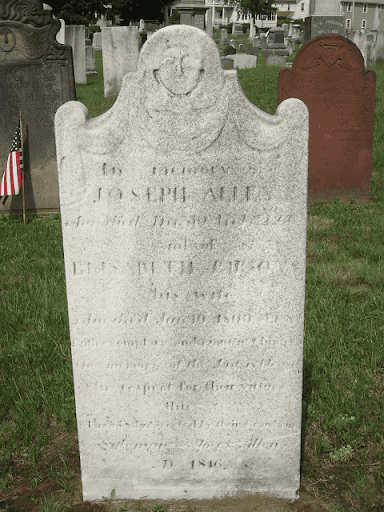
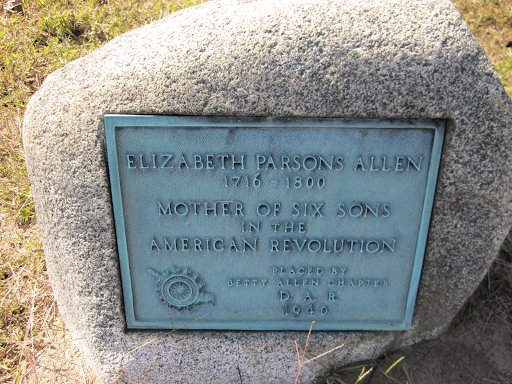
By the end of her life, Betty Allen reportedly had assisted at the births of more than 3,000 children, according to church records. She is buried in Bridge Street Cemetery. Her grave does not mention her work as a midwife, nor does the second memorial placed in her honor by the Betty Allen Chapter of the DAR in 1940.
ADDITIONAL RESOURCES
Miller, Marla Miller. Entangled Lives: Labor, Livelihood and Landscapes of Change in Rural Massachusetts. Johns Hopkins University Press, 2019.
Jane O’Connell. “The Contentious History of Midwifery in Massachusetts.” The Porter Phelps Huntington Museum, 2021.
“Phillis, Rose, and Phillis: Enslavement and Illness at Forty Acres,” The Porter Phelps Huntington Museum, 2018.
Will and Probate Inventory of Elisabeth Allen, Hampshire County, MA: Probate File Papers, 1660-1889, Box 2.