Angel De Cora
Introduction
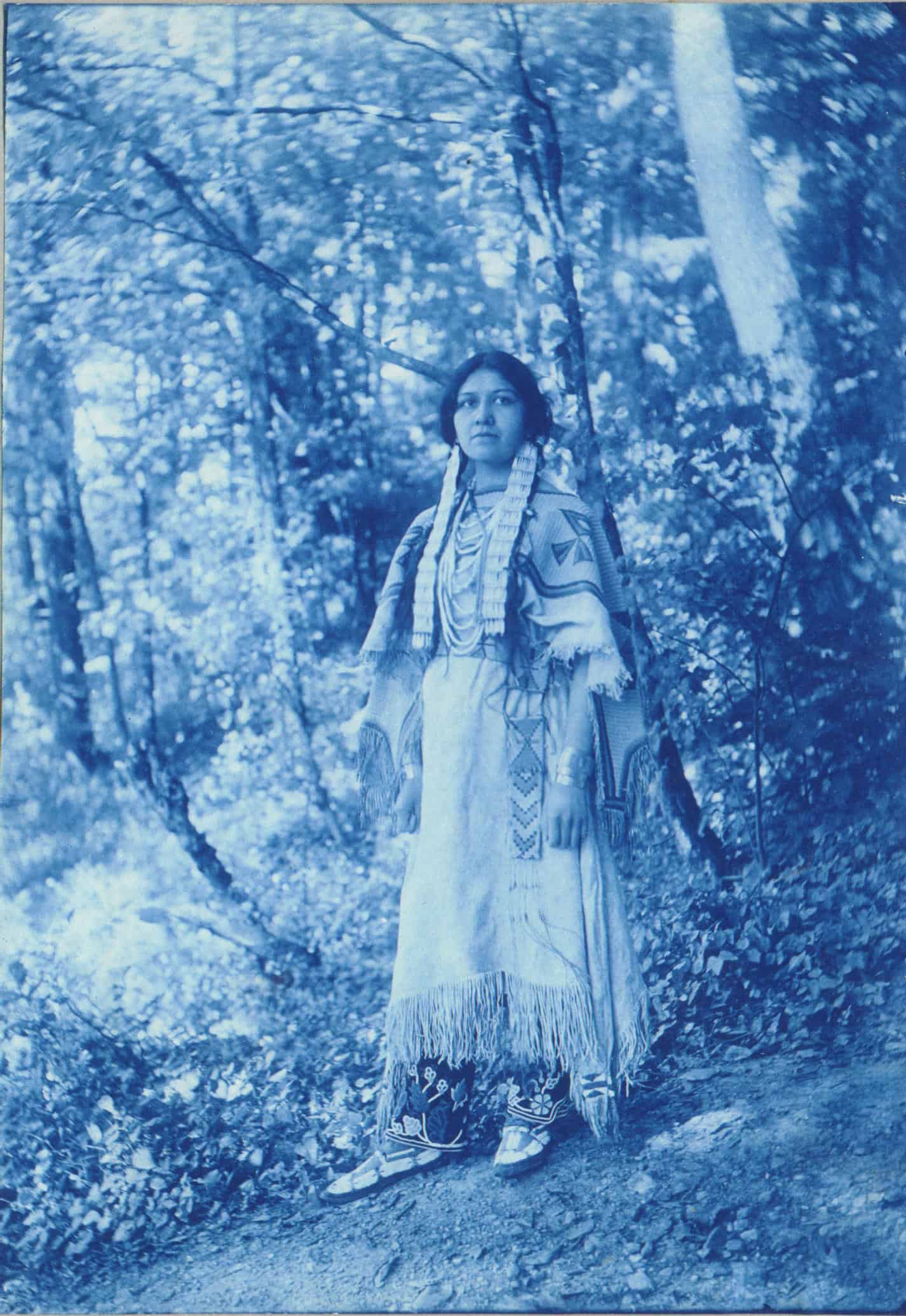
Hinook-Mahiwi-Kalinaka (“She Returns to the Sky,” Winnebago/Ho-Chunk, 1871–1919) was also known by her English name, Angel De Cora. She was one of the first nationally known Native American artists and the first Native American graduate of Smith College (class of 1896). She is buried in Northampton.
Early Years
Hinook-Mahiwi-Kalinaka was born on the Winnebago Reservation in Nebraska in 1871. Kalinaka writes in her autobiography about her upbringing: “About as early as I can remember, I was lulled to sleep night after night by my father’s or grandparent’s recital of laws and customs that had regulated the daily life of my grandsires for generations and generations, and in the morning I was awakened by the same counselling.”
Her life among her family was interrupted early, when she was kidnapped and brought to the Hampton Normal and Agriculture Institute. Located in Virginia, Hampton was a boarding school originally founded to teach recently freed African Americans. It was shortly expanded to be a boarding school for American Indian children as well. Among the first of its kind, Hampton followed a method of assimilation that focused on agricultural and other trade–based educational models. It was at Hampton that Hinook-Mahiwi-Kalinaka was likely to have begun identifying herself more regularly with her English name, Angel De Cora. It was a common assimilatory practice for American Indian children to use their English names or be renamed by administrators as they entered the school. This was part of a process used to strip identity away from children. De Cora is reported as having excelled in her classes, especially those pertaining to artistic endeavors.
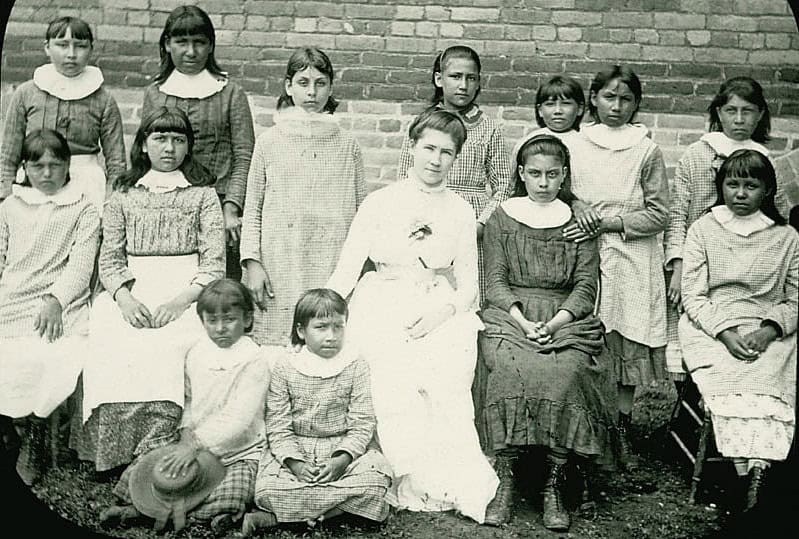
Three years into her boarding-school education, she was able to return home. Upon returning, she learned that, “My father and the old chief and his wife had died, and with them the old Indian life was gone.” She returned to boarding school after her short and tragic visit home, and graduated from Hampton in 1891.
Higher Education and Artistic Training
After excelling at her early education, De Cora enrolled at Smith College to develop her artistic talent. To finance her tuition, she worked as a custodian for the Hillyer Gallery, now known as the Smith College Museum of Art. Unable to live in segregated campus residences, De Cora lived with a local family in Northampton. De Cora studied studio art under Dwight D. Tryon, and stated that “The instruction I received and the influence I gained from Mr. Tryon has left a lasting impression upon me.” In 1896, De Cora graduated and became the first recorded Native American student to have a degree from Smith College.
De Cora’s educational journey then led her to Drexel University, where she was a part of Howard Pyle’s competitive artistic summer school. Pyle thought highly of her, writing that De Cora was one of his most artistically talented students but that, unfortunately, “she was a woman and still more unfortunately an American Indian.” Her teachers were aware that De Cora’s talent was unequal to the career options she had as a young Winnebago woman in the early 20th century.
Beginnings of Artistic Career
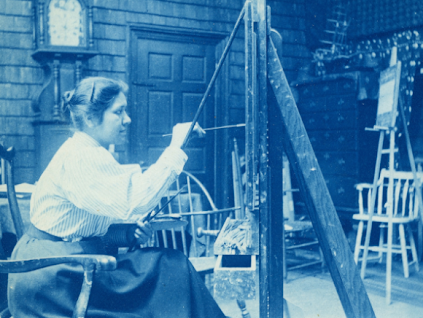
De Cora continued her career at Harper’s, which was the most widely circulated magazine at the time. De Cora both wrote and illustrated for the magazine. In her obituary, the author Natalie Curtis wrote of an instance when De Cora’s skills were apparent to everyone around her.
Our designer” looked at the page and gave a low whistle. “I never saw anything like this in my life before,” he said. “Whoever did that lettering is a genius! Don’t ask me to make letters like that. I really advise you to get the person who did this page to do all the others.”
“You would be surprised,” I said to the designer, “to know that the ‘genius’ is a young Indian girl!”
He thought a minute, then said, “Well, no, I am not really surprised, because no white man could have done this.”
The reaction from the designer showed that De Cora’s style was so unique that she was able to assert her own style and artistic vision within the art world.
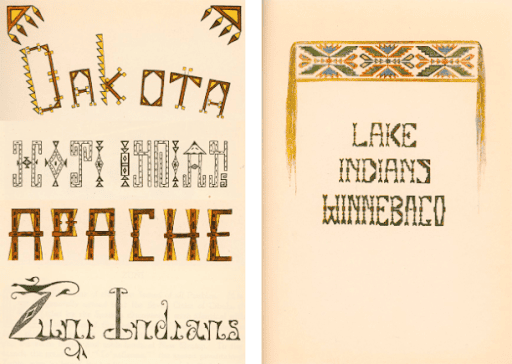
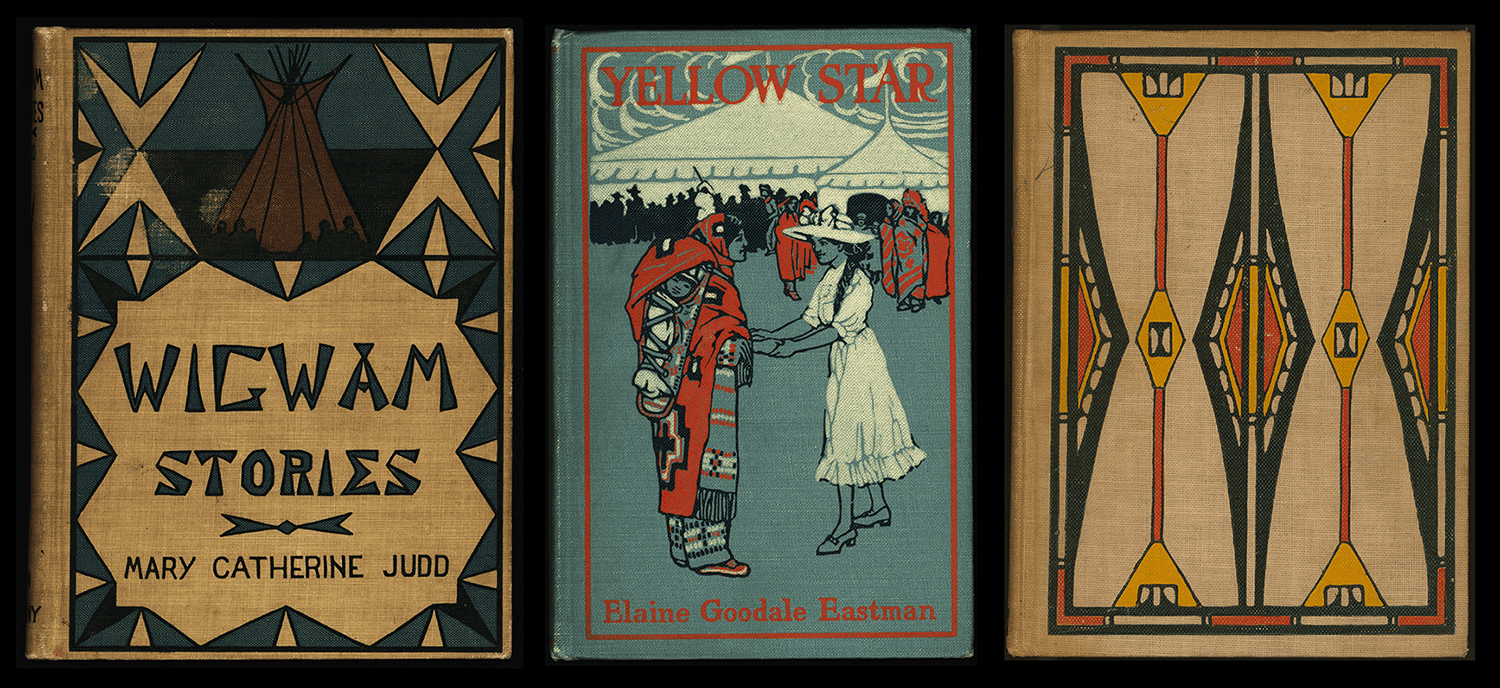
As De Cora’s career as an independent artist developed further, she expanded to illustrating books. These included works by Francis La Flesche (Omaha), the first professional Native American ethnologist and Zitkala-Ša (Gertrude Bonnin, Yankton Dakota), writer, activist, and cofounder of the National Council of American Indians, among other notable scholars and writers. De Cora opened studios in Boston and New York City and contributed to the art world’s fervor for “primitivism.” The primitivism art movement appropriated Indigenous forms of art to “elevate” artwork made in the style of Indigenous artisans. In 1902, De Cora was appointed as a member of the American Design Society.
Teaching Career
In 1905, De Cora was appointed to teach artistic training at the Carlisle Indian Boarding School, which had been founded by Richard Henry Pratt in Carlisle, Pennsylvania, in 1879. Through the Carlisle School, the U.S. government moved from tacit endorsement of missionary-led Indian schools to full involvement by founding the first off-reservation federal Indian boarding school. Best known for its mantra of “Kill the Indian, Save the Man,” the school’s main mission was to reeducate American Indian youth and assimilate them into white and Christian culture.
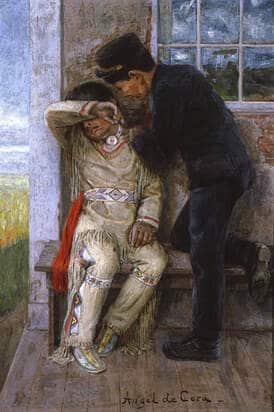
In a 1906 letter to the superintendent of Indian schools, De Cora reflects that she is attempting to reconnect students with their cultural traditions. She writes that her approach worked to make students feel comfortable returning to their respective tribes’ traditions. De Cora explains that:
For a week, each new class that came to me, I appealed to their race pride, calling on them in mass and individually for Indian history, not as the White historian has pictured him in words but as some of us have heard it from the Indian story tellers. by the light of the camp fire …”
The uniqueness of De Cora’s teaching style was a glimpse into how the Indian boarding-school system could nurture the educational goals of the program while not completely acquiescing to the full assimilation of its students.
The Indian arts program had economic interests for administrators of education as well. The scholar Anne Ruggles Gere explained: “The commercial potential of Indian art attracted attention from those concerned with Indian education as well as those interested in business and tourism. Some, thinking along the lines of Pratt’s sale of his prisoners’ art at Fort Marion, imagined that students could produce art that would help defray the cost of their education.” De Cora was at least partially aware of the financial incentives for her teaching, because each year she had to justify her work in letters to the superintendent. The letters concentrated on the financial gain that would benefit Carlisle from having an Indian art program. De Cora stayed in the position between 1905 and 1915, when the Indian art position was terminated.
Final Return to Northampton
Having no surviving close relatives, De Cora returned to Northampton in 1919 to stay with the Clapp family, with whom she had boarded during her time at Smith College, to find respite from an abusive husband. She had married William Henry Dietz shortly after meeting him at the St. Louis World’s Fair in 1904. Tragically, De Cora died of pneumonia on February 6, 1919, at just 47 years old. She was laid to rest in an unmarked grave in Northampton’s Bridge Street Cemetery.
De Cora’s grave remained unmarked until, almost a century later, Smith College installed a grave marker at a location believed to be the site of her burial. On October 16, 2021, Historic Northampton sponsored a wreath-laying ceremony at De Cora’s marker. The event was part of the Five Colleges, Inc.’s celebration of De Cora’s life and work on the 150th anniversary of her birth and the 125th anniversary of her Smith College graduation.
ADDITIONAL RESOURCES
BOOKS & ARTICLES
Curtis, Natalie. “An American Indian Artist.” The Outlook, January 14, 1920, 64–66.
De Cora, Angel. “Angel De Cora—An Autobiography,” in The Red Man by Red Men, March 1911, 279–80.
Gere, Anne Ruggles. (2004). “An Art of Survivance: Angel DeCora at Carlisle.” American Indian Quarterly. 28 (3/4): 649–684. doi:10.1353/aiq.2004.0096
Waggoner, Linda. Fire Light: The Life of Angel De Cora, Winnebago Artist. Oklahoma University Press, 2008.
OTHER RESOURCES
Visit “My people are a race of designers”: Winnebago Artist Hinook-Mahiwi-Kalinaka (Angel De Cora), Delaware Art Museum.