From the Plantation to NorthamptonSlavery & The Watson Household
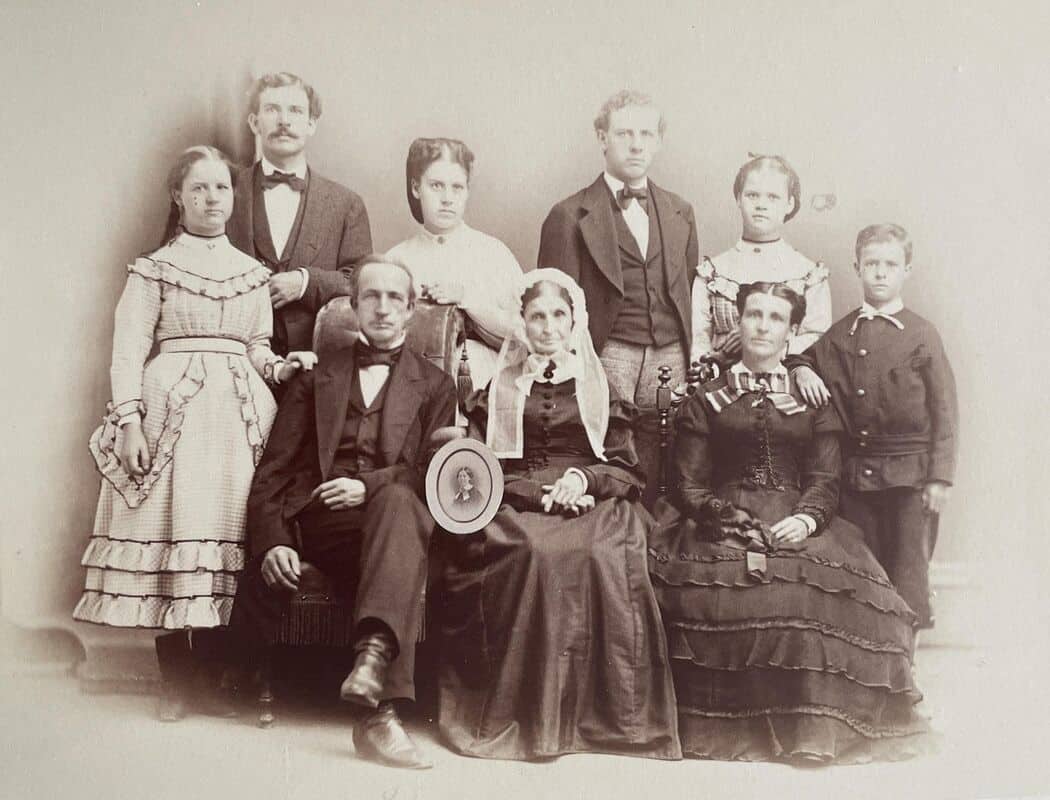
Portrait Photograph of the Watson Family dated September 7, 1870. Historic Northampton (ID 2026.17.2)
Event Details
Like many towns in New England, Northampton’s economy and society were shaped by slavery. Before the Civil War, Northampton residents produced crops and goods that were sold to support Southern slave labor, and local cotton mill owners relied on slave-grown cotton. Southern white families vacationed at the Northampton water cures, and some sent their children to Northampton’s elite private schools.
Perhaps no 19th-century Northampton family had more direct ties to slavery than the Watsons. During the early 1800s, Henry and Sophia Watson owned a cotton plantation in Greensboro, Alabama, where they enslaved at least 228 people. In 1861, at the start of the Civil War, they moved to Northampton, a town known for its prominent abolitionists, with their six young children and Henry’s sister. They bought an estate on the property that became Childs Park.
In this Zoom talk, Historic Northampton’s Elizabeth Sacktor and UMass PhD student Anaëlle Cama will present their new research on life at the Watson plantation before the family moved to Northampton. They will focus on the lives of several enslaved women – Ellen, Eveline, Ann, Phillis, and others – who likely sewed the Watson family clothing now in Historic Northampton’s collection. They will also explore how the Watsons and their children profited from wealth derived from slavery and sharecropping and became benefactors to local institutions.Presented by Historic Northampton in collaboration with Forbes Library, Northampton’s public library.
About the Presenters
Elizabeth Sacktor initially began work with Historic Northampton as a collection and research intern in the summer of 2023, helping to re-catalog and conserve their extensive historic clothing collection. Now she works as the interpretive programs manager, developing engaging and educational programs for people of all ages to connect to local history. Before Historic Northampton, Elizabeth worked in the Smith College Historic Clothing Collection, in the Costume Office at Old Sturbridge Village, and as a Research Fellow at Historic Deerfield, where she focused her research on early female death professionals and shroudmakers in 19th-century Western Massachusetts. She graduated from Smith College with a degree in Women’s History, while concentrating in Museums.
Anaëlle Cama is a third-year Ph.D. student in the W.E.B. Du Bois Department of Afro-American Studies at UMass Amherst. She graduated from Université Jean Moulin Lyon III with her bachelor’s in English and from Université Paris Cité with her master’s in Anglophone Studies with a major in American history. Anaëlle has worked as an archivist for the Black Feminist Archives at UMass Amherst in 2024, as an instructor on Black history in her department, and as a research assistant for Professor Yolanda Covington-Ward on research about recaptured Africans in Liberia. As part of her public history certificate, she is currently an intern at Historic Northampton, mostly working on archiving and interpreting enslaved labor in the Watson household. Her interests include Black intellectual history, Black women’s history, spatial studies, and Black arts.