Native Preachers
The Histories of Native Preachers Two Centuries Past in Massachusetts
(From a lecture given in Northampton on May 27, 2026)
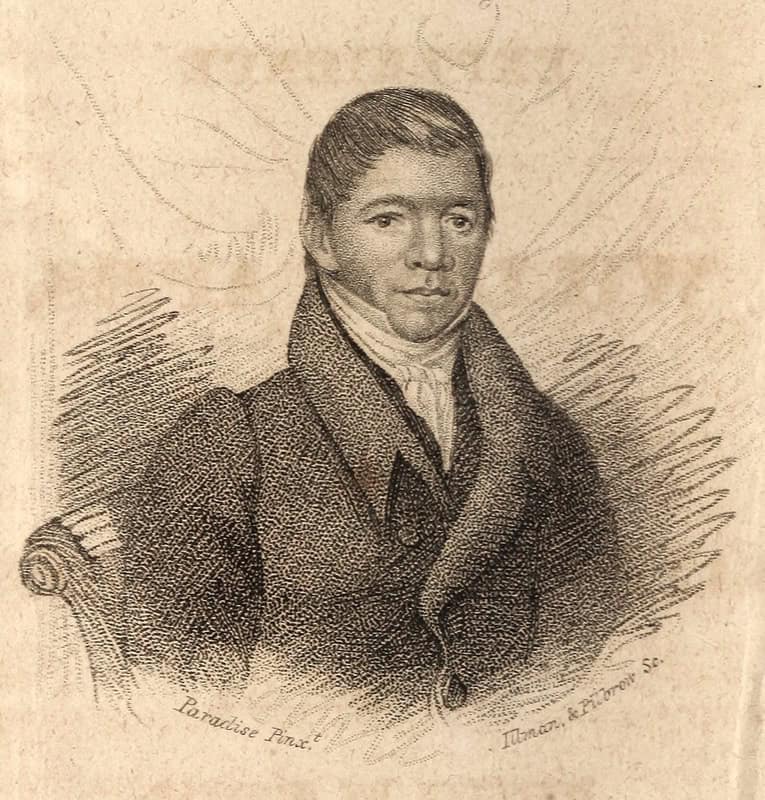
Probably not many of you marked it on your calendars this year, but May 21 was William Apess Day. For most, it passed without notice, as few have actually heard of William Apess or understood there was a day set aside to honor his achievement.
William Apess was an Indigenous Pequot and an ordained Methodist minister who traveled the central Connecticut River Valley during the 1820’s and 30’s, preaching his version of the gospel in the churches, meetinghouses, schools, and backwoods clearings where gathered the less prosperous members of society. Apess used his authority as a Christian minister to call for better treatment toward people of color, including his Indigenous “brethren” who lived difficult and mostly impoverished lives on the fringes of settler society.
In 2020, the town of Colrain, Massachusetts, officially declared May 21 to be “William Apess Day,” in order to recognize that this forgotten Native son was born in that place in 1798 and lived out a good portion of his life in Colrain, whenever he wasn’t out playing the role of itinerant preacher and advocate for Native causes throughout the Northeast.
Shining a light on Native lives in eighteenth-century Northampton and the larger Connecticut Valley is the goal of a new project at Historic Northampton—“Native Strategies: Indigenous Families in Western Massachusetts During the American Revolution”—funded by Mass Humanities, the Massachusetts Cultural Council, and the SCP Foundation. The project will include essays, lectures, plays, historic walks, and other events designed to help us better understand the historic continuity of Native presence in western New England.
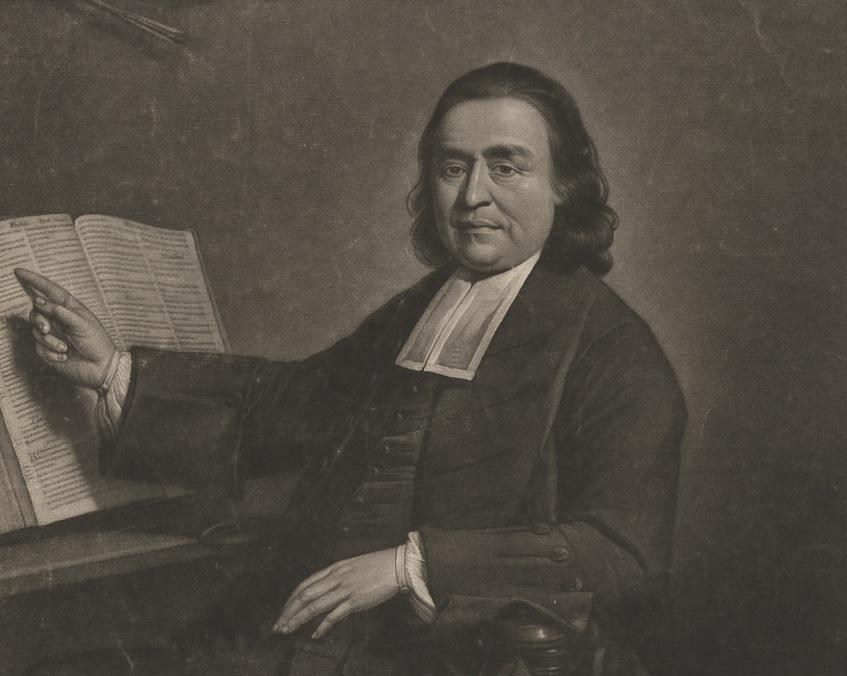
As it turns out, William Apess was only one of several educated, literate, and influential Native preachers who passed through this region in the late eighteenth and early nineteenth centuries. Another was Samson Occom, a Mohegan, who spent four years being educated by Connecticut minister Eleazar Wheelock, learning to read, write, and study the bible. In his journal for 1743, Occom wrote that he “hoped to learn something of the Latin tongue,” as he had an interest, too, in educating himself concerning legal matters—the esoteric terms and statutes by which colonial courts were eagerly divesting the Mohegan of their lands in the 1740’s and 50’s.
Upon leaving Wheelock’s tutelage, Occom served for a decade as both school teacher and preacher to the Montauk and Shinnecock Tribes of Long Island, before receiving his official ordination in 1757.
In 1766, Occom travelled to England, touring the British Isles for two and half years, where he addressed large audiences excited to see the “wild Indian” preach. His reason for being there was to raise money for an “Indian College” as It was Occom’s hope that the next generation of Native students would be provided the educational skills necessary to survive in this rapidly colonizing world.
Occom, as it turns out, was the perfect advocate for this cause. Although Nathaniel Whitaker, a white minister, accompanied him to England to serve as chaperone, Occom surpassed his escort in most every way, becoming an overnight sensation and preaching in hundreds of venues to all sorts of audiences. Occom maintained a calm and dignified presence in his travels that won over detractors and quickly dispelled notions of “savagery” that were quick to attach themselves to anything having to do with Native Americans. Wealthy benefactors, concerned about the “plight of the poor Indians” in the colonies were anxious to donate to Occom’s cause and he ultimately raised some 16,000 £ (in English currency) for the proposed College—equivalent in today’s US currency to roughly $5,500,000.
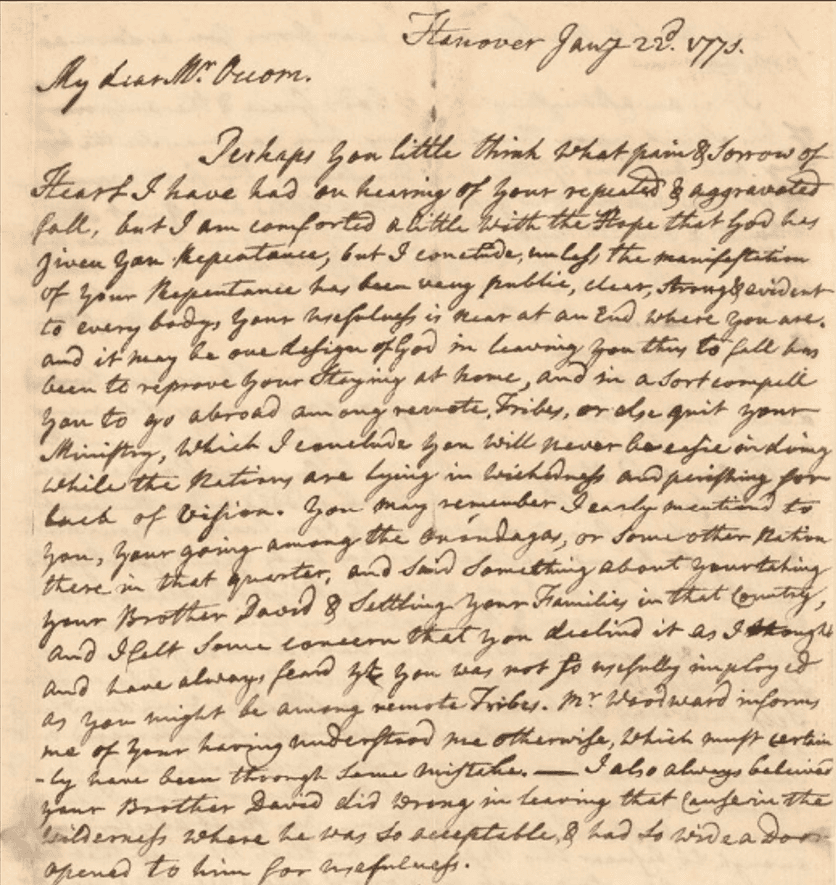
In keeping, however, with a long history of deceit and abuse against Native peoples, the money never went toward the cause for which it had been allocated. Instead, Occom’s colonial sponsor, Eleazar Wheelock, appropriated the funds and used them to found Dartmouth College instead, which failed to fulfill its charter responsibility of providing education to Native youths. Occom wrote his British patrons in 1783 to say how “there has not been one Indian in that Institution this Some Time—all that money has done is it has made the Doctor’s [Wheelock’s] Family very grand in the World.”
Occom was, nevertheless, able to leverage his newly gained fame and notoriety to continue to preach throughout the Northeast. Natives of New England began to find their way to the Christian church in large numbers at this time, for there was a modicum of cultural refuge in this institution and protection against the worst abuses of settler oppression.
In the 1780s, Occom helped a number of Christian Natives remove themselves to what they hoped would be a safer harbor in upstate New York, founding a settlement in Oneida Country that they named Brothertown. In his travels back and forth to Brothertown, Occom would often pass through Western Massachusetts, to stop at the white and Indian settlement of Stockbridge. But he also writes of passing through the many “Indian Towns” along the way where, as Occom noted, small enclaves of Native families still took refuge. These families, who lived hardscrabble lives outside of larger settlements, largely flew beneath the radar of colonial record-keeping. But Occom would stop to preach and offer what services he could, before moving on to the more established towns along the way.
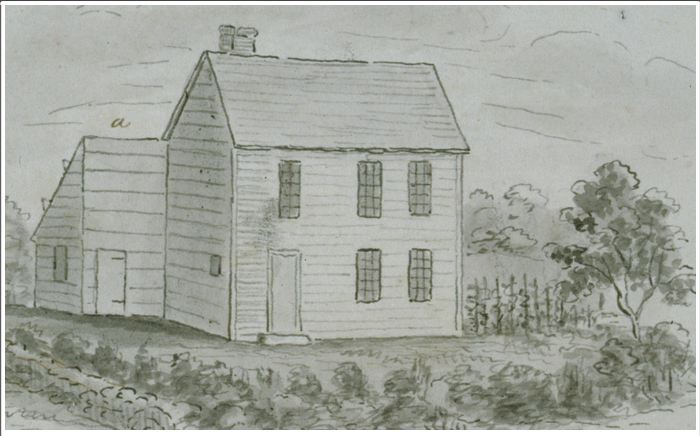
Occom’s travels can be retraced today through the extensive journals he kept from 1743-1782, and through his vast record of correspondence, sermons, and other archival remains. His journals offer evidence of the resiliency of Indigenous peoples in the region who refused to simply “vanish” from history. Many of Occom’s writings were stored for 250 years at Dartmouth College—a vital archival component of the founding of that institution. But today, after years of negotiation, most of Occom’s writings have been repatriated to Uncasville, Connecticut, where the Mohegan Tribe now cares for this important record of their history.
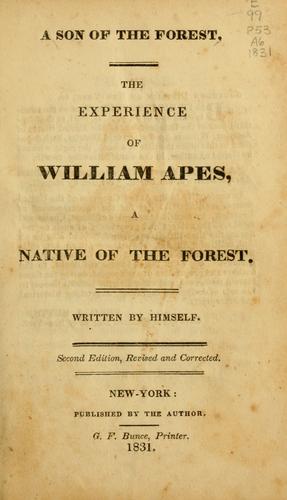
As with Occom, William Apess’s travels often took him through Western Massachusetts. In his 1829 memoir A Son of the Forest, Apess writes that his father “pitched his tent in the woods of a town called Colrain, near the Connecticut River in Massachusetts,” and this is where Apess began his life’s journey. As with many Native children of his time, Apess spent much of his childhood as an indentured servant to white families, as his own family was too impoverished to care for him. As was equally true of many Native children of this time, Apess endured a great deal of prejudice and abuse as a child torn from his own kinship networks and forced to serve as free labor for strangers who, as he said, treated him like an “Indian dog.”
In April of 1813, at the age of fifteen, Apess ran away from his indenture and found his way to New York City where he was almost immediately conscripted into the US Army. Although legally too young to serve, his age was misrepresented on his enlistment records, and within a matter of months Apess found himself marching toward the US/Canadian border to fight in the War of 1812. Apess was involved in some of the fiercest battles of this war, including the assault by British Major General Prevost on US fortifications at Plattsburgh. For six days Apess manned the artillery in the makeshift redoubt of Fort Brown along the Saranac River, while under constant canon fire. When the war ended, he journeyed up into Canada and lived for a time with the Tyendinaga Mohawk on the Bay of Quinte.
It was while living with the Mohawk in Canada that Apess underwent a kind of spiritual realignment that oriented him towards his Indigenous roots and put him on the path to regeneration. It was a long journey on foot to reunite with his Pequot people in the area of Groton, Connecticut. But once there, he placed himself under the tutelage of his Aunt Sally George, a Pequot Medicine Woman and charismatic lay preacher who held raucous camp meetings in the woods and groves of the area. These meetings were attended by people of all colors and ethnicities, from as far away as Massachusetts and Rhode Island. Apess apparently imbibed something of his Aunt Sally George’s energy, will, and charisma, and was soon acting as a lay preacher himself, joining with the Methodists whose practice of extemporaneous preaching appealed to Apess and gave vent to passions long pent up over his short career of hardship, trauma, and abuse.
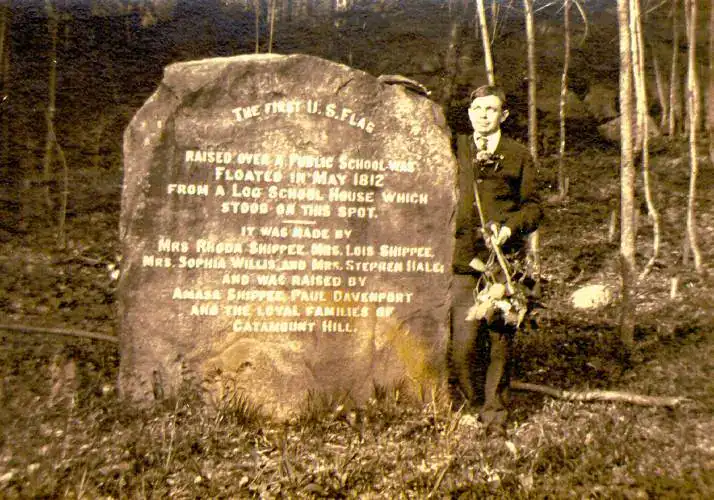
In the spring of 1819, Apess made his way back up the Connecticut River to the town of Colrain where his father still made a living in the hilltop community that had sprung up there. Today, there is nothing but second- and third-growth forest blanketing those hills, but in Apess’s time it seems that white settlers were eking out lives in these spaces, and Apess began worshipping with them where they gathered, in the natural amphitheaters carved out of forest and rock. Apess made an impression on this small but pious community and before long he was asked to preach at the schoolhouse on Catamount Hill. The space of his first sermon can still be located today, as the schoolhouse site is remembered by the descendants of that former community and is marked by a solitary stone and an American flag that flies in a clearing, deep in those woods.
Although Apess was greeted with jeers and projectiles in his early hill-town preaching, he persevered, and by the 1830’s he was a regular feature, preaching in New York, Worcester, Boston, and throughout the Northeast, advocating for Native causes. As The Worcester Spy reported on July 13, 1831, the Reverend Apess came preaching “in this town” and while, “not gifted with the eloquence of Samson Occum, succeed[ed] very well in enlisting the sympathies of those who hear[ed] him.”
Apess might not have been preferred to white audiences as Occom, but he created more of a stir, and in 1833, the Massachusetts state militia was very nearly called in to stop him as he led a series of non-violent protests among the Mashpee Wampanoag in Cape Cod, in an effort to secure the rights of full citizenship for that tribe. The Hampshire Gazette reported on July 17, 1833, that the Mashpee “have made a declaration of independence and resolved to manage their own affairs.” Asserting the tribal sovereignty, Apess declared the Mashpee would from here on “rule ourselves, and have the right to do so; for all men are born free and equal, says the Constitution of the country.” Although his efforts landed him in jail for a month, in an attempt by the state to silence him, he nevertheless managed, while in prison, to draft a petition for the tribe and, upon release, immediately went on the stump, preaching in Worcester, Westfield, Springfield, and beyond to bring to light the slave-like conditions under which the Mashpee were ruled.
While notice of his preaching in Northampton has not surfaced, it is hard to imagine it was not part of his circuit. The petition ultimately made its way to the Massachusetts General Court where, in the winter of 1834, Apess delivered a fiery speech on behalf of Mashpee civil rights. The abolitionist newspaper, The Liberator, edited by William Lloyd Garrison, was on hand to report on the event. It noted of Apess that:
…his fearless, comprehensive, and eloquent speech endeavored to prove that under such laws and such overseers, no people could arise from their degradation. He illustrated the way in which extortions were made from the poor Indians, and plainly declared that they wanted their rights as men and as free men.”
William Apess’s campaign was successful and the General Court voted to reaffirm the natural rights of the Mashpee people.
William Apess would write five books in his lifetime. He was the first Native person in North America to write and publish such sustained book-length narrative works of his life and concerns. His memoir, A Son of the Forest, is a groundbreaking book in which Apess begins to forge a rhetoric of resistance for people of color. In his 1835 Indian Nullification, he recounts the struggles at Mashpee and asks the question, “What to the Indian is the Fourth of July?”, many years before Frederick Douglass would rise to ask that same question of the nation on behalf of enslaved African Americans.
William Apess Day has come and gone, for this year at least, but we would do well to remember that remarkable Indigenous people like Apess and Occom are part of our regional history and part of US history. And they were not alone. Other prominent Native figures like Hendrick Aupamaut (Mohican), Joseph Johnson (Mohegan), Samuel Ashpo (Mohegan), Peter Jones (Ojibwe), Jane Johnston Schoolcraft (Anishinaabe), Elias Boudinot (Cherokee), John Norton (Mohawk/Cherokee), David Fowler (Mohegan) and others, made their marks and left an archival trail for us to follow.
To bring their stories into the fold of historical memories that inform our culture is to be reminded that this, too, is Native space and that Native people never “vanished” nor left—they simply led difficult, complicated, and poignant lives, passing through a history that was and remains hostile to their very presence.
ADDITIONAL RESOURCES
Lopenzina, Drew. Through an Indian’s Looking Glass: A Cultural Biography of William Apess, Pequot. University of Massachusetts Press, 2017.