Slavery & Freedom in Northampton
With Dr. Ousmane Power-Greene, Dylan Gaffney & Dr. Elizabeth M. Sharpe
For the last five years researchers at Historic Northampton and Forbes Library have been uncovering stories of slavery and freedom in Northampton. These investigations have revealed that perhaps as many as fifty enslaved people lived in Northampton between 1654, when Northampton was settled by the English, until 1783, when slavery was abolished in Massachusetts.
As elsewhere in the North, slavery in Northampton was inextricably linked to local commerce, local and regional family networks, and the global economy. Among the narratives of Northampton’s enslaved people—who were Indigenous, African, and African American—are stories of a few individuals who were able to take control over their lives, gain freedom, start families, manage careers, and acquire property. Presenters Dylan Gaffney, Elizabeth Sharpe, and Ousmane Power-Greene will discuss what we presently know about enslaved lives in Northampton and conclude with questions that remain unanswered and avenues for future research.
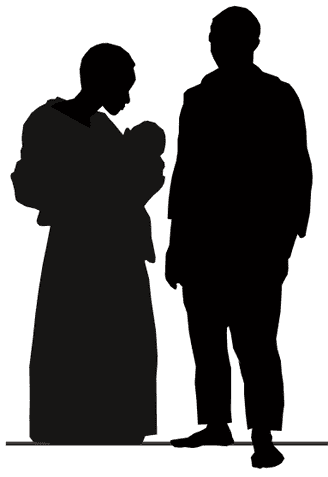
About the Graphic Silhouette of Hannah, her baby, and Mingo
In 1692, Hannah was unmarried and enslaved in Northampton. She bore a child, and in court she named Mingo as the father. The court called their act a “heinous crime against the light of nature” and sentenced both Hannah and Mingo to 15 lashes. Their baby was born into slavery. The court decided that Samuel Parsons (Mingo’s enslaver) and Timothy Baker (Hannah’s enslaver) would be “joint + equal in charge of the child” until the child was nine years old. At age nine, either Parsons or Baker could buy out the other for the value of the child or they could arrange to jointly own him. In this case, the child’s wages if hired out, or the child’s value if sold, would be “divided betwixt them.”