Made in the Valley
19th-Century Music for Viols and Voices from the Connecticut River Valley
Event Details
Unitarian Society of Northampton and Florence
220 Main Street
Northampton MA
Get directions
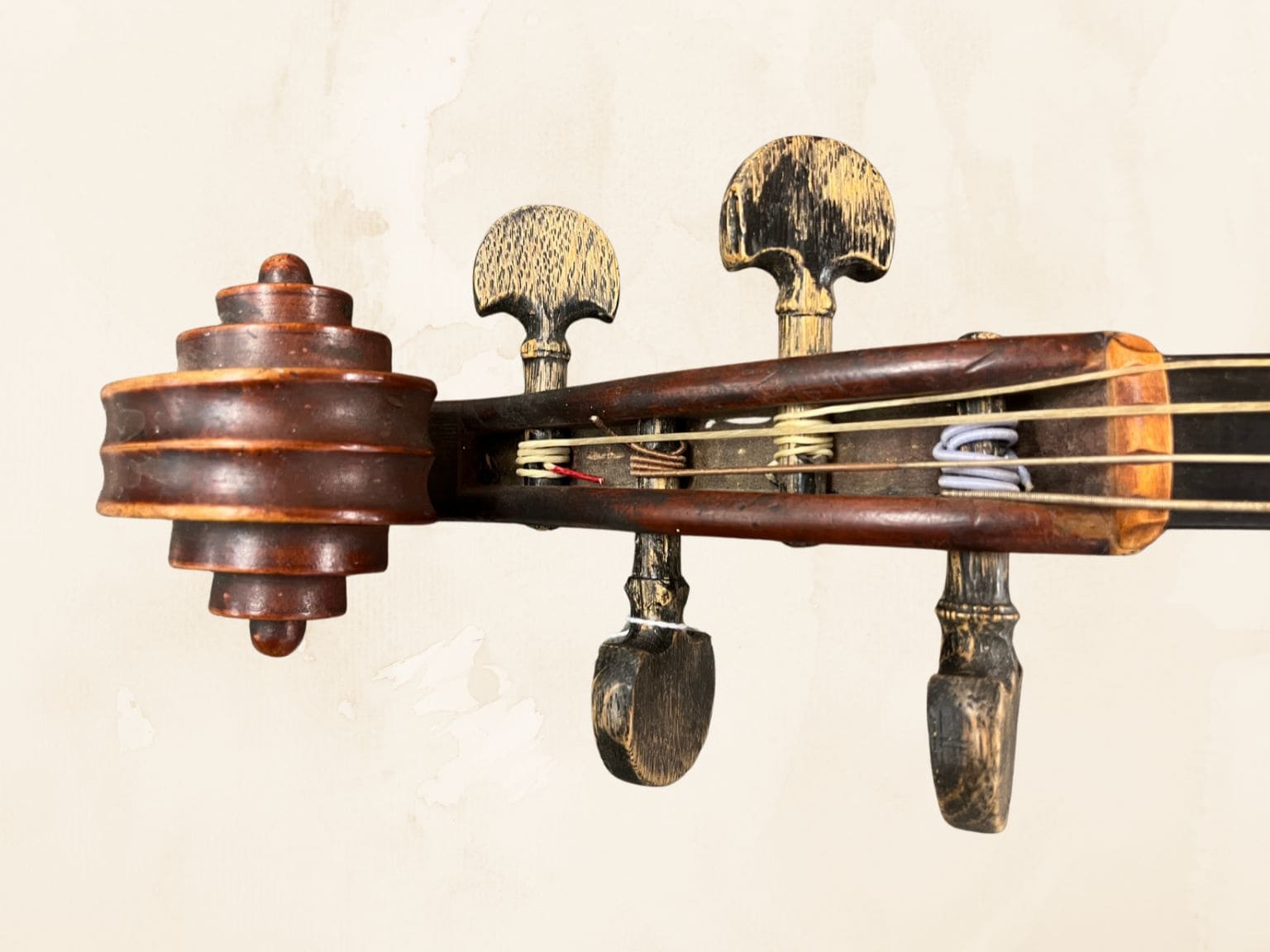
A concert featuring voices and viols of the Early Republic period
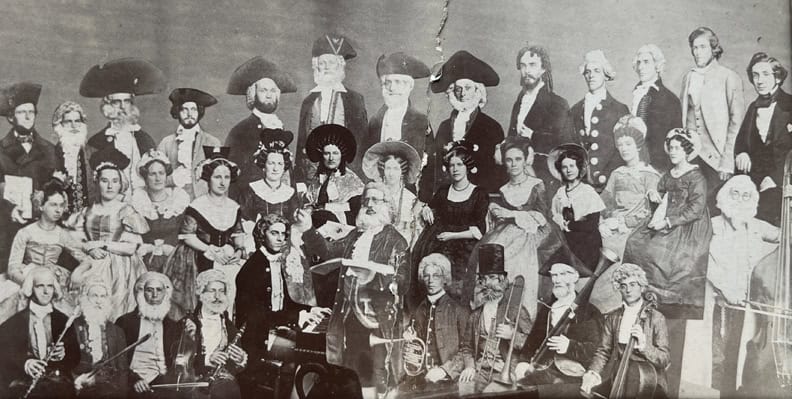
Music was everywhere in New England in the decades before and after the Revolution. By 1800, Northampton was a regional hub of music printing, and Connecticut Valley instrument makers worked to meet the new demand for musical instruments. While there were few professional musicians, almost everyone–rich or poor, Black or white–learned to sing and many learned to play New England viols (similar to modern cellos and violas), fiddles, flutes, “clarionets,” bassoons, and more.
To celebrate this early music, Historic Northampton features a concert featuring voices and viols, including works by Sawney Freeman, a formerly enslaved composer from Connecticut as well as music that Freeman would have played and heard. Other selections will include hymns, fiddle tunes, songs, and dance music, some of which haven’t been heard for more than two centuries.
The music and commentary will be presented by five eminent musicians: vocalist and multi-instrumentalist Tim Eriksen; viol virtuoso Loren Ludwig; alto violist Alice Robbins of Arcadia Players; vocalist and violinist Allison Monroe, Director of the Five College Early Music Program; and bass violist Nate Steele of the Museum of Fine Arts Boston.
Daphne Lamothe, Smith College Provost, will moderate the program.
Gian Lyman Silbiger Grant of the Viola da Gamba Society of New England: This concert has been made possible in part by the Gian Lyman Silbiger Grant of the Viola da Gamba Society of New England. This award fosters the performance of music for viols and voices around New England and encourages further exploration of the viol and its music.
In Partnership with the Unitarian Society of Northampton and Florence
Major Sponsors
Smith College, Daily Hampshire Gazette, Whalen Insurance, Northeast Solar, & PeoplesBank.
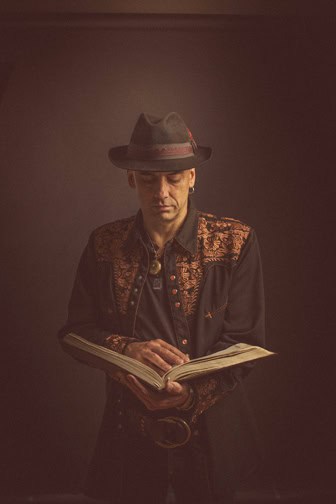
Tim Eriksen is a musician, ethnomusicologist and instructor. He was a consultant and performer for the soundtrack of the film Cold Mountain and was enlisted to teach Sacred Harp singing to the cast.
His PhD dissertation Old Folks’ Concerts: The Meaning and Mushrooming of an Antiquarian Music Craze, 1853-1856, was inspired by the annotated music book of Northampton resident Amelia Clark (1850-1944). His essay, “Old Folk’s Singing and Utopia: How Abolitionist Musical Antiquarianism and Calvinist Eschatology Gave Birth to Science Fiction on the banks of the Connecticut River” was published in the Massachusetts Review in 2016.
Eriksen has taught college courses including American Balladry, Global Sounds, Film Music from Hollywood to Bollywood, American Music, and Songwriting at Smith College, as well as at Amherst College, Hampshire College, Dartmouth College, The University of Minnesota, and Wesleyan University. He has also taught in Poland and The Czech Republic and has conducted extensive research on traditional Yugoslavian music.
The former frontman of the prophetic groups Cordelia’s Dad (folk-noise), Northampton Harmony (shape-note quartet), and Žabe i Babe (Bosnian folk and pop), Eriksen is the only musician to have shared the stage with both Kurt Cobain and Doc Watson, and his media appearances have ranged from Prairie Home Companion to the Academy Awards. Having graduated from early shows at punk mecca CBGB, Tim’s performances have included his Carnegie Hall debut as a soloist in Even Chambers’ symphonic work “The Old Burying Ground” and two week-long stints at the Blue Note Jazz Club with Omar Sosa. In the studio, he has worked with legendary producers and engineers including Joe Boyd, T-Bone Burnett and Steve Albini.
Loren Ludwig is a musician and music researcher based in Baltimore, MD. Loren grew up in Amherst, MA, a beneficiary of terrific public school music education and a diverse, creative, and generous local community.
He studied viola da gamba at Oberlin Conservatory and received a PhD in historical musicology from the University of Virginia. Loren’s research explores connections between the materiality of musical instruments, performance practices, and emergent cultural meanings. His work on the “early music activism” of Civil Rights luminary Bayard Rustin was recently made into a Sunday Feature by BBC3 and his various projects have been supported by the US Fulbright Program, the Andrew Mellon Foundation, the National Endowment for Arts, and others.
Loren is currently writing a monograph on a lost tradition of stringed instrument building and playing in Colonial and Early Republic New England, “Ingenious Mechanisms”: New England Viols and Vernacular Luthiery in the Early Republic. Loren records and performs across the country and internationally on the viola da gamba and other historical stringed instruments. He is a co-founder of LeStrange Viols and contemporary/experimental music ensemble Science Ficta and is a founding member of the seventeenth-century string band ACRONYM.
Loren serves as faculty in Johns Hopkins’ Medicine, Science, and Humanities major and is the Program Coordinator for the Johns Hopkins School of Medicine’s Program in Arts, Humanities, & Health.
Allison Monroe specializes in historical musical repertoires on bowed strings and voice. As the Director of the Five College Early Music Program in western MA (2023-present), she coaches ensembles, teaches courses, coordinates the Program’s activities and faculty, and oversees the Loeb Instrument Collection. She formerly taught at Case Western Reserve University (2018-2023), where she also earned a DMA in Historical Performance Practice. Her performing credits include the Boston Camerata, Blue Heron, Alkemie, Piffaro, Newberry Consort, Ensemble L’Harmonie des saisons, Les Délices, Apollo’s Fire, and Indianapolis Baroque Orchestra. Allison is also Cofounder and Artistic Director of medieval band Trobár. She can be heard on Trobár’s first album Il Dit / Elle Dit, as well as The Queen’s Rebels’ Fair and Princely Branches (for which she was also Artistic Director), and Les Délices’ Noel, Noel and The Highland Lassie.